






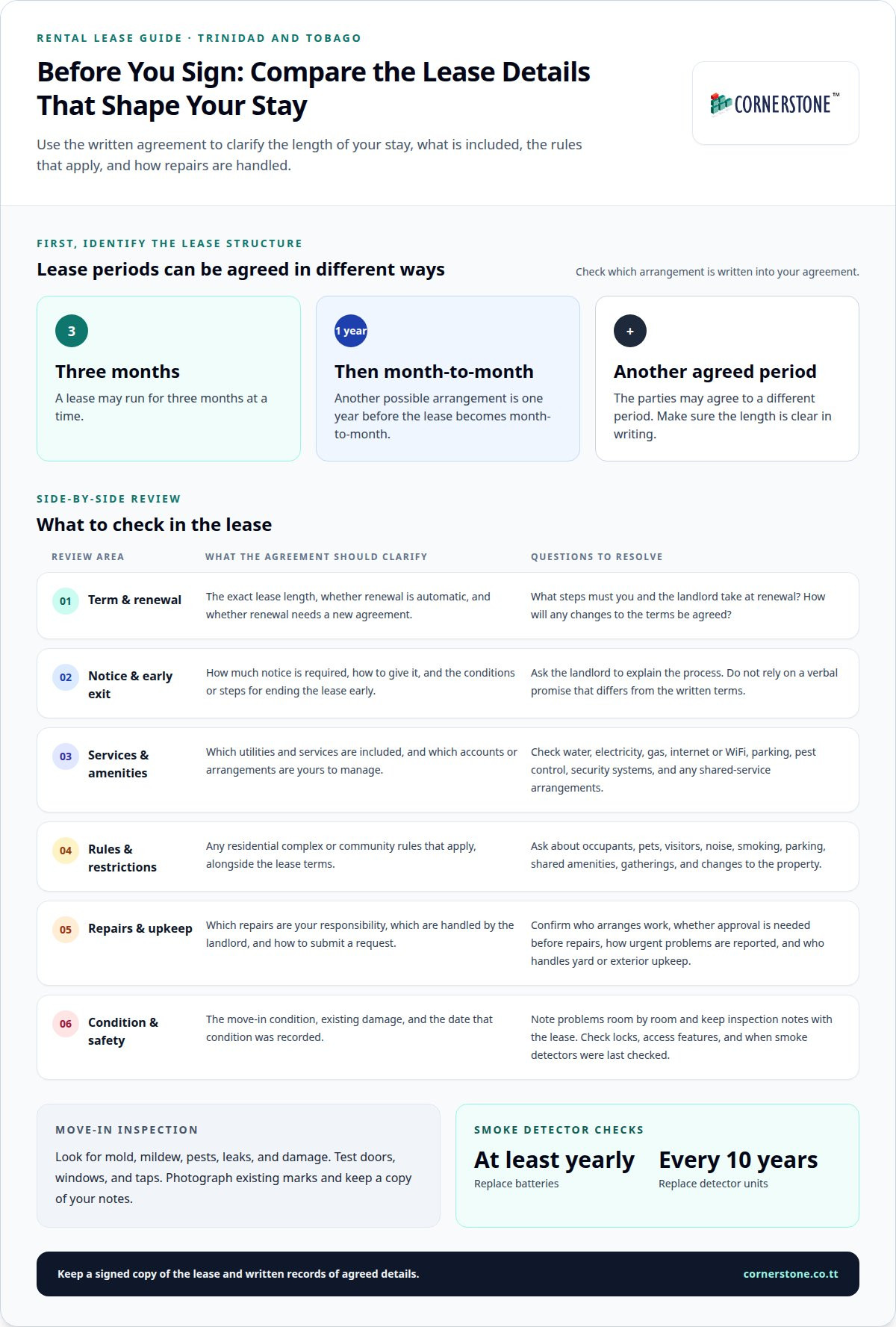
In Trinidad and Tobago, rental leases may run for three months at a time, for one year before becoming month-to-month, or for another period agreed by the parties. Before signing, check that the lease clearly states its length, renewal options, notice requirements and what happens if you leave early. This helps you decide whether the arrangement fits your plans.
Review what the rent includes, which community rules apply, and how repairs and the home’s condition are addressed. These details help you understand the agreement and make a more informed choice before committing to a rental.
Key Takeaways
- Understand how the lease term, renewal options, and early-exit terms affect your plans before you sign.
- Separate what rent covers from services and utilities you may need to arrange yourself.
- Clarify household and neighborhood rules, including who handles routine upkeep.
- Record the home’s move-in condition and learn how repair requests are handled.
1. What should I check before ending my lease?
In Trinidad and Tobago, rental leases may be agreed for three months at a time or run for one year before becoming month-to-month. Useful questions to ask before renting a home include: What is the exact lease term? How does renewal work? How much notice must you give, and what are the conditions for ending the lease early? Ask the landlord to explain the steps for ending the lease early. The lease should set out these conditions before you sign. If the term or renewal process is unclear, ask for the wording to be clarified in the agreement.
To assess whether a landlord, rental listing and lease are legitimate, compare the landlord’s name and property details across the listing, agreement and documents shown to you. View the home and ask the person offering it to explain their role. Read the full lease before signing, and keep a copy of the signed agreement.
Read the lease terms carefully. Check the responsibilities of each party and any rules that apply during your stay. If the agreement sets out a process for raising concerns or requesting repairs, make sure you understand it. Ask how much notice you must give before moving out, and check whether the agreement explains how to provide that notice.
Renewal can affect your plans and how long you can stay. Ask whether the lease renews automatically, whether you must give notice to leave, and whether renewal requires a new agreement. Check what steps you and the landlord must take at renewal, and whether the lease explains how changes to its terms will be agreed. Don’t rely on a verbal promise that differs from the written terms.
As you consider questions to ask before renting a home, check for restrictions that could affect your stay, such as rules about occupants, pets or changes to the property. During the inspection, record existing damage and raise concerns before moving in. Keep a copy of the inspection notes with your lease. This gives you a record of the home’s condition when you accepted it if questions arise at move-out.
2. What services and amenities are included?
Ask which utilities, services and amenities are provided, and which you must arrange yourself. The agreement should clarify whether water, electricity, gas, internet or WiFi are included. For example, an apartment might include water but leave electricity and internet accounts for you to arrange. Check each service separately rather than assuming “utilities included” covers everything.
Before signing, list the home’s recurring services. Ask who sets up each account and how shared services are handled. If electricity is billed directly to you, ask how to arrange the account. For a shared service, ask how your portion is determined. Put the agreed arrangements in writing.
Check amenities and practical extras, too. Ask whether parking is included, assigned or covered by separate terms. For a home with a yard, clarify who handles lawn care and exterior upkeep. If internet, pest control or a security system matters to you, find out whether it is provided or needs to be arranged. These details help clarify your responsibilities.
Clarify the responsibilities that apply when you move out. Ask what condition the property should be left in and which upkeep tasks are your responsibility. Have these expectations recorded in the agreement so you know what to handle before leaving.
Raise any unanswered questions before signing. For example, if the listing mentions parking but the lease is silent, ask for the parking arrangement to be added. Confirm that the included services and your responsibilities match across the listing and lease. This helps you plan for electricity, internet, yard work and other regular commitments.
3. Are there any HOA rules or neighborhood restrictions?
Ask whether the home is subject to rules from a residential complex or community association. Rules may affect noise, visitors, pets, smoking, parking and access to shared amenities. Request the rules that apply to tenants before signing, then compare them with the lease. If the lease allows something that community rules restrict, ask for the conflict to be resolved in writing.
Think about everyday routines, not just unusual situations. Find out whether guests can use shared facilities, where visitors may park and whether pet ownership has limits. Ask how noise complaints are handled and whether outdoor gatherings are restricted. Clear answers help you understand how the rules may affect your household and visitors.
Clarify who is responsible for yard work and exterior maintenance. Ask whether you or the landlord handles lawn care, outdoor spaces and upkeep around the home. If there is a shared entrance or common area, find out who maintains it and how to report a problem. Put the agreed duties in the lease to reduce the risk of disputes over routine tasks.
For routine repairs, ask how to submit requests, who arranges the work and what response time to expect. The lease should explain which repairs are your responsibility and which are handled by the landlord. If a tap starts leaking, for example, you should know how to report it and whether you need approval before arranging work. Keep records of requests and replies.
Make a separate plan for emergency repairs. Ask whom to contact if a problem needs urgent attention, such as a serious leak, and what steps to take while waiting. Ask whether you can make changes to the property, such as putting up shelves, and whether you must restore it when moving out. Discuss any restriction that could affect your plans or lead you to end the lease early before signing. Clear written terms can help clarify expectations.
4. Maintenance, repairs and property condition
During a viewing, look for mold, mildew, pests, leaks and damage that could affect daily use. Test doors and windows, check taps, and note visible problems room by room. If you’re viewing virtually, ask about areas the camera doesn’t show clearly. Confirm the home’s move-in condition and date in writing before arranging your move.
Ask about safety and security features, including gates, alarm systems, access control, and working locks. In an apartment or shared building, check common entrances, buzzers, and callboxes. Ask when smoke detectors were last checked. Batteries should be replaced at least once a year, and detector units every 10 years. These details help you understand the home’s basic safety arrangements.
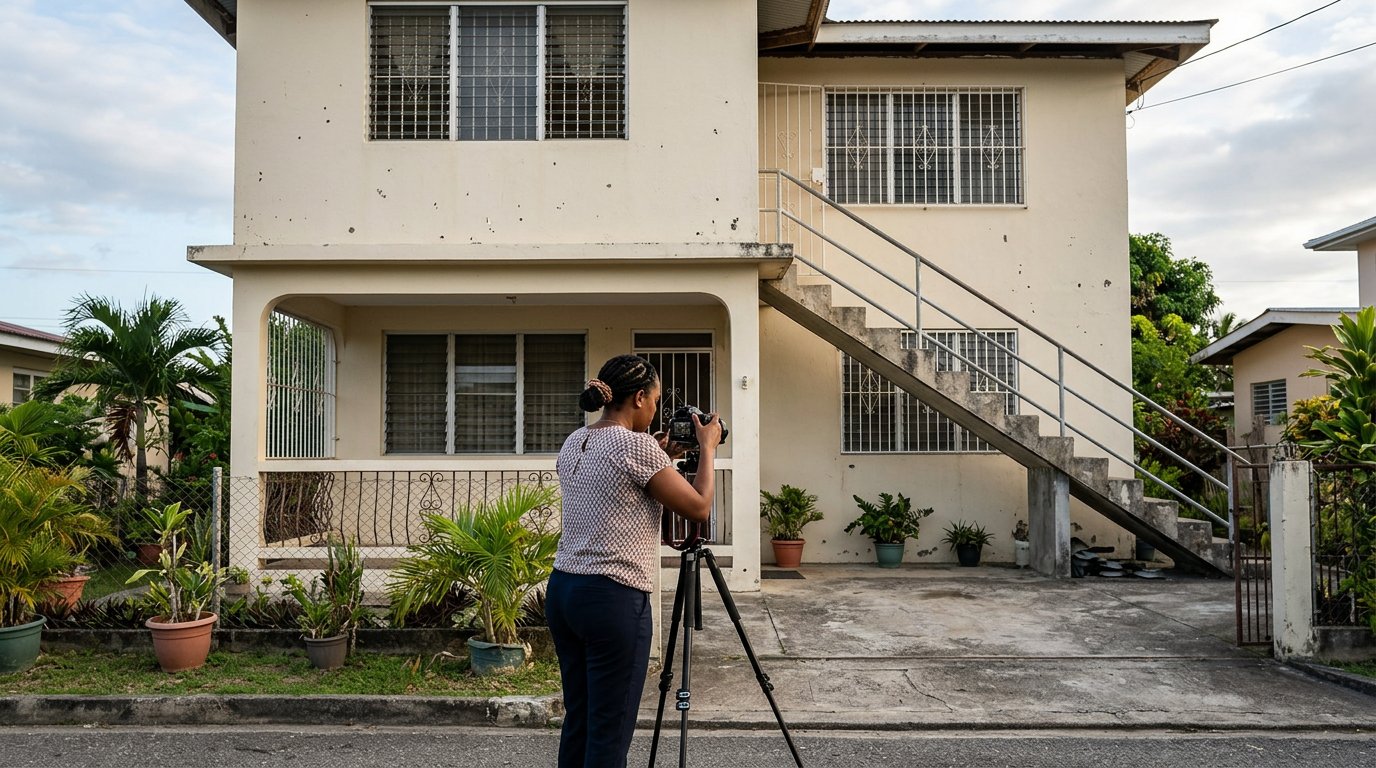
Make a record during the move-in inspection. Photograph existing marks, damaged fixtures and appliances, then send the images with a written list to the landlord. Keep copies with your agreement. This gives both sides a clear record of the home’s condition.
Set out repair responsibilities in the lease. Ask how to submit routine requests, who arranges repairs and what response time to expect. Find out whether major work is planned while you’re living there. For urgent problems, ask whom to contact and what steps to take if a leak or electrical issue occurs. Record the process before moving in.
Agree on a repair timeline for known issues before signing. For example, the repair guidance suggests using 48 hours as a possible timeline, but the timeframe should reflect the repair and written agreement. Ask whether any repair could affect access, parking, or your move-in date. If you’re considering a rental, explore available rental homes and consider these condition questions during your search.
Cornerstone
Cornerstone can help you explore rental listings and consider practical details before you decide. If you’re weighing lease terms, included services or maintenance responsibilities, discuss your needs with the team and how a rental might fit your plans. For landlords, Cornerstone offers property management support. Owners considering their next steps can also request a property market opinion, which provides market context and is not a licensed valuation.
Keep your priorities and questions together as you review rental homes. This makes it easier to discuss what matters to you, from the property’s condition to the lease terms. To talk through your property plans, contact Cornerstone.
Make Your Next Rental Decision With Care
Choosing a rental is also a chance to consider how your next home will support your daily life. The questions to ask before renting a home can help you weigh practical needs against personal priorities, such as how much flexibility you want and whether the property suits your routines. Decide which factors matter most, then use them to guide your conversations and choices.
Cornerstone assists with property sales, rentals and management. If you’re still weighing your options, discuss your property plans with the team and identify a useful next step. Raise the points that matter to you and decide how you’d like to proceed, without feeling rushed.
Contact Cornerstone with your rental questions to start a conversation and move forward with greater clarity.
Frequently Asked Questions
How long is the lease term?
The lease term should match how long you expect to stay and the flexibility you need. If your plans may change, ask whether the agreement offers a renewal or extension option and how to request it. Someone relocating for a temporary work assignment, for example, may need a different arrangement from someone planning a longer stay. Check that the dates fit your plans.
Are there any HOA rules or neighborhood restrictions?
Ask how community rules affect everyday routines, not just formal restrictions. Find out whether you can host visitors in shared spaces, use amenities at certain times or park a guest’s vehicle on the property. If you work from home, ask about daytime noise expectations. Knowing how the rules apply to your routine helps you decide whether the setting suits you.
What should I know about moving out?
Ask how the final inspection is arranged and what steps you need to follow when moving out. Find out whether you need to provide a forwarding address and how to keep a record of your move-out communications. These steps help you understand the process and keep a clear record.
What's included in the lease?
The lease should specify what is included rather than relying only on the listing description. Ask whether shared amenities, appliances or furnishings are part of the rental, and note any limits on their use. For example, clarify whether a listed appliance stays with the home and who handles repairs if it stops working. Written details help prevent different expectations after move-in.
How can I end my lease early?
The lease’s early-exit terms explain what steps to follow if your plans change. Before signing, consider situations such as a job transfer or a change in household needs. Ask whether the agreement explains how to end the tenancy early and what written notice is required. Knowing the steps in advance helps you make an informed commitment.
Are pets allowed?
Permission to keep a pet depends on the lease and any community rules. Describe the pet you plan to keep and ask whether approval applies to that specific animal. Clarify expectations for shared outdoor areas, noise and cleaning up after your pet. If you may get a pet later, ask whether you would need fresh approval. Clear written terms help everyone understand the arrangement.