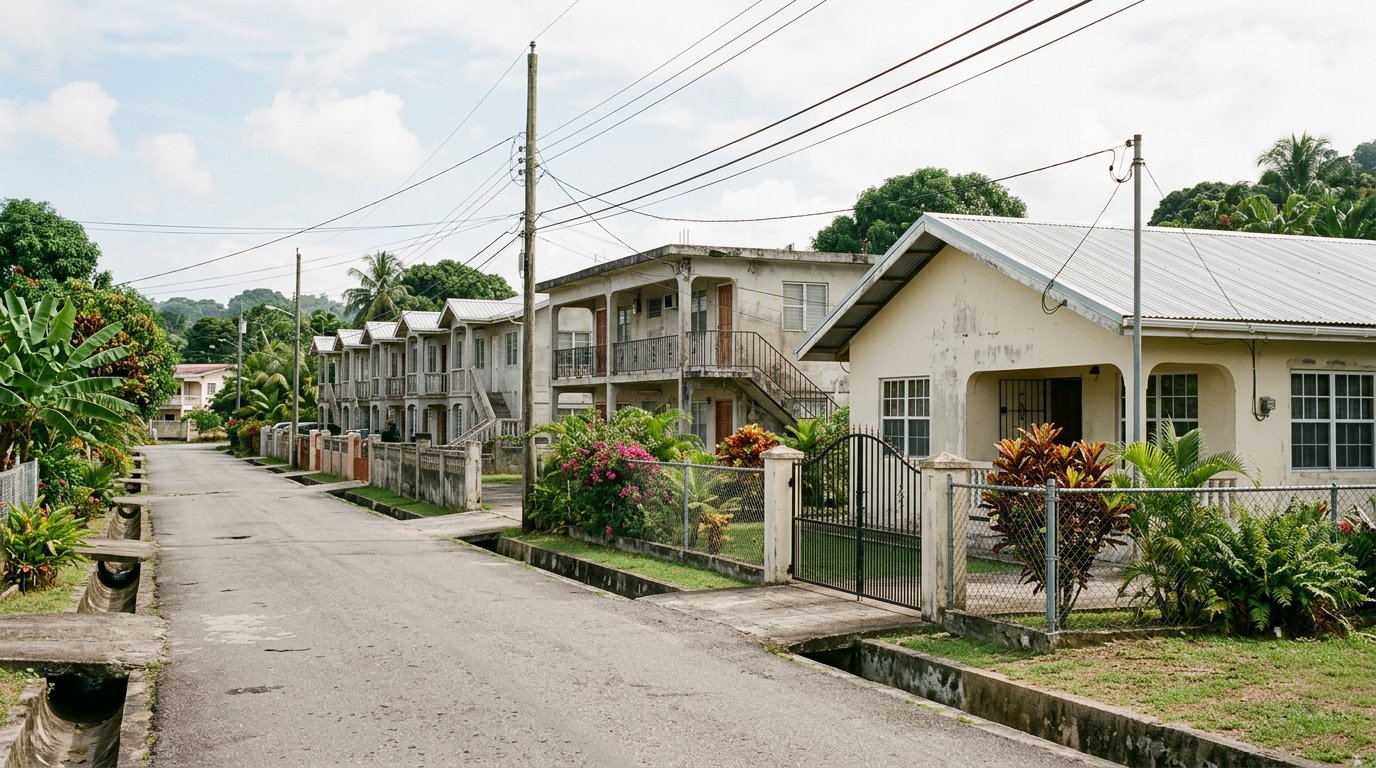








Homeowners associations can shape how buyers view a single-family home in Trinidad and Tobago. Shared upkeep, amenities, and community rules may all influence interest in a property.
When weighing an association’s effect, consider what its rules mean for daily life, how well shared spaces are maintained, and whether the amenities may appeal to buyers or tenants. These factors can help you decide whether to sell or rent.
A property market opinion for homeowners can put these details in context alongside your home’s condition and comparable market activity. This article explains what to review before deciding whether to sell or rent.
Key Takeaways
- Assess a home in the context of Trinidad and Tobago’s local market, including its condition, location, and comparable properties.
- Look beyond an HOA’s effect on price: its rules and shared responsibilities can also shape your day-to-day experience as a homeowner.
- Review the association’s rules and records so you understand property-use requirements and what may need to be addressed before a sale or rental.
- When you’re ready to sell or rent, Cornerstone can provide a property market opinion and help with sales, rentals, or property management.
What is the current outlook for the Trinidad and Tobago property market?
There is no single outlook for every home in Trinidad and Tobago. Buyer interest can vary with location, property type, condition, and comparable homes available. Similar features alone do not mean two homes will attract the same buyers.
For a useful market picture, start with recent transactions involving similar properties. An agent’s estimate before a sale or rental typically uses recent transactions for comparable homes. Location, land and floor area, layout, upkeep, and nearby amenities help explain why one property may attract more interest than another. Completed transactions can show which features buyers have chosen in a particular area.
Assess a single-family home on its own features. Its condition, access, parking, and outdoor space can affect how buyers compare it with nearby homes. In a planned community, shared facilities and association rules may also matter. Consider these details alongside local sales evidence, not as a substitute for it.
Use a property market opinion for homeowners as practical guidance when considering a sale or rental. It can help you compare your home with similar properties and understand which features may influence buyer or tenant interest. It is not a formal valuation prepared for a specific purpose.
Before deciding what to do, gather clear information about your home and its surroundings. Record its condition, recent improvements, land and floor areas, and shared amenities. Compare these details with similar properties and recent transactions in the same area. This gives you a grounded starting point for deciding whether to sell, rent, or prepare the property further.
There is no single best area for every homeowner; buyer interest varies by location and property. Compare similar homes and recent transactions in the same area to judge whether a location suits your plans to buy or sell.
Valuers preparing market value reports use more than one approach to form an opinion of a property’s current market value. Trinidad is susceptible to natural disasters, including hurricanes, floods, and earthquakes.
How do HOAs affect homeowners?
A homeowners association can shape everyday routines through community rules, shared spaces, and maintenance responsibilities. In a single-family development, rules might cover exterior changes, parking, pets, noise, or use of common areas. Rules differ by association, so read the governing documents before buying or making plans for your home.
Shared facilities can also affect how you use your neighbourhood. An association may set booking rules for a recreation area or explain how residents report maintenance concerns. These arrangements can clarify responsibilities, but may limit what you can change or when you can use shared spaces. Find out how decisions are communicated and how residents can raise concerns.
For a home purchase or sale in Trinidad and Tobago, association obligations and transaction requirements are separate matters. Review the association’s rules separately from the documents related to buying or selling, so you understand what each covers.
No single area in Trinidad and Tobago is best for every homeowner. Compare places such as Chaguanas, San Fernando, and Port of Spain based on your commute, household needs, property type, and access to services. For selling, consider the likely buyers for that location and the features they value.
Mortgage rates and home loan requirements are set by lenders. Before planning a purchase, review the lender’s stated rate and application criteria, including the financial information and property details requested. Association rules do not replace lending requirements.
Before committing to a home in an association, take three steps: read the rules, understand how shared spaces are managed, and learn how residents raise issues. This helps you decide whether the community’s expectations fit your plans as a homeowner.
What should homeowners review in HOA rules?
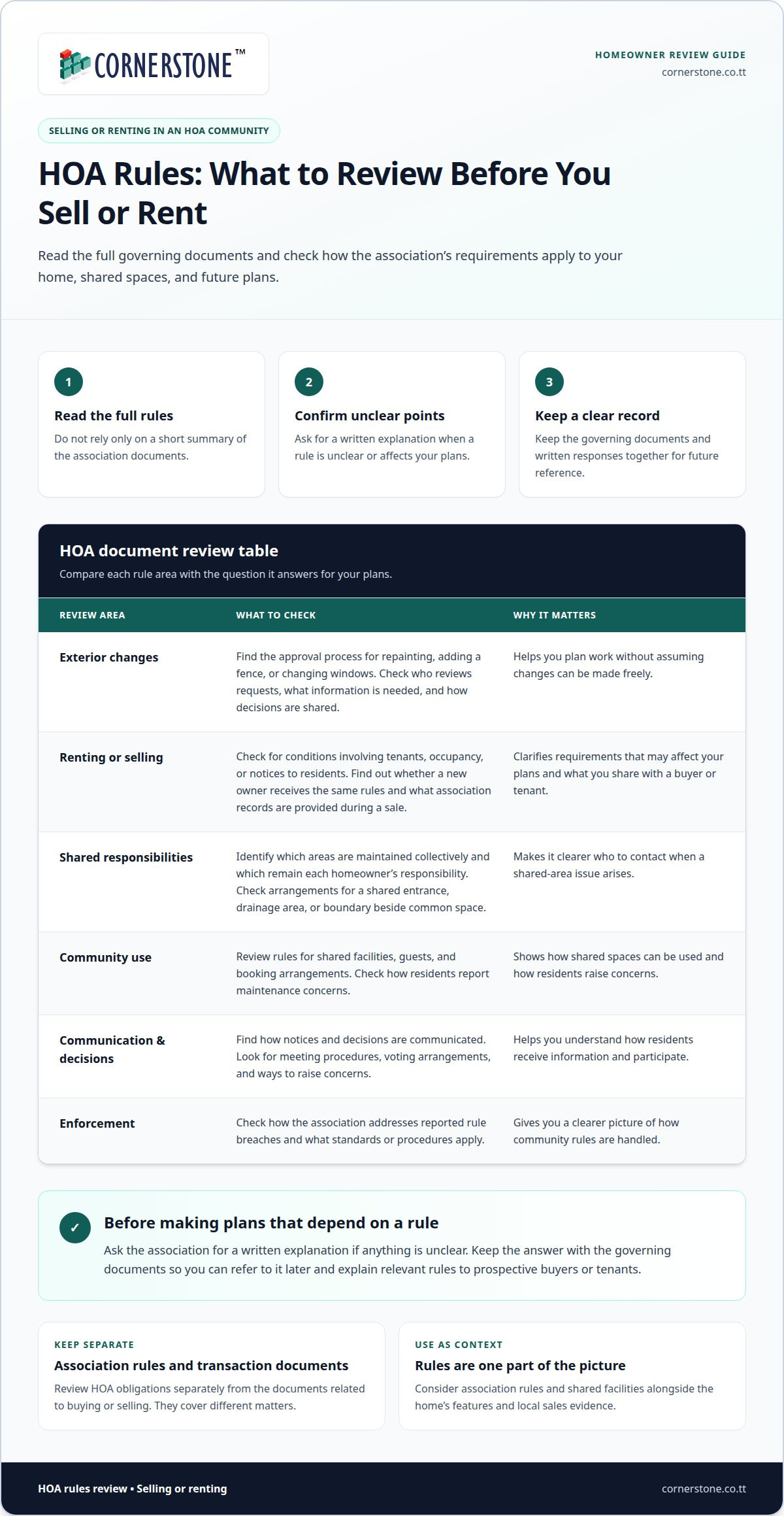
Read the full governing documents, not just a short summary. Check how the association approves exterior changes, such as repainting, adding a fence, or changing windows. Note who reviews requests, what information is needed, and how decisions are communicated. This helps you plan work without assuming you can make changes freely.
Check how the rules apply if you plan to rent out or sell your home. Some associations set conditions for tenants, occupancy, or notices to residents. Find out whether a new owner receives the same rules and what association records are provided during a sale. These details can affect your plans and what you share with a buyer or tenant.
Pay close attention to how the association divides shared responsibilities. The documents should explain which areas are maintained collectively and which remain each homeowner’s responsibility. For example, find out who handles a shared entrance, drainage area, or boundary next to common space. Clear responsibilities help you know whom to contact if an issue arises.
- Changes: Review the process for requesting approval and the standards used.
- Community use: Find rules for shared facilities, guests, and booking arrangements.
- Communication: Identify how notices, decisions, and resident concerns are handled.
- Enforcement: Understand how the association addresses reported rule breaches.
Check how residents can participate in decisions. Look for meeting procedures, voting arrangements, and ways to raise concerns. If a rule is unclear, request a written explanation before making plans that depend on it. Keep the governing documents and written responses together for future reference.
A careful review gives you a clearer picture of the community’s expectations. It can also help you explain relevant rules to prospective tenants or buyers without relying on guesswork.
How can homeowners prepare to sell or rent out a property?
First decide whether you plan to sell or rent. Your goal shapes what to prepare: buyers need a clear picture of the home’s condition and features, while prospective tenants need practical information about the space and its use. Set a timeline and gather property records before arranging viewings.
Walk through each room as if seeing it for the first time. Check that doors, windows, taps, lights, and appliances work as expected. Clear clutter from counters and walkways, clean visible surfaces, and make outdoor areas easy to view. Note repair needs honestly and keep records of completed work. A tidy, well-presented home helps visitors focus on its layout and condition.
- For a sale: Gather property details, records of improvements, and HOA documents that explain relevant rules or shared facilities.
- For a rental: Prepare a clear description of the rooms, included appliances, access arrangements, and any community rules tenants should know.
- For either plan: Make viewing arrangements practical, and ensure the home is clean, accessible, and ready for visitors.
Keep descriptions accurate. If a feature needs attention, do not describe it as fully working. Use recent, clear photographs that show the rooms and outdoor spaces as they are. For a home in an HOA community, include useful details about shared areas and explain any rules that may affect residents. This helps prospective buyers or tenants understand what using the property involves.
When your preparation is in place, a property market opinion can help inform your next steps. Cornerstone can assist with property sales or rentals. Discuss preparing your property for sale or rent and choose the approach that fits your plans.
Cornerstone: Property market opinion
Cornerstone’s property market opinion can help you consider how to approach a sale or rental. It offers practical context for comparing your home with similar properties, taking into account factors such as location, condition, layout, and recent market activity. Use it to set a direction before listing and understand which details may matter to prospective buyers or tenants.
Share key information about the property and your plans. Tell Cornerstone whether you are considering a sale, a rental, or weighing both options. Details about the home, its features, condition, and any HOA rules can help make the discussion about next steps more useful.
If you plan to sell, Cornerstone can assist with the sale and guide you through preparing a listing for prospective buyers. If renting is a better fit, Cornerstone can assist with the rental process. The right option depends on your plans for the property and your circumstances.
For owners seeking help overseeing a residential property, Cornerstone also offers property management. Landlords can use a secure online portal as part of that support. This may help if you want assistance managing the property while focusing on other priorities.
A market opinion provides practical guidance, not a licensed valuation. Cornerstone is not a valuator, so its opinion is not a formal valuation for purposes that require one. It can still help you make a more informed decision about selling, renting, or managing your home.
Considering your next move? Contact Cornerstone to discuss your property and plans.
Make your next property decision with confidence
Your next step depends on what you want your home to do for you. Whether you are considering a sale, a rental, or ongoing support as a landlord, start with a clear view of the property and its place in the local market. A property market opinion for homeowners can help frame the conversation and give you a practical starting point.
Cornerstone can discuss your options across property sales, rentals, and property management. Share your plans, whether you are preparing to move, exploring rental income, or looking for support with a home you own. The right path starts with understanding your priorities and the property’s details.
You don’t need to have every decision settled before beginning a conversation. A straightforward discussion can help you identify the next step that fits your plans, without pressure to choose a particular route. If you’re ready to talk through your property, contact Cornerstone about your property. Take the next step at a pace that feels right for you.
Frequently Asked Questions
Are home sales and rental demand rising or falling in Trinidad and Tobago?
There is no single outlook for every property type and location across Trinidad and Tobago. Sales interest and rental enquiries can differ based on a home’s features, condition, location, and the people seeking that type of property. Assess recent completed sales and rental activity separately for comparable homes. This distinction can help you decide whether selling or renting better fits your plans.
Which areas in Trinidad and Tobago are best for homeowners looking to buy or sell?
There is no single best area for every homeowner. Compare places such as Chaguanas, San Fernando, and Port of Spain based on your commute, household needs, property type, access to services, and the likely buyers for the property.