






The first-time home-owner tax deduction and stamp duty exemption have different rules. For a first-time home buyer in Trinidad and Tobago, the home must be used as a residence to claim the tax deduction. The stamp duty exemption applies when the Deed of Conveyance and any Deed of Mortgage are executed on or after 01.01.2019.
Buying an existing home may feel more straightforward than building, but each option comes with different costs and decisions. Home prices and rents can vary by area, so the right choice depends on more than the purchase price alone.
This guide compares buying with building, explains when the stamp duty exemption takes effect, and considers how affordability, home prices and rents can shape your plans. It also covers how residential use affects the rules, helping you understand what may apply as you weigh your next step.
Key Takeaways
- Compare buying an existing home with building by weighing maintenance needs against the time, oversight and possible delays involved in construction.
- Separate the first-time homeowner tax deduction from the stamp duty exemption; their eligibility rules and timing differ.
- Assess affordability by looking beyond the home price to factors such as location, financing and the costs involved in building or maintaining a property.
- Use local home prices and rents to compare your options, since both can vary considerably by area.
1. Choosing between buying and building
For a first-time home buyer in Trinidad, the choice often comes down to time, control and readiness. Buying an existing home lets you assess the property before making an offer. Building gives you more say over the design, but also means overseeing the process. In Trinidad and Tobago, compare both options with your savings, likely mortgage payment and location needs.
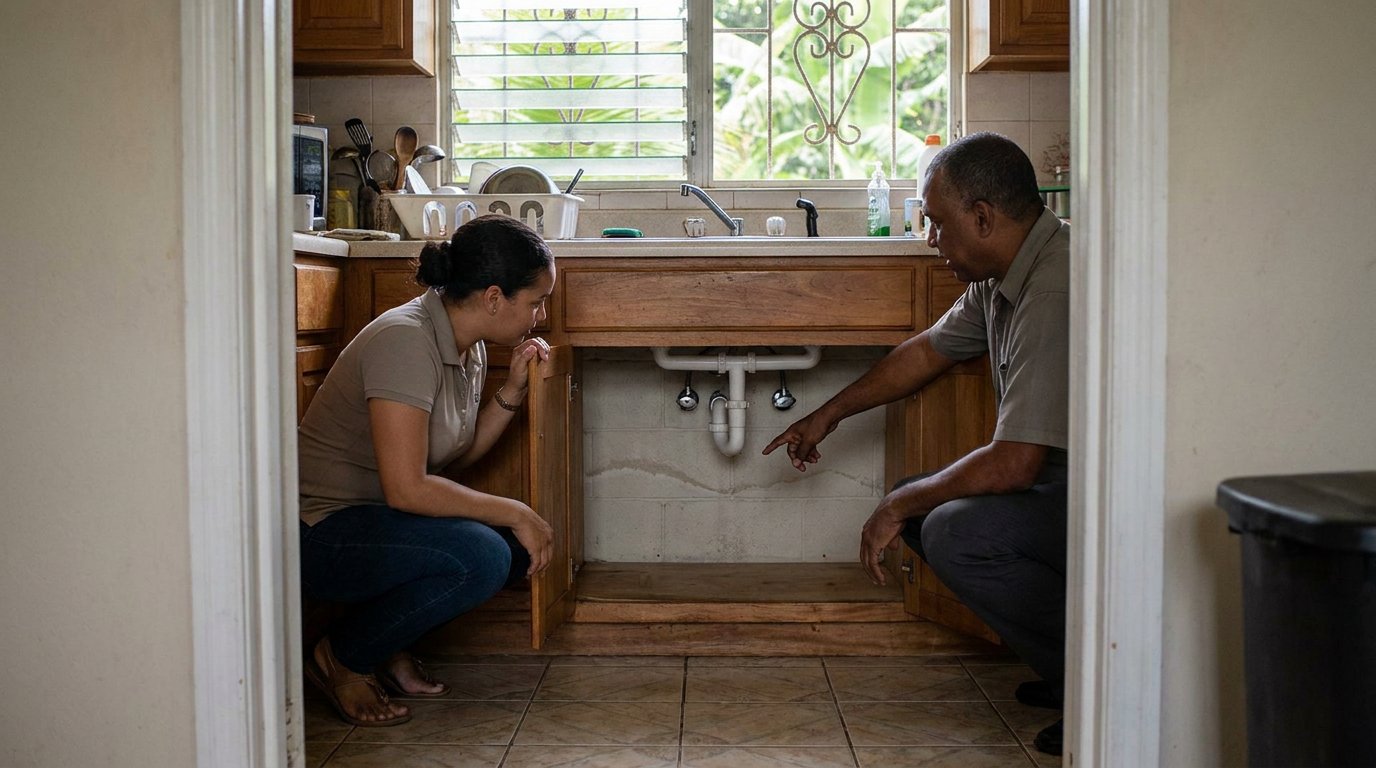
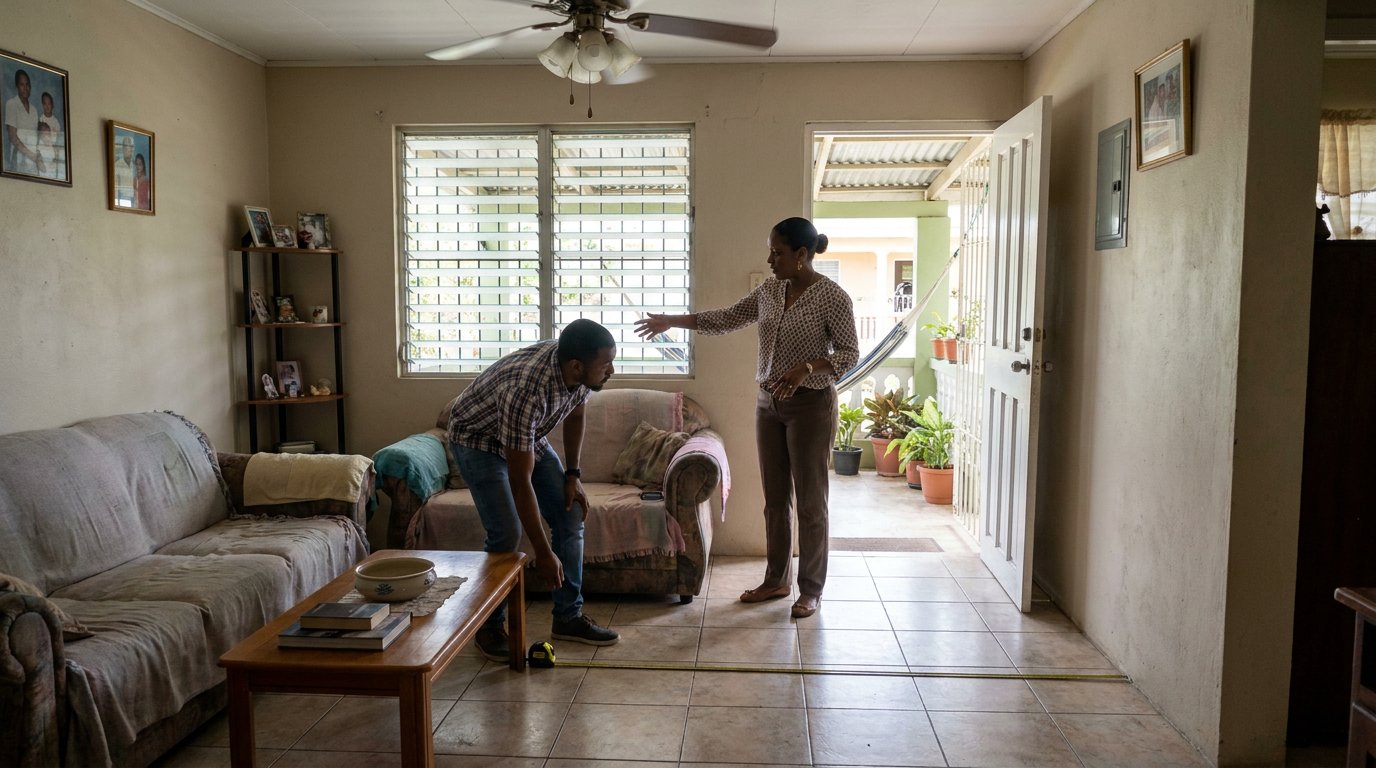
An existing home may need maintenance or renovations, particularly if it is older. Include these costs in your plans before deciding what you can afford. A house that suits your household today may still need repairs before every room works as intended. A viewing can help you note visible work, while the property’s age may indicate where upkeep could be needed.
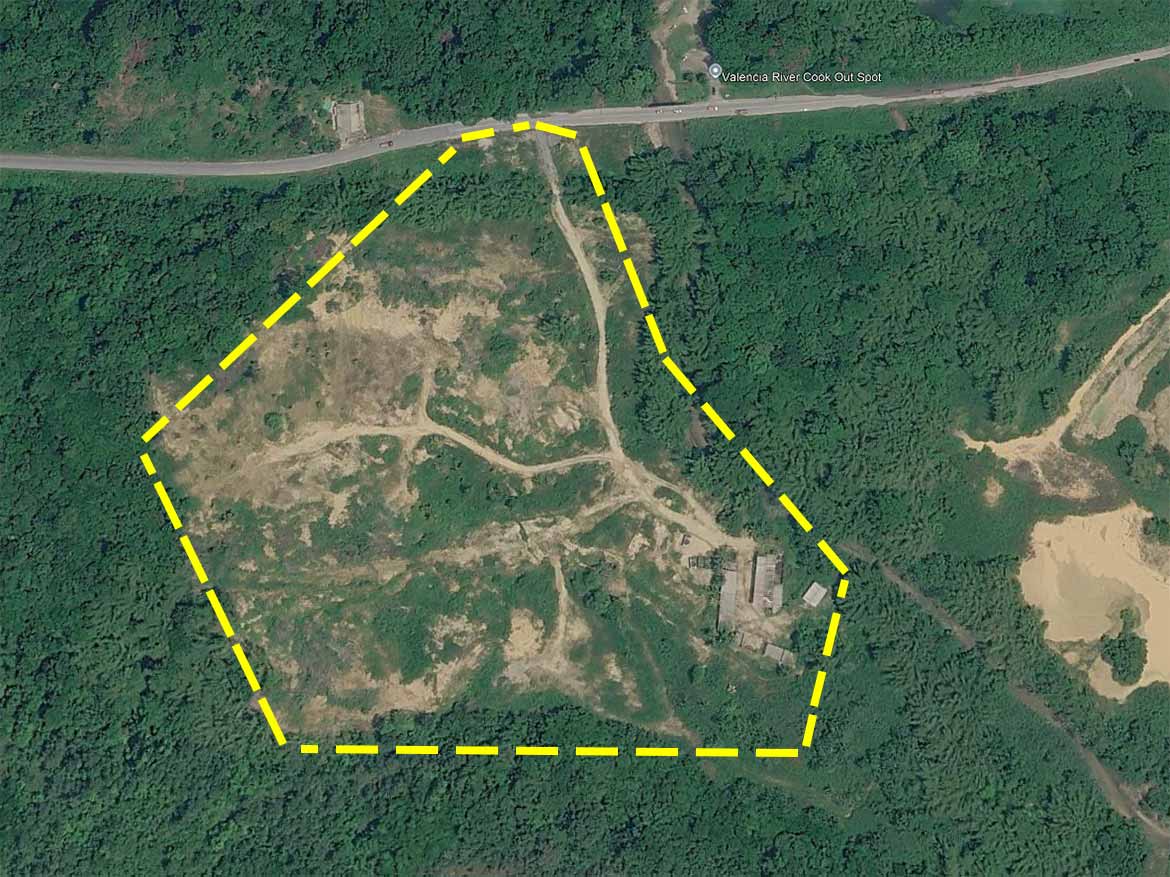
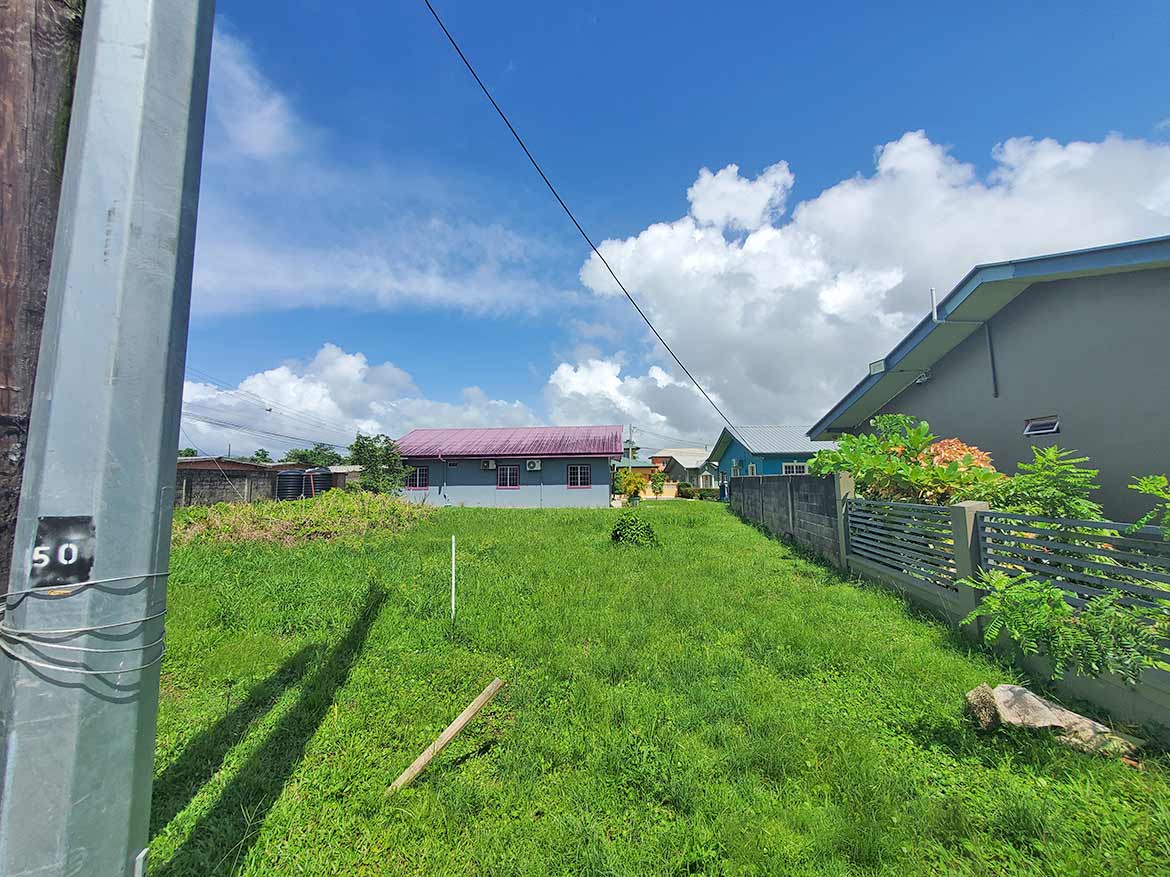
Building brings a different set of demands. Construction can involve stress, cost overruns, and delays, and you must oversee the process. That calls for time as well as money. Consider whether you can manage decisions and follow progress while meeting other commitments. Land also affects the choice: building in Trinidad or Tobago may mean compromising on location if land in a preferred community is unavailable or extremely expensive.
Use a simple comparison before choosing. Note the locations that work for you, the condition you can accept and how much time you can give the project. Then compare your expected mortgage payment and savings with the costs still ahead. For a home you buy, allow for possible maintenance or renovations. For a build, consider the oversight involved and leave room for delays and overruns. Neither option suits every household. The better fit depends on your priorities: moving into a home sooner or having more say over how it is built. This comparison gives you a clearer basis for deciding what to do next.
2. Effective date for the first-time homeowner stamp duty exemption
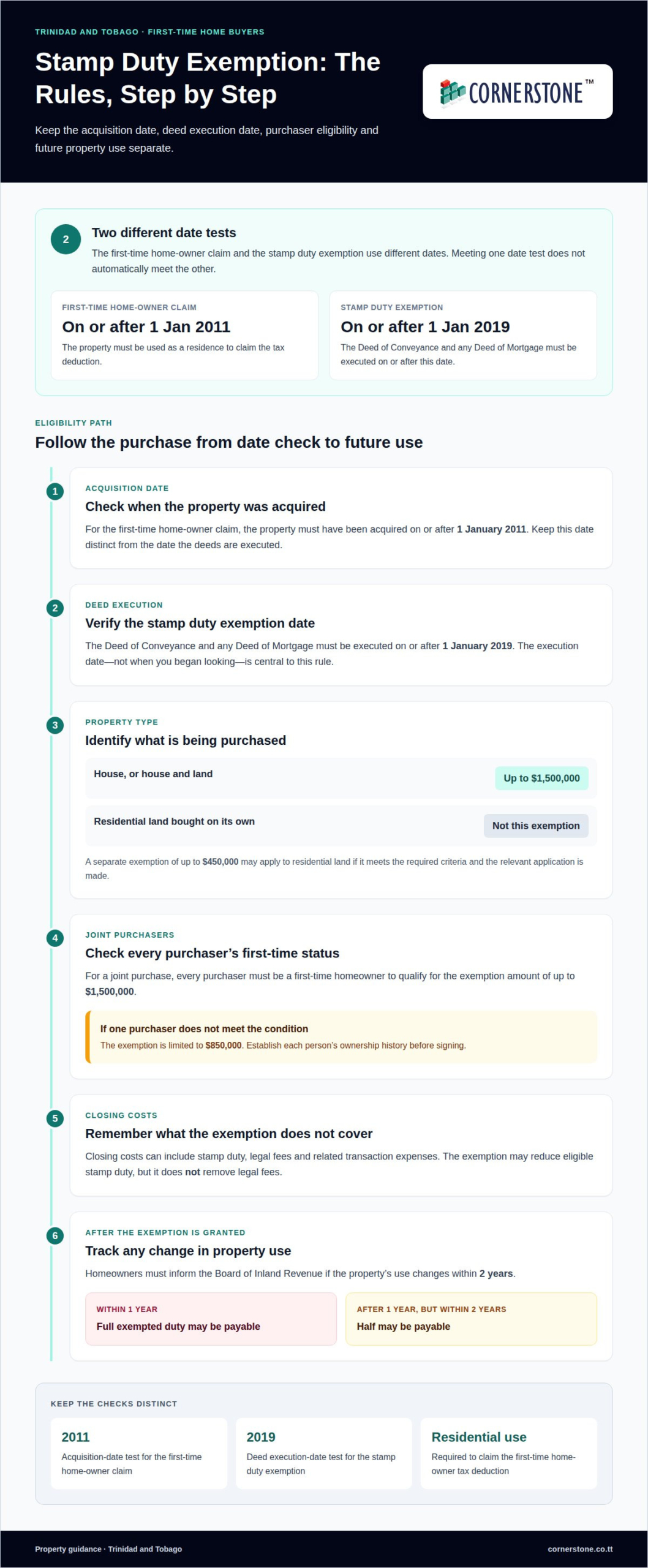
At purchase, closing costs can include stamp duty, legal fees, and related transaction expenses. The stamp duty exemption may reduce eligible duty, but it does not remove legal fees. In Trinidad and Tobago, the first-time homeowner stamp duty exemption applies when the Deed of Conveyance and any Deed of Mortgage are executed on or after 01.01.2019. The execution date, not simply the date you begin looking, is central to this rule.
There is a separate date for the first-time home-owner claim: the property must have been acquired on or after January 1, 2011. Keep that acquisition date distinct from the deed execution date used for the stamp duty exemption. For example, a purchase acquired after January 1, 2011, may meet the first date test, while the exemption still depends on the deeds being executed on or after 01.01.2019. These are separate eligibility checks.
The exemption can cover stamp duty on a house or a house and land, up to $1,500,000 for first-time homeowners. If several people purchase together, every joint purchaser must be a first-time homeowner to qualify for that exemption. If one purchaser does not meet the condition, the exemption is limited to $850,000. That difference can affect the amount of duty due, so joint purchasers should establish each person’s ownership history before signing.
Residential land bought on its own does not qualify for the first-time homeowner stamp duty exemption. A separate exemption of up to $450,000 may apply if the land meets the required criteria and the relevant application is made. After an exemption is granted, homeowners must inform the Board of Inland Revenue if the property’s use changes within two years. Changing its use within one year can make the full exempted duty payable; after one year but within two years, half may be payable. These rules matter for future plans, not only the purchase.
3. Factors affecting housing affordability
Monthly income matters, but the mortgage interest rate also shapes the payment you can manage. Mortgage interest rates in Trinidad and Tobago typically range from 4% to 8% APR, depending on the institution. A lower rate can reduce interest costs over the loan, while a higher rate can make the same purchase harder to sustain. Compare the payment with your regular expenses, not just the amount a lender may approve.
Income limits have also shaped government-supported mortgage facilities. These are separate facilities, so an income threshold for one should not be assumed to apply to every mortgage option.
Loan terms affect affordability too. TTMB’s 5% mortgage facility has a maximum term of 30 years, up to age 70. A longer repayment period can spread payments over more time, but the overall financial commitment lasts longer. Before buying, compare the monthly payment with household expenses and consider whether income could change. The purchase price alone doesn’t show the full effect of interest and repayment timing.
Savings help prepare for costs beyond regular payments. If possible, the planning guidance recommends saving 15% to 20% of monthly income for homeownership. Treat that as a planning suggestion, not a lender’s qualification rule. Set out current expenses, the savings you can maintain, and the payment you could carry. Then compare those figures with the income conditions of the mortgage facility you’re considering. A first-time buyer should also distinguish an affordable payment from an approved loan: approval doesn’t make other household expenses disappear.
4. Home prices and rents in Trinidad and Tobago
Compare a similar property’s annual rent with its asking price. A price-to-rent ratio of 15 or below generally favours buying; above 20 may favour renting.
That is the maximum exemption amount, not a stated maximum property price. Residential land bought on its own does not qualify for this exemption.
Review each facility’s criteria before planning around it.
For a first-time home buyer in Trinidad and Tobago, a practical purchase sequence is to seek mortgage pre-approval, set a budget, compare properties, review the deed and property details, then proceed to closing. Before committing, legal checks should include ownership records, boundaries and any conditions affecting the property.
Search by area and property type, then compare asking prices with rents for similar homes. If you’re weighing specific homes for sale, explore Cornerstone property sales and compare suitable options. Location can make a substantial difference: prices in more desirable areas can be double those in more modest areas, while homes priced between TT$1 million and TT$2 million have lower supply than demand.
Cornerstone: Property sales
Cornerstone can help you explore property sales in Trinidad and Tobago as you compare prices and consider homes. If you are weighing buying against renting, its separate rental listings offer another option to consider alongside homes for sale. A property market opinion can provide context as you assess your plans, but it is not a licensed valuation.
Share the areas, property type and features that matter to you to help focus your search on homes that fit your needs. If renting remains an option, Cornerstone also offers property rentals and management.
For a practical next step, contact Cornerstone or visit cornerstone.co.tt to explore property sales.
Choose a next step that fits your plans
Make your next move practical: note what matters most in a home, which areas suit your daily life and what monthly commitment leaves room for other priorities. This shortlist can help you compare options with purpose, rather than feeling drawn to a property simply because it is available. If your plans change, renting can remain an option.
If you’re a first-time home buyer in Trinidad and Tobago, Cornerstone can help you explore property sales or rentals. Its property management offering may also be relevant if you plan to rent out a property. Talk through the type of home and location you have in mind, then choose a step that feels right for you. Contact Cornerstone to discuss your options. Take the process at your pace; a thoughtful next move is progress.
Frequently Asked Questions
Must the property be owner-occupied to qualify for the First Time Homeowner exemption?
For the first-time home-owner tax deduction, the house must be intended for use as your residence. This is separate from the stamp duty exemption, which has its own eligibility rules and deed execution date. A home bought as a rental investment may not meet the residence test for the tax deduction. Keep the two benefits distinct when planning your purchase.
What about mortgages?
A mortgage is a loan used to buy a property, and its repayment terms affect your monthly budget. If you buy with a mortgage, keep the lender’s statement showing the property acquisition date, as it can support a first-time home-owner deduction claim. You can seek advance approval for the mortgage-interest deduction or claim it through a tax return the following year.
What is the effective date for the stamp duty exemption for first-time homeowners?
The exemption applies when the Deed of Conveyance and any Deed of Mortgage are executed on or after 01.01.2019. Focus on when those deeds are executed, rather than when you first viewed the property or began arranging financing. Keep copies of the completed deeds with your purchase records so you can refer to the relevant dates when reviewing eligibility.
When should you start thinking about homeownership?
Start planning before making offers, when you can review your income, regular expenses, savings and preferred locations together. For example, track household spending and set aside a consistent amount towards a future deposit. This gives you a clearer picture of what payment fits your budget and helps you decide whether to keep saving, explore mortgages or compare buying with renting.
What are the eligibility requirements for first-time home buyer assistance in Trinidad and Tobago?
Requirements depend on the specific benefit. For the first-time home-owner tax deduction, the property must be used as a residence, and the acquisition must be your first. The claim requires evidence of ownership and a Certificate of Assessment. A purchased home requires a Deed of Conveyance; a constructed home requires a Certificate of Completion from its Regional Corporation.
What are current mortgage interest rates and down-payment requirements for first-time buyers in Trinidad and Tobago?
Mortgage interest rates typically range from 4% to 8% APR, depending on the institution. Traditional banks require a down payment of at least 10% to 20%. Your income, the property, and the lender’s terms affect the amount you need and the payment you can manage. Compare the deposit requirement with your savings before deciding which properties fit your budget.