







To decide how to choose a property manager for a rental home in Trinidad and Tobago, assess their tenant screening, local market knowledge, and day-to-day responsibilities. Knowing how to choose a property manager also means agreeing on what you want handled, from tenant enquiries and rent collection to maintenance coordination and updates. This guide explains what to consider before deciding who will manage your rental property.
Key Takeaways
- Look for a tenant-screening process that considers applications, references, rental history, and whether applicants agree to the property’s terms.
- Ask how the manager handles repair approvals, maintenance updates, and follow-up so you know what to expect when an issue arises.
- Choose someone familiar with the rental market where your property is located and able to explain how that knowledge informs rental decisions.
- Agree on the manager’s responsibilities, reporting, and communication with you before signing a management agreement.
1. Tenant screening
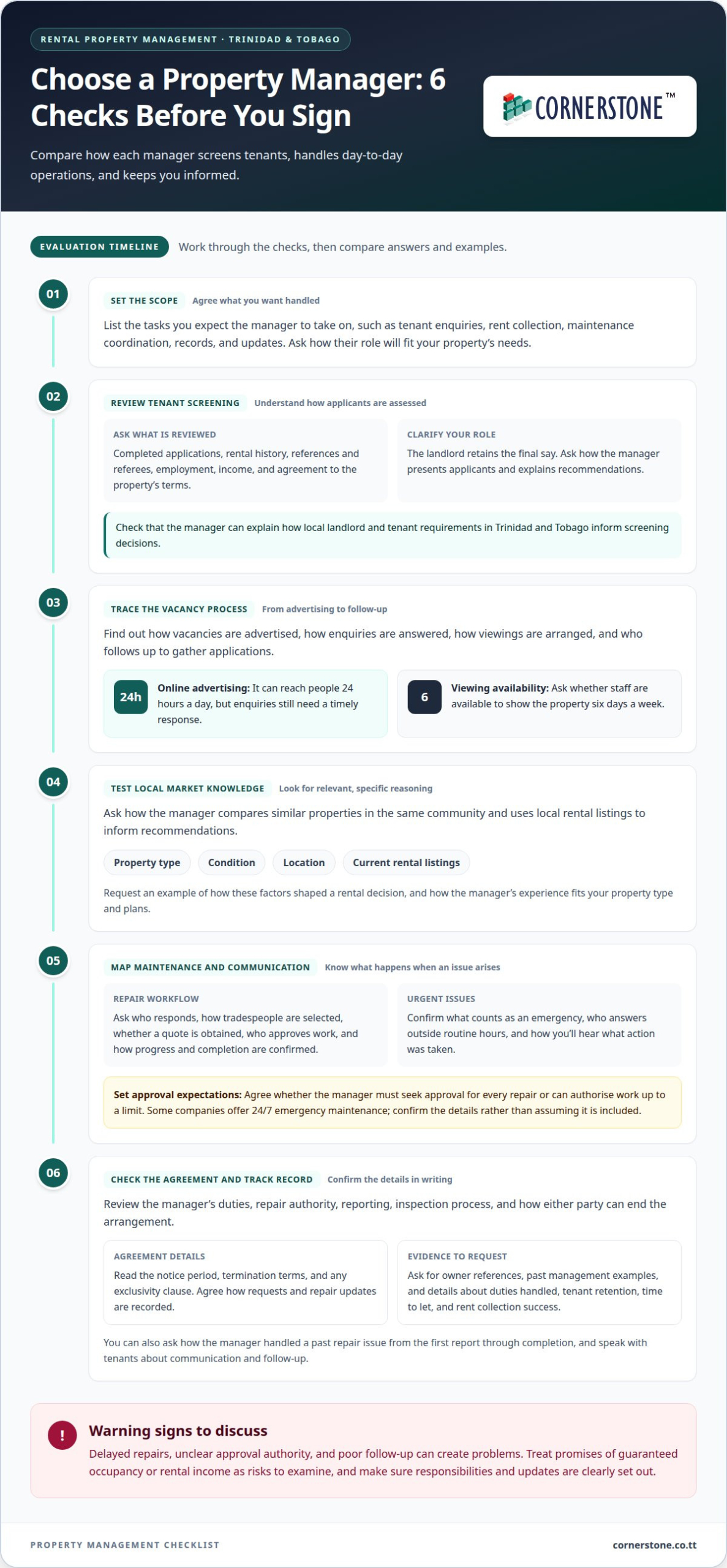
A careful screening process helps match a tenant to the particular rental property and its terms. Ask how the manager reviews completed applications, rental history, references, referees, employment, and income. For example, a prospective tenant’s application should be considered alongside references and their agreement to the property’s conditions. The landlord retains the final say on who will live in the home, so clarify how the manager presents applicants and recommendations.
Choose someone familiar with landlord and tenant requirements in Trinidad and Tobago, rather than relying on rules from another country. Ask how that knowledge informs tenant screening and tenancy decisions. A manager should be able to explain their process clearly, including how they address concerns raised by an applicant or owner.
Ask how the manager advertises vacancies and handles tenant applications. Clear property details, suitable rental terms, and timely responses to enquiries can help attract prospective tenants. Find out how each application is assessed against the property’s requirements, so you understand the basis for a recommendation.
Viewings matter, too. Ask how prospective tenants can see the rental property and whether staff are available to show it six days a week. Online advertising can reach people 24 hours a day, but an enquiry still needs a timely response and a clear route to arrange a viewing. Find out who follows up after each viewing and gathers applications.
Tenant relations continue after move-in. Ask how the manager handles complaints and disagreements between tenants and owners. A clear process records the concern, explains next steps to both parties, and follows up. Agree on how you’ll be updated when an issue may affect the property or tenancy.
To assess references and track record, request references from property owners and examples of past management work. Ask about duties handled, tenant retention, time to let, and rent collection success. Where possible, speak with tenants in managed buildings about communication and how promptly issues were handled. These specific examples help show how the manager works beyond the interview.
2. What Is a Property Manager?
A property manager handles rental operations for owners, coordinating tenant matters, maintenance, and records. For a rental property, repair management means more than calling a tradesperson. The manager should assess the issue, arrange suitable work, communicate the plan, and follow up. In an apartment building, a building management company may also handle daily operations and maintenance, according to the European Commission. Ask how the manager’s role fits your property’s needs.
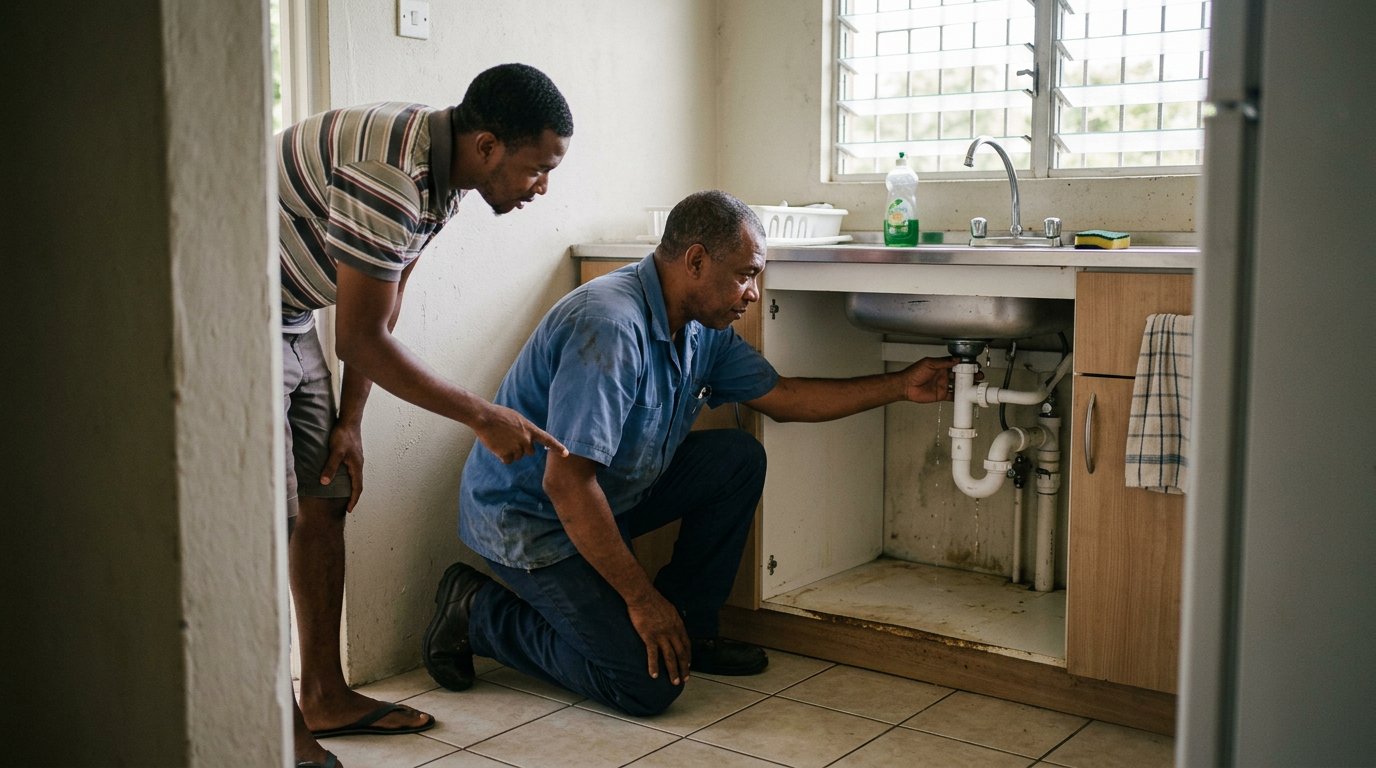
During an interview, ask who responds to repair requests, how tradespeople are selected, and how you’ll hear about progress. Find out whether the manager obtains a quote before work starts and whether you approve each repair or set an approval limit in advance. Ask how urgent problems are handled outside routine maintenance. These answers show whether the process is clear before a leaking pipe or faulty appliance causes stress.
Your property management agreement should set out the manager’s duties, repair authority, reporting, inspection process, and how either party can end the arrangement. Read the notice period, termination terms, and any exclusivity clause before signing. Clarify how requests and repair updates are recorded and how completed work is confirmed. A written agreement helps prevent different expectations later.
Risks include delayed repairs, unclear approval authority, poor follow-up, and promises of guaranteed occupancy or rental income. Reduce these risks by matching the agreement to your expectations, agreeing on repair approvals, and setting a routine for updates and inspections. Ask for an example of how the manager handled a past maintenance issue, from the first report to completion.
If you’re considering professional property management support, look for a clear plan for repairs, communication, and oversight.
Availability is another part of the role to pin down before appointing a manager. Some property management companies offer 24/7 emergency maintenance, but owners should confirm what counts as an emergency, who answers the call, and how the manager reports the action taken. Agree whether managers can authorise repairs up to a monetary limit or must seek approval for every repair. Ask whether a property management company provides a quote before maintenance work begins, so owners understand the proposed work before it is authorised.
3. Local market knowledge
In Trinidad and Tobago, a property manager’s local knowledge should shape how they assess your rental home. Ask how they compare similar properties in the same community, rather than relying on broad national assumptions. For example, a furnished apartment and an unfurnished family home may attract different tenants, even when nearby. The manager should explain how property type, condition, location, and current rental listings inform recommendations. Ask for an example showing how these factors shaped a rental decision.
Ask how the manager keeps up with requirements relevant to your property and applies them during advertising, tenant selection, and ongoing management. A clear explanation should connect requirements to practical steps, such as communicating tenancy terms and recording repair requests. Make sure their process reflects Trinidad and Tobago, not another country’s rules.
Marketing affects how quickly a rental attracts suitable applicants. Find out how the manager presents a vacancy, sets rental terms in line with local conditions, and responds to enquiries. Accurate details about a home’s features, condition, and access help prospective tenants decide whether it suits them. A vacant property can affect a landlord’s income, so ask how the manager tracks interest and changes the approach when enquiries are limited.
Look for evidence behind claims of expertise. Ask for owner references, examples from a property portfolio, and a case where local knowledge guided a rental decision. For instance, how did the manager respond when repairs were needed before advertising? When considering how to choose a property manager, this example can reveal whether they connect local conditions with practical action. Also consider how to choose a property manager whose experience fits your property type and rental plans. Specific, relevant examples help you judge that fit.
4. Property manager responsibilities
A property management company should define who handles each part of your rental’s day-to-day operation. Services should cover tenant enquiries, rent collection, maintenance coordination, inspections, record keeping, and communication about tenancy issues. The manager may also help find and vet tenants, then keep you informed about concerns affecting the property. Ask which duties are included and which remain your responsibility before agreeing to work together.
Clear financial reporting helps you follow your property’s performance and understand its returns. Ask how rent received, payments made, outstanding amounts, and repair updates are recorded and shared. A monthly statement can make activity easier to review, while organised records help clarify questions about a particular transaction. Find out how often you’ll receive updates and who you can speak with if a figure or repair entry needs explanation.
Good oversight also means keeping communication and property records organised. Ask how the manager logs tenant requests, tracks follow-up, and reports problems that may affect the home. Regular inspections can help identify maintenance concerns before they grow. An experienced property manager should explain what an inspection covers, how findings reach you, and how urgent issues are handled. Agree on how much involvement you want in routine decisions.
Assess capacity as well as reputation. Ask how many properties each staff member manages and how the company ensures questions receive attention. A manager’s track record can include average time to let, tenant retention, and rent collection success. Consider whether those measures reflect your property type and goals, rather than relying on broad promises about income or occupancy.
Use the written agreement to clarify responsibilities, reporting, inspection arrangements, and repair authority. If you want help overseeing a rental home, explore property management support that fits your needs.
Confirm the manager knows which licences, certificates and inspections are required to operate legally and avoid fines. Ask whether rent is collected through an audited trust account.
Cornerstone
Cornerstone offers property management for owners considering professional support with a rental home. The company also handles property rentals and sales, and provides property market opinions for owners considering their next step. A market opinion can inform a discussion about your property’s position, but it is not a licensed valuation.
Choosing a manager comes down to the details: how they handle tenant applications, understand the local market, define responsibilities, and communicate with you. Use these points to discuss the support you need and the decisions you want to retain as an owner.
If you’d like to talk through your property plans, contact Cornerstone.
Take the Next Step With Confidence
Knowing how to choose a property manager can help you set expectations for the relationship, but your priorities are what shape the right arrangement. Think about the role you want to keep as an owner and what a good working relationship should look like over time. A clear sense of those preferences can make your next decision feel more considered.
Cornerstone’s team can discuss your property plans and the support that may suit them. Start by identifying what matters most to you as an owner.
When you’re ready, share your priorities with Cornerstone. Take the next step at a pace that feels comfortable.
Frequently Asked Questions
What Is a Property Manager?
A property manager is appointed to coordinate rental operations under an agreed arrangement. The title alone does not define their authority, so the written agreement matters. It should distinguish routine decisions the manager can make from larger decisions that remain yours. Clarifying this boundary helps avoid confusion over who can approve changes.
How do property managers screen tenants and handle rent collection?
For rent collection, a manager can record each payment against the agreed rental period and flag overdue or partial payments for follow-up. Ask how you’ll see the payment record and how a discrepancy is handled. The lease provides the reference for the tenant’s payment terms. Agreeing on clear reporting helps you track activity without relying on informal updates or memory.
How are maintenance, repairs, and emergencies handled by property managers?
Ask how the manager records the property’s condition at the start of a tenancy. Dated notes and photographs, where appropriate, can provide a useful reference if concerns arise later. Discuss how the manager distinguishes routine requests from urgent problems and communicates the next steps to the tenant.
Should I hire a local property manager or manage the property myself?
Consider the property’s needs and how much time you can give it. You may be able to manage a straightforward rental yourself if you can coordinate tenancy matters and keep reliable records. If you want support with day-to-day responsibilities, professional management may be a better fit. Choose an arrangement that suits your circumstances and the property.