
In Trinidad and Tobago, selling privately means you’ll handle the marketing, buyer enquiries, viewings and negotiations yourself; an estate agent can manage those steps with you. Choosing a real estate agent versus selling privately affects how the sale is handled, not the need for legal support: a qualified attorney is part of the property-sale process either way. This guide compares the two routes, selling steps and legal responsibilities so you can weigh the trade-offs against your property and the time you can give the sale.
Key Takeaways
- Map out the tasks involved in a private sale, from handling enquiries and viewings to keeping negotiations moving.
- Compare how an estate agent’s market insight and support may affect your sale alongside the time and responsibilities you take on yourself.
- Consider how pricing, negotiation and the sale process may affect your sale proceeds.
- Keep legal responsibilities in view: a qualified attorney is part of a property sale whether you sell privately or use an agent.
Steps to Sell Property Yourself in Trinidad and Tobago
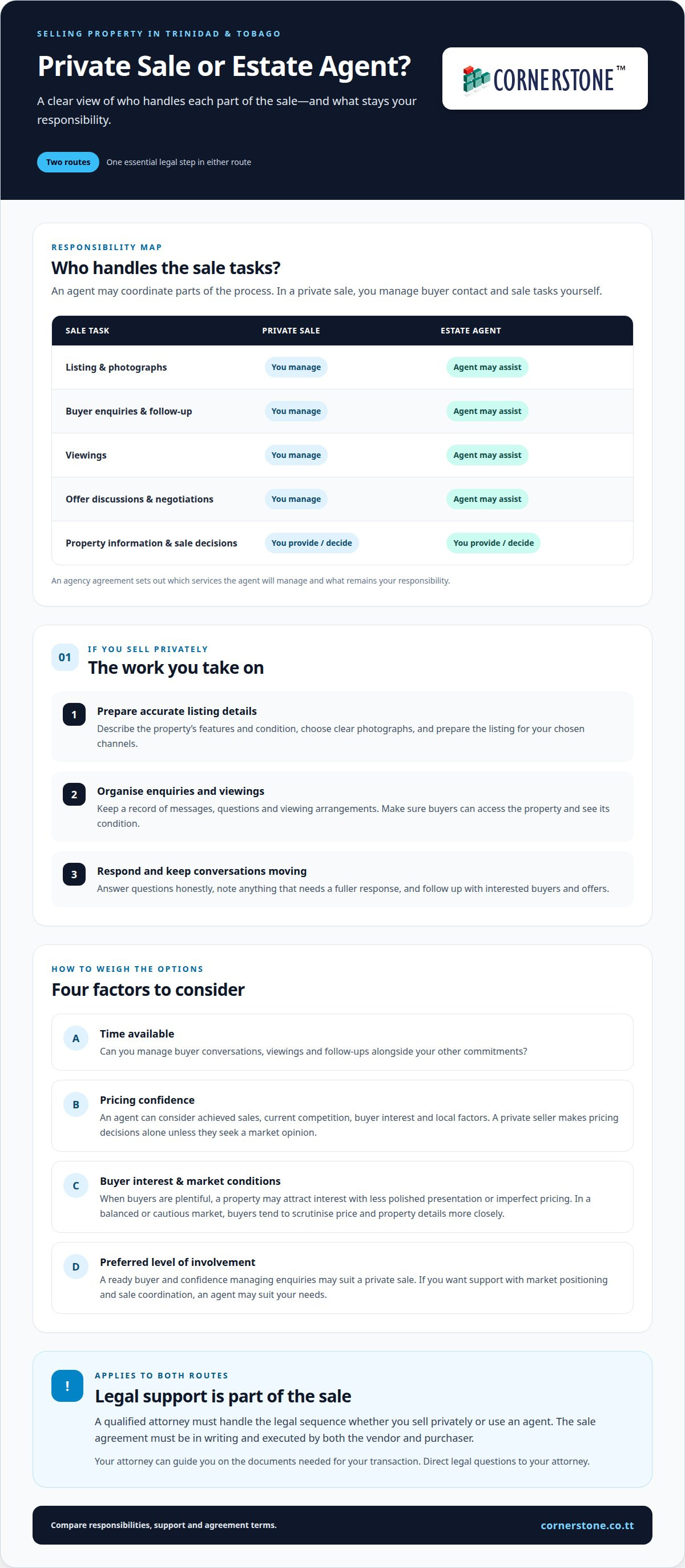
Selling privately means you control how the property is presented, when buyers visit and how you respond to offers. You are also responsible for organising enquiries and following up with interested buyers. Keep a simple record of messages, questions and viewing arrangements to track each conversation from the first enquiry.
Start with accurate listing details, including the property’s features and condition. Choose clear photographs that show the spaces buyers need to assess, then prepare the listing for the channels you plan to use. Before viewings, make sure buyers can access the property and see its condition. Answer questions honestly during visits, and note anything that needs a fuller response.
Selling your own property does not exempt you from the legal steps in a Trinidad and Tobago transfer. A sale agreement must be in writing and executed by both the vendor and purchaser. A qualified attorney must handle the legal sequence, whether you sell privately or use an agent. Your attorney can guide you on the documents needed for your transaction.
Buyers may ask for property details or request relevant reports as part of their due diligence. Keep property information organised, respond clearly, and direct legal questions to your attorney. Selling privately changes who manages the sale tasks, but buyers still have an opportunity to review information before proceeding.
| Option | Seller manages | Support |
|---|---|---|
| Private sale | Listing, photographs, enquiries, viewings and negotiations | Qualified attorney handles the legal sequence |
| Estate agent | Property information and sale decisions | Agent may assist with marketing, enquiries and viewings |
A private sale may suit you if you can manage buyer contact and viewings. If you want support coordinating the sale, an agent can help.
Estate Agents vs Private Selling in Trinidad and Tobago
In Trinidad and Tobago, an agent can help position your property by considering achieved sales, current competition, buyer interest and local factors. This can help you judge whether your asking price fits the market, rather than relying only on the asking price of a nearby listing. A private seller makes those pricing decisions alone unless they seek a property market opinion. Either way, consider presentation, condition and buyer interest.
An agent may also coordinate marketing, respond to enquiries, arrange viewings and help you negotiate offers. They can assess buyer interest and help keep the sale moving through solicitor, survey and mortgage stages. In a private sale, you manage those conversations and follow-ups yourself. That control may suit you if you already have an interested buyer and a well-supported asking price. An agent’s support may be more valuable when buyers are selective or negotiations become more demanding.
Market conditions affect how much these differences matter. When buyers are plentiful, a property may attract interest even with less polished presentation or imperfect pricing. In a balanced or cautious market, buyers tend to scrutinise the asking price and property details more closely. An agent can help you interpret the competition and adjust the presentation or asking price as interest develops. You still decide whether to accept an offer and which terms fit your plans.
How can you choose a reputable real estate agent in Trinidad and Tobago? Ask how they assess comparable achieved sales, competition and buyer interest, and how they will handle marketing, enquiries and negotiations. Before signing an agreement, read its terms, including the agent’s obligations and how the arrangement can end. Clear answers help you understand the working relationship before your property is listed.
Consider your available time, confidence in pricing and willingness to manage buyers directly. If you have a ready buyer and can handle enquiries and viewings, a private sale may suit you. If you want help with market positioning and sale coordination, an agent may be a better fit. Compare the support and responsibilities involved, not just the convenience of having someone manage sale tasks.
Compare the Sale Support Options
Compare the sale experience and the responsibilities involved. Consider who handles buyer communication, how offers are reviewed and which tasks you want to manage during the transaction.
Seller Responsibilities
Selling privately gives you direct control over buyer discussions, but also makes you responsible for managing enquiries and negotiations. An agent may take on some coordination, changing how involved you are at each stage.
When comparing options, consider how each route fits your plans. For example, can you keep buyer conversations moving while managing other commitments? Think about how you want offers presented and discussed, too. These practical differences help you assess the sale process and choose an approach that suits your property and preferences.
Agency Agreement and Support
An agreement with an agency describes your relationship and the services the agency will manage. Read the terms alongside the support offered so you understand what work is covered and what remains your responsibility. In a private sale, you manage the listing, buyer contact and negotiations yourself.
What support can a real estate agent provide in Trinidad and Tobago? The agreement with the agency sets out the services for that arrangement. Review the scope of support and the responsibilities described in the same agreement, rather than assuming every property sale follows identical terms.
Compare the Two Routes
For a useful comparison, list the sale tasks each route puts on you. With an agent, note where the agency manages communication or coordination. With a private sale, consider how you will handle listing updates, buyer questions and changing interest. This makes it easier to see what each option asks of you during the transaction.
Weigh those responsibilities against your schedule and preferred level of involvement. If you want to manage buyer contact directly, private selling gives you that control. If you prefer support coordinating parts of the process, an agent may better fit your needs. Choose the arrangement whose responsibilities and terms make sense for your sale.
Seller’s legal and disclosure responsibilities
Whether you sell privately or through an agent, the legal requirements for the transfer still apply. In Trinidad and Tobago, property transfers are principally governed by the Conveyancing and Law of Property Act, Chapter 56:01. Registered land is governed by the Real Property Act, Chapter 56:02. A qualified attorney handles the legal sequence, while you provide relevant property information and make decisions as the seller.
The sale agreement must be in writing and executed by both the vendor and purchaser. Before signing, review the property description and agreed terms with your attorney. Keep copies of the signed agreement and related communications together. If a buyer asks about the property’s condition, boundaries or included items, answer accurately and share relevant details with the attorney handling the transaction.
What taxes or transfer-related charges apply to property sellers in Trinidad and Tobago? Potential obligations include capital gains tax, property tax and stamp duty on land and non-residential property. Their application depends on factors such as the property, its holding period and the transaction, so account for them in your planning.
These obligations relate to different aspects of ownership and transfer. Capital gains tax concerns a gain on a property sale, while property tax relates to a property’s Annual Taxable Value. Stamp duty is associated with transfers of land and non-residential property. Consider these categories when assessing the transaction, and discuss how they apply to your circumstances with your attorney.
An agent may assist with communication, but you remain a party to the sale agreement and transaction. Private sellers manage more buyer contact directly. Gather the property records and details you hold, and share relevant information with your attorney. Clear records can help answer buyer questions and keep discussions focused on the property.
If you want local context for your plans, Cornerstone’s property market opinion provides market context, not a licensed valuation. You can request a property market opinion as you consider your next step.
Cornerstone
Cornerstone can help you weigh your selling options through property sales and a property market opinion. If you are unsure how to position your asking price or how much of the sale process you want to manage yourself, a market opinion can offer local context. It is guidance on the market, not a licensed property valuation. You can use that perspective alongside your priorities, such as handling buyer enquiries yourself or having support with the sale. The right approach depends on your property, your plans and the level of involvement you prefer. Cornerstone’s team shares open, data-driven guidance to help you consider those factors without pressure. If you would like to talk through your property and sale plans, contact Cornerstone.
Choose the sale approach that fits your plans
Before deciding between a real estate agent and selling privately, write down what you want the sale process to look like. Note which tasks you’re comfortable handling, where you’d value support and how involved you want to be in buyer conversations. This gives you a practical basis for deciding rather than focusing on a single feature of either route. Consider how the sale fits your next move, whether you plan to buy another home, rent out a property or change your plans. Cornerstone can discuss your options in light of your circumstances, rather than offering a one-size-fits-all answer.
If you’re ready to talk through your plans, contact Cornerstone about your property sale. Take the next step at a pace that feels right for you.
Frequently Asked Questions
Are there any risks to selling my house privately?
Yes. You may misjudge the asking price, miss buyer questions or lose momentum while managing enquiries and viewings. Slow replies, for example, can reduce an interested buyer’s engagement, while incomplete property details can complicate discussions. Keep records of offers and communications, share accurate information and have an attorney handle the legal transaction. Private selling gives you control, but also puts more sale tasks in your hands.
Can I switch from an agent to a private sale?
You may be able to change your selling approach, but first review the agency agreement you signed. It may explain how the arrangement ends and whether any responsibilities continue in certain circumstances. For example, an agent may have introduced a buyer before you decide to sell privately. Read the agreement’s terms and discuss legal questions with your attorney before changing course.
What should I consider when selling property privately?
Consider the work involved in preparing the property, managing property marketing, responding to buyer enquiries and arranging viewings. You will also need to keep records of offers and communications and coordinate the sale process with your attorney. Think about the time you can give these tasks and the support you may need.
What should I know about selling property in Trinidad and Tobago?
When selling property in Trinidad and Tobago, consider how much time you can give to property marketing, buyer enquiries and negotiations, and whether you want an agent’s support. The right approach depends on your circumstances and the terms of any arrangement you enter into. An attorney can handle the legal transaction.
What should I consider before selling privately?
Consider whether you can manage the listing, enquiries and offers, and keep buyers informed throughout the process. Think about how you will respond to questions, arrange viewings and handle negotiations. A useful first step is to clarify the tasks you will take on and the support you may need.
What are the pros and cons of using a real estate agent versus selling privately in Trinidad and Tobago?
An agent can help with property marketing, buyer enquiries and offer discussions, while private selling gives you direct control over those tasks. The trade-off is the time and attention needed to keep buyers engaged and respond consistently. Either way, an attorney handles the legal transaction. Consider your comfort with buyer conversations, the time you can give the sale and how much support you want.