
A Trinidad and Tobago home purchase may qualify for a stamp duty exemption, depending on whether you’re buying a house, land, or both. A stamp duty calculator for a residential property purchase in Trinidad and Tobago in 2026 can help you estimate the duty using your purchase details.
This guide explains when stamp duty is due and how property type and homeowner eligibility affect the calculation, helping you understand the steps involved in your purchase with Cornerstone.
Key Takeaways
- Identify whether your purchase is a house with land or land alone, as the exemption rules differ.
- Work out which property and transaction details affect the stamp duty calculation before estimating what may be due.
- Use the conveyance paperwork and your purchaser status to establish which residential rules apply to your purchase.
- Cornerstone can help with a property sale, rental, market opinion, or management if you need support beyond understanding stamp duty.
Residential Property Stamp Duty Exemptions
A residential property stamp duty exemption is relief from duty on a qualifying property transfer. In Trinidad and Tobago, the applicable exemption depends on whether you’re buying a dwelling house, residential land, or both.
A house-and-land exemption is relief that may apply when a dwelling and its land are bought together. The Inland Revenue Division says the first-time homeowner exemption applies to a house or a house and land together, but not to residential land alone. For joint buyers, each purchaser’s status can affect which exemption limit applies, so record all purchasers correctly in the conveyance.
A residential land exemption threshold is the value boundary below which qualifying land may receive relief. Land-only purchases follow a different exemption rule from purchases that include a dwelling house. First-time homeowner status does not extend the house-and-land exemption to vacant land purchased on its own. The property description in the transfer documents helps distinguish these cases.
Does stamp duty differ for a house, a condominium, or vacant residential land in Trinidad and Tobago? The rules distinguish a dwelling house or house-and-land purchase from residential land bought on its own. A condominium’s treatment depends on how the property is described in its transfer documents, so don’t assume it follows the land-only rule.
What information and documents are needed to calculate residential property stamp duty in Trinidad and Tobago? You need the purchase details, property description, and each purchaser’s first-time homeowner status. The draft conveyance helps establish whether the transfer covers a dwelling, land, or both.
A Trinidad and Tobago residential stamp duty calculator should use the local property category and exemption criteria. A calculator designed for another country’s transfer tax rules can’t establish the applicable Trinidad and Tobago treatment. A mortgage deed is separate from a conveyance, so assess its stamp duty separately. Review the purchase agreement and draft transfer documents together to ensure the property description and transaction details align.
How Stamp Duty Is Determined
In Trinidad and Tobago, the property type and transfer documents help determine how stamp duty applies. A 2026 stamp duty calculator for a residential property purchase in Trinidad can help organize the relevant details. Review the documents and property description to identify the type of transfer before considering the applicable rules.
How the transfer is classified
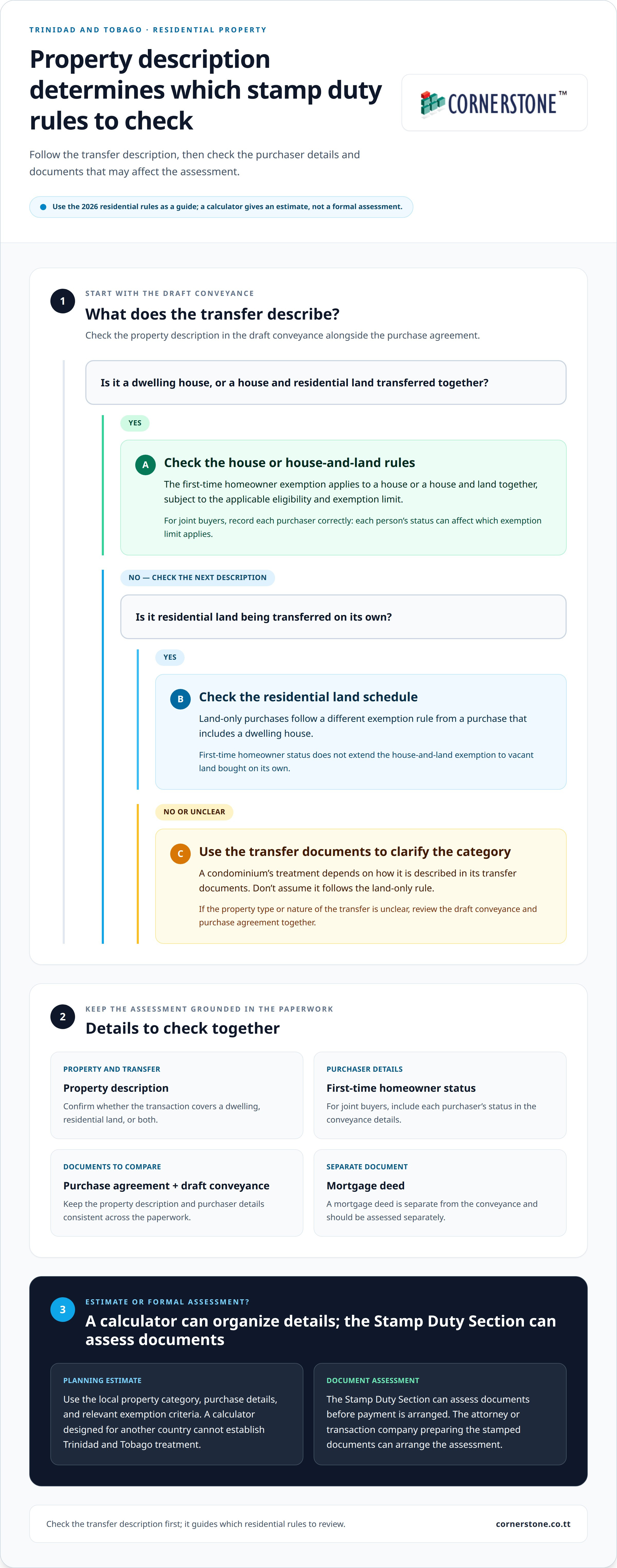
The property’s legal description helps identify what is being transferred. A dwelling and residential land may follow different schedules, so check the property category shown in the transaction documents. The draft conveyance helps identify the property and the nature of the transfer. Reviewing it alongside the purchase agreement can help you understand which residential schedule may apply. If you are unsure how the documents describe the transfer, seek appropriate guidance before proceeding.
Residential property categories and exemptions
Dwelling houses and residential land have separate schedules in Trinidad and Tobago, so the rules that apply depend on the property type. The current residential rules also provide exemptions, which can affect whether duty applies. A calculation therefore needs to account for the relevant schedule and any exemption that fits the purchase. A residential property purchase stamp duty calculator for Trinidad in 2026 needs these same distinctions.
How do you identify the residential rules that apply in Trinidad and Tobago? First, check whether the transfer concerns a dwelling house or residential land. The applicable schedule and any exemption depend on the transaction category, so one description may not fit every residential purchase.
To assess a purchase, follow this sequence: identify what the conveyance transfers, determine the relevant transaction category, then refer to the matching residential schedule and check whether an exemption applies. Keep the purchase agreement and draft conveyance together, since they describe the transaction and property. If the paperwork treats a dwelling and land as part of one transfer, review the recorded transaction. A separate land-only transfer is considered under its own residential land schedule.
Stamp Duty on Trinidad and Tobago Home Purchases
Stamp duty applies to certain legal documents used in real estate transactions, including home purchases. It relates to the instrument recording the transaction, rather than being a general charge for simply owning a home. The document and transaction details therefore matter when working out what duty applies.
For a buyer, the sale agreement records the agreed terms, while the conveyance records the transfer of the property. Keep these documents consistent about the property and the parties involved. If the description or purchaser details change during the transaction, the paperwork may need to reflect those changes before stamping.
A registration fee is separate from stamp duty and may apply to a property transfer. The applicable fee depends on the title system used for registration. Treat these as distinct items in your purchase planning, rather than assuming stamp duty covers every document-related charge.
Are there additional taxes or registration fees besides stamp duty when buying a home in Trinidad and Tobago? A registration fee may be payable separately, depending on the title system used for the transfer. Stamp duty and registration are separate parts of the transaction, so account for them as distinct items in your paperwork.
If your purchase includes a mortgage, its deed is another legal document in the transaction. It may have its own stamp duty treatment, separate from the transfer of the home. Keeping the conveyance and mortgage paperwork distinct helps you understand which transaction each document records and keeps their separate obligations clear.
How to Confirm the Applicable Stamp Duty
Confirmation is the formal assessment of stamp duty on your transaction documents. A calculator can provide an estimate, but the Stamp Duty Section can assess documents before you arrange payment. This is useful when you need confirmation rather than an early planning estimate.
For a 2026 purchase, use this sequence to confirm the assessment:
- Ask the attorney or transaction company preparing the stamped documents to arrange the assessment.
- Have the relevant documents assessed by Stamp Duty Section staff before arranging payment.
- Refer to the assessment when arranging payment for the documents.
This sequence helps you avoid arranging payment before the documents have been assessed. The duty due is tied to the documents presented, so an estimate should not replace the assessment. Keep the assessed paperwork with your transaction records so you can refer to it if questions arise while the transfer is being completed.
What are Trinidad and Tobago’s residential property stamp duty rates for 2026? The rates are set out in separate schedules for residential property transactions, and the applicable duty follows the schedule relevant to the deed. A calculator’s result is only useful when it reflects that schedule and the assessment of the documents.
If a calculation differs from the assessment, ask the person handling the transaction to explain the difference using the documents. This keeps the discussion focused on the details applied to your purchase. Confirming the assessment before arranging payment helps you rely on the assessed duty rather than an estimate alone.
How Cornerstone Can Help
Cornerstone can support your property plans as you work through the purchase details and stamp duty paperwork. Its role is to help with property decisions, not to calculate or handle legal conveyance documents.
If you’re buying or selling, Cornerstone can help with property sales. A property market opinion can give you insight into a property’s market position as you consider a purchase or sale. It isn’t a licensed valuation, so it serves a different purpose from a formal valuation.
For landlords and tenants, Cornerstone offers property rentals. If you own a property and need ongoing support, Cornerstone also provides property management. These services can help with the practical side of owning, renting, or managing property, while stamp duty remains a separate part of the transfer process.
For example, a buyer considering a home purchase may need to weigh the property’s market position alongside the conveyance paperwork. A seller preparing to list can seek a market opinion while planning the sale. A landlord may turn to property management for help overseeing a rental property. The right support depends on your property plans.
Stamp duty rules depend on the property and transaction documents. Cornerstone’s property services can help you make informed real estate decisions about a sale, rental, or ongoing management, but they don’t replace the formal process for preparing and stamping conveyance documents. Keeping those roles clear helps you understand where property guidance fits into your next steps.
If you’re considering a sale, rental, market opinion, or property management, you’re welcome to contact Cornerstone for a conversation. There’s no pressure to make a decision before you’re ready.
Frequently Asked Questions
When do I need to pay Stamp Duty?
Stamp duty is usually arranged while the conveyance documents are being prepared and stamped. An attorney or the company handling the transaction typically prepares the required documents and pays on your behalf. Ask how stamping fits into your purchase timeline, especially if a mortgage deed is also involved, since it is a separate document with its own stamp duty treatment.
What documents should I prepare?
Gather the purchase details and information about each purchaser’s status. Your attorney or the company handling the transaction can advise which documents are needed for the conveyance. If a mortgage is involved, ask whether any additional documents are required for the mortgage deed. Having the relevant information ready can help the parties prepare the paperwork for the transaction.
Must the property be owner occupied to be entitled to the First Time Homeowner exemption?
The exemption is tied to qualifying first-time homeowner status and an eligible purchase, such as a house or a house and land together. The Inland Revenue Division also states that a purchaser must inform the Board of Inland Revenue if the property’s use changes within the specified period. Consider both purchaser eligibility and the property’s intended use.
What if I already own a property?
Owning a property may mean you don’t qualify for the First Time Homeowner exemption. That doesn’t automatically rule out every exemption: a separate one may apply to a qualifying house-and-land purchase. If you’re buying with someone else, each purchaser’s status can affect the exemption available. Make sure the conveyance reflects all purchasers and the property being transferred.
Where can I find more information?
For guidance on stamp duty, consult the Inland Revenue Division’s Stamp Duty Section. It can assess transaction documents and help establish how the relevant rules apply to the deed. Have the draft conveyance, purchase details, and information about each purchaser’s status ready. These details help distinguish a house transfer from a land-only purchase.
What should I check in the conveyance documents?
Check that the conveyance accurately identifies the property being transferred and includes the details of all purchasers. If you are buying a house and land together, confirm that the documents reflect that. Your attorney can explain how the relevant stamp duty rules apply to the deed and whether an exemption may be available based on the purchaser’s status and intended use of the property.