

In Trinidad and Tobago, the agreement for sale 90-day closing timeline generally means paying a 10% deposit when you sign and the balance within 90 days of the agreement date. A conveyance on sale is the legal transfer of the property from seller to buyer, and the agreement sets out the terms that guide this process.
It’s reasonable to focus on the payment deadline, but the steps before completion matter too: title checks, mortgage releases and other documents can affect progress. This guide explains how the payment terms and completion documents fit the timeline, what may happen if you miss a deadline, and how the agreement’s wording can affect your deposit.
Key Takeaways
- Understand what an agreement for sale records and why its written terms matter to a property transaction.
- Learn how missed deadlines, extension terms and breach may affect your deposit.
- See how title checks, mortgage releases and vendor documents can shape the path to completion.
- Find out how payment arrangements for a pre-sold home may differ from a standard sale.
Consequences of breach and deposit forfeiture
In Trinidad and Tobago, a customary property purchase deposit is 10% of the agreed sale price when buyer and seller enter an Agreement for Sale. The general payment arrangement is a deposit on signing, with the balance due within 90 days of the agreement date. These deadlines form part of the written terms, so the signed agreement guides the transaction.
What clauses protect buyers and sellers in an agreement for sale in Trinidad and Tobago? The agreement should clearly set out the deposit, payment deadlines, how an extension is handled and the consequences of a breach. A property-damage clause can also give the purchaser the option to terminate and recover the deposit if the property is damaged.
A purchaser may arrange for a residential-property deposit to be held by a stakeholder, such as a bank or attorney, in an interest-bearing account. This keeps the funds separate from either party’s personal money while the sale progresses. The agreement should state who holds the deposit and what happens to it if the sale completes or falls through.
If the purchaser cannot complete within the stated 90 days, they must seek an extension. Without one, the seller can forfeit the deposit. Where the agreement makes time of the essence, even being one day late paying the balance may lead to termination and forfeiture. The exact deadline and any extension terms matter, so a delay should not be treated as automatically harmless.
If a purchaser breaches the agreement without lawful excuse, the deposit is forfeited. The treatment of the deposit after a vendor breach can depend on the agreement. For example, a purchaser who misses the payment deadline without an agreed extension risks losing the deposit. Property damage may give the purchaser a different option, but only if the agreement provides for termination and recovery in that situation.
Mortgage releases and other completion documents
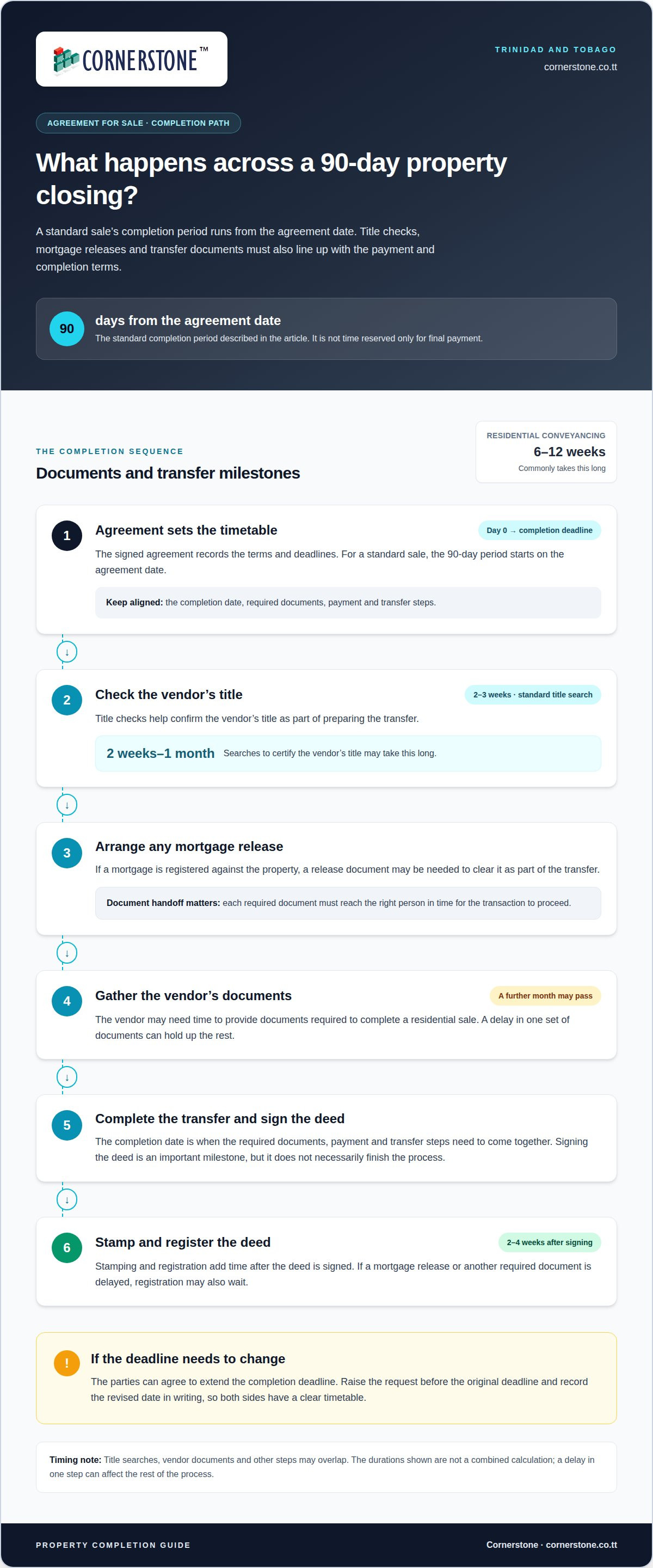
A standard property sale agreement in Trinidad and Tobago usually sets a 90-day period for completion. The completion date is the point by which the required documents, payment and transfer steps need to come together. A residential conveyancing transaction commonly takes six to twelve weeks, so the agreement’s deadline can leave limited room for delays.
Can the parties extend a 90-day closing deadline in Trinidad and Tobago, and how? Yes, the parties can agree to extend it. Raise the request before the original deadline and record the revised completion date in writing, so both sides have a clear timetable.
A vendor’s mortgage can affect the documents needed to complete a sale. If a mortgage is registered against the property, a release document may be required to clear it as part of the transfer. The purchaser’s side also needs the documents required for the transfer and, where applicable, mortgage completion. Each document must reach the right person in time for the transaction to proceed.
Title checks and vendor documents take time. A standard title search can take two to three weeks, while searches to certify the vendor’s title may take between two weeks and an entire month. A further month can pass while the vendor provides documents needed to complete a residential sale. These steps may overlap, but a delay in one set of documents can hold up the rest.
After the deed is signed, stamping and registration in a standard conveyancing transaction add two to four weeks. That means signing the deed does not necessarily mark the end of the process. For example, if the vendor’s mortgage release or another required document is delayed, registration may also wait. Keep the completion date, document progress and any agreed extension aligned, rather than treating the 90-day period as time reserved only for final payment.
Agreement for Sale payment terms
Payment terms set the financial timetable for a property transaction. In a typical Trinidad and Tobago sale, the purchaser pays a 10% deposit when signing the Agreement for Sale, then pays the balance within 90 days of the agreement date. For your agreement-for-sale 90-day closing timeline in Trinidad, the signed contract is the key reference for payment triggers and deadlines.
Read the payment clauses alongside the agreement’s covenants, meaning the promises each party makes. The purchaser’s payment obligation and the vendor’s obligations to complete the sale are parts of the same transaction. For example, a clause may link payment of the balance to delivery of the documents needed for transfer. The written terms explain how each party’s actions affect the agreed process.
Some payment schedules differ, particularly for a pre-sold home. A typical schedule includes a 10% deposit when the agreement is signed, followed by a further 10% when the roof is installed. The balance is usually due within 90 days of the property’s completion. That completion-based deadline differs from a standard sale’s 90-day period, which runs from the agreement date.
This distinction matters when planning funds. With a standard sale, the agreement date starts the stated payment period. With a pre-sold home, roof installation and property completion are payment milestones. If you’re buying a home under construction, make sure the written schedule identifies those milestones and explains when each payment falls due. These details help you map your agreement-for-sale 90-day closing timeline in Trinidad to the contract’s actual terms.
For either type of purchase, keep the signed agreement and payment records together. Make sure each payment follows the amount, trigger and deadline written in the contract. If a milestone changes or both parties agree to a different timeframe, record the revised terms in writing. Clear payment clauses help you track your obligations and understand what follows if the transaction does not proceed as planned.
What does an agreement for sale mean in Trinidad and Tobago?
An Agreement for Sale is a written contract that sets out the terms of a property purchase. A conveyance on sale is the transfer of the property from the vendor to the purchaser. The agreement records what the parties promise to do before that transfer is completed. It is not the same document as the deed recording the conveyance.
Section 4 of Trinidad and Tobago’s Conveyancing and Law of Property Act requires a contract for the sale of land, or a memorandum of it, to be in writing and signed by the party to be charged for an action to be brought on it. In practical terms, the written and signed record matters if a dispute arises over the agreement.
The agreement gives both parties a reference point for the transaction. It can identify the property being sold, set out payment arrangements and the completion deadline, and explain what happens if an obligation is not met. For example, if the purchaser and vendor later disagree about a deadline, they can refer to the signed terms.
Property title in Trinidad and Tobago can fall under different legislation. The Conveyancing and Law of Property Act, Chapter 56:01, governs Old Law land. The Real Property Act, Chapter 56:02, governs registered-title RPO land. The title system matters because the records used to establish ownership differ, so the agreement and supporting documents should relate to the property being transferred.
Before signing, have an attorney review the title deed or deed of lease, as applicable. That review can help identify whether the stated property and ownership documents match the transaction. Keep the signed Agreement for Sale with its supporting records, including any written changes agreed by both parties. If you’re planning a purchase or sale, contact Cornerstone about property sales as you consider your next step.
Cornerstone: Property sales
Cornerstone can help if you’re preparing to sell a property or considering a purchase in Trinidad and Tobago. Its property sales service can guide you through the sale process and help you consider how a property fits your plans. If you’re weighing an asking price, Cornerstone also offers a property market opinion. This is market guidance, not a licensed valuation or legal conveyancing service. An attorney handles legal advice and conveyancing, including review of the Agreement for Sale and transfer documents. If you’re planning a sale or purchase, contact Cornerstone to discuss the property and the support you need.
Take your next property step with care
As you plan your next steps, consider how the property fits your wider goals, whether you’re preparing to sell, buying a home or weighing a rental investment. A clear sense of your priorities can help guide your decisions along the way.
Cornerstone’s real estate team brings experience in Trinidad and Tobago property matters and can help you explore your next step. If you’d like to talk through your plans, contact Cornerstone about your agreement. Take the conversation at a pace that feels comfortable for you.
Frequently Asked Questions
Is a 90-day closing period standard for property sales in Trinidad and Tobago?
Yes, a 90-day completion term is commonly used in Trinidad and Tobago property sale agreements. It is a contractual timetable, so the signed agreement sets the deadline for your particular transaction. Check how the agreement defines completion and whether the date depends on a specific event. That detail helps you understand which obligations must be met by the deadline.
When does the 90-day closing period start under a Trinidad and Tobago agreement for sale?
For a standard resale, the period is generally counted from the agreement date recorded in the signed contract. It does not begin when your lender approves a mortgage or when a title search finishes. If the agreement specifies a different trigger, that wording controls. Make sure you and the vendor are working from the same recorded date.
What steps must buyer and seller complete during a 90-day property closing in Trinidad and Tobago?
The buyer and seller coordinate the contract requirements, financing, property transfer and any conditions written into their agreement. For land purchases, buyers should confirm that the Town and Country Planning Division has approved the parcel for residential development. This check is especially relevant if your intended use depends on residential approval. The agreement’s conditions determine what each party must complete.
How long do conveyancing, title searches, and mortgage approval usually take in Trinidad and Tobago?
Timing depends on the property records, how complete the vendor’s documents are and the lender’s review of your mortgage application. Title defects or missing information can add work before the transaction is ready to complete. Mortgage approval depends on the lender’s assessment of your application and supporting documents. These processes can run alongside one another, so a delay in one may affect the overall timetable.
What are the buyer’s deposit and payment deadlines under a Trinidad and Tobago agreement for sale?
The agreement sets out the purchaser’s deposit and payment obligations, including when each amount is due. Read the clauses to identify the payment recipient, any milestone that triggers payment and the stated completion date. If you and the vendor change a payment arrangement, keep the revised terms in writing. This helps distinguish an agreed change from a missed obligation.
What happens if a buyer or seller misses the closing date in Trinidad and Tobago?
The agreement’s wording and the party responsible for the breach shape what follows. A late payment or incomplete obligation can put the transaction at risk, especially if the contract makes deadlines strict. If a problem arises, record the issue and any proposed resolution in writing. The parties’ rights and remedies depend on the contract terms and the circumstances of the breach.