
For a freehold vs leasehold property purchase in Trinidad, freehold gives you ownership of the land and building without a fixed expiry date. Leasehold gives you rights for a defined period under a lease. Neither is automatically the better choice: freehold may suit you if lasting ownership matters most, while leasehold may fit your plans if you understand the remaining term and its conditions.
It’s reasonable to ask whether leasehold is a poor investment. Its value may decrease as the lease gets shorter, and the property may return to the landowner when the term ends unless the lease is renewed. Another key point is that transferring leasehold ownership requires approval from the state or lessor, so the process differs from a freehold sale.
This guide compares ownership, lease terms, ongoing responsibilities, transfer approvals and long-term value, then gives you a practical way to weigh the options against your plans. You’ll come away knowing what to examine before deciding which type of property fits.
Key Takeaways
- Compare what each title gives you: freehold has no fixed expiry date, while leasehold rights last for the term set out in the lease.
- Before pursuing a leasehold transfer, account for the required approval from the state or lessor, as this can affect the transaction process.
- Look beyond the current lease terms and consider how a shorter remaining term, renewal conditions, and possible reversion could affect your long-term plans.
- Use your ownership goals, responsibilities, and plans for the property to decide which option deserves a closer look.
Approval requirements for transferring leasehold property
In Trinidad and Tobago, transferring a leasehold property requires approval from the state or lessor. This matters when a buyer takes over the lease, not just when the seller agrees to sell. Early on, identify who grants approval and what the lease requires. A leasehold transfer is not the same as a freehold sale, because the lessor’s role may be part of the process.
Foreign nationals should also consider the Foreign Investment Act, which governs certain property purchases by non-citizens. Leasehold transfers separately require state or lessor approval. That requirement alone does not establish every approval a foreign buyer may need.
For either title type, first identify what interest the seller can transfer. Have a real estate attorney familiar with Trinidad and Tobago property law review the sale agreement and explain your rights. For leasehold, the attorney can also assess the transfer conditions and approval process set out in the lease. For example, establish whether the lessor’s approval is required before a buyer takes over the lease.
| Property option | Transfer approval | Key point to assess |
|---|---|---|
| Freehold | No leasehold lessor approval requirement applies | Confirm the title and sale terms |
| Leasehold | State or lessor approval is required | Review lease conditions and approval steps |
Choose the option whose transfer conditions you understand and can accommodate, especially when buying leasehold.
- Identify the title. Establish whether the property is freehold or leasehold before relying on the seller’s description.
- Review the documents. Ask a real estate attorney to examine the sales agreement and, for leasehold, the lease’s transfer terms.
- Clarify approval. For leasehold, identify whether the state or lessor must approve the transfer and what the lease requires.
- Plan the transfer. Confirm that required approval is addressed as part of the transaction, rather than assuming the signed sale agreement completes it.
Comparison of ownership, control and long-term value
In Trinidad and Tobago, freehold ownership covers the land and building indefinitely, subject to land laws and title restrictions. You can transfer or inherit freehold ownership, and you are responsible for maintaining the land and repairing the property. That control also means planning and arranging upkeep yourself.
Leasehold gives you rights for the period set out in the lease, rather than indefinite ownership. The lease defines what you can do and which obligations continue during your ownership. A leaseholder’s responsibilities may differ from a freehold owner’s, so read the specific agreement to understand the limits and duties attached to the property.
There is no universal rule that one title type is easier to finance. A lender assesses the property and proposed borrowing. With leasehold, the remaining term is a key consideration because the ownership rights have a defined end; a shorter term may affect how a lender views the property as security. Freehold has no fixed expiry date, but that alone does not ensure mortgage approval.
Long-term value also depends on how much time remains on the lease. Leasehold property value may decrease as the term shortens, while freehold ownership has no set expiry. In some cases in Trinidad and Tobago, a leaseholder may have an option to buy the freehold title. Treat this as a possibility, not an automatic right, and review the lease for any related terms.
Compare the choices against your intended holding period and appetite for responsibility:
- Choose freehold for lasting ownership: you hold the land and building indefinitely and handle maintenance.
- Consider leasehold for a defined term: review the lease, remaining term, transfer conditions, and responsibilities before committing.
- Assess long-term plans: consider whether the lease term fits your plans and whether a freehold purchase option applies.
The better fit depends on how you weigh lasting ownership, lease conditions, upkeep and the time you expect to hold the property.
Lease terms and renewals
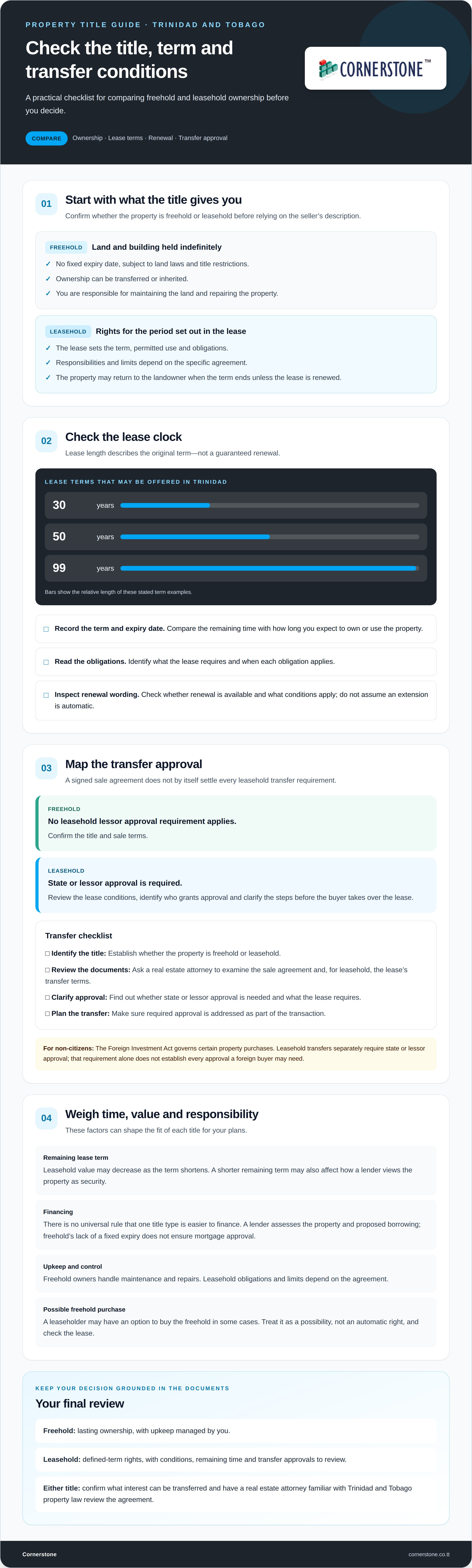
Leasehold properties in Trinidad may be offered for terms of 30, 50, or 99 years. Those periods describe the lease, not a guaranteed renewal. A 99-year lease still has a defined end, while a shorter term leaves less time under its original conditions. For a freehold vs leasehold property purchase in Trinidad, compare the stated term with how long you expect to own or use the property.
Read the relevant lease clauses to understand the obligations and conditions that apply. Check when each obligation applies rather than assuming every lease works the same way.
Pay close attention to renewal terms. The lease should explain whether renewal is available and what conditions apply. Don’t assume an extension is automatic or that existing conditions will remain unchanged. If renewal matters to your plans, review the wording before deciding whether the property suits your intended holding period.
Before making an offer, review these points in the lease:
- Term: Record the lease length and stated expiry date. A 50-year term differs from a 99-year term in how long the original rights last.
- Obligations: Identify the obligations described in the agreement.
- Renewal: Read the clauses covering renewal and the conditions attached to extending the term.
- Remaining time: Consider how much of the lease remains when you buy. A shorter term can affect long-term plans and property value.
These checks help you compare the lease’s obligations with your plans. In a freehold vs leasehold property purchase in Trinidad, assess the remaining term and renewal wording together. A lease may have fewer years left by the time you buy than it had when first granted, so focus on the current term, not its original length.
What happens when a leasehold property lease expires in Trinidad and Tobago?
At the end of a leasehold term in Trinidad and Tobago, ownership of the land and building may revert to the landowner unless the lease is renewed. The expiry date marks the end of the period granted by the agreement. Don’t assume your rights continue beyond that date without renewal. The lease wording and any steps taken before expiry shape the options available to you.
Start by finding the expiry date and reading the clauses about renewal. These terms matter if you want to stay in the property or continue using it after the current term. An option to renew is not the same as an automatic extension. Check the process and conditions in the agreement, and don’t treat renewal as settled before those terms are addressed.
Some leaseholders in Trinidad and Tobago may have an option to buy the freehold title. This is separate from renewing the lease: renewal continues the lease under agreed terms, while buying the freehold changes the ownership arrangement. If either route could suit your plans, identify the relevant wording and consider the timing before the lease expires. The specific agreement determines whether an option is available.
Use the expiry date to organise your decision:
- Find the key terms. Note the expiry date and clauses about renewal, buying the freehold, or what follows when the term ends.
- Match the timing to your plans. Consider whether the remaining term covers the period you expect to use or own the property.
- Choose a direction. Decide whether you would explore renewal, consider a freehold purchase option if one applies, or plan to leave when the lease ends.
- Review the agreement early. Give yourself time to understand the available choices before reaching the stated expiry date.
For example, a property granted on a 99-year lease may have fewer years remaining when offered for sale. The original term alone does not show the current position. Consider the remaining period, the agreement’s renewal wording, and any freehold purchase option together when planning beyond the lease.
Cornerstone
Cornerstone helps people explore property options in Trinidad and Tobago as they weigh freehold against leasehold ownership. If you’re considering a purchase, Cornerstone’s property sales and market opinions can help you understand available opportunities and local market context. If you already own a property, rentals and property management may also fit your plans. The right next step depends on how you intend to use the property and whether its title supports those plans. For lease terms, transfer approvals and legal rights, rely on the relevant documents and advice from a real estate attorney. Contact Cornerstone to discuss your property plans.
Take Your Next Property Step With Confidence
Connect your ownership choice to what you want from the property over time. For a freehold or leasehold property purchase in Trinidad, consider how long you plan to hold it and which responsibilities fit your plans. The right choice should suit your intended use, not just look appealing at the point of purchase.
Cornerstone supports property plans through property sales, rentals and property market opinions. If you’re still weighing options, a market opinion can provide local context as you consider available properties. For legal questions about title or lease terms, consult a real estate attorney familiar with Trinidad and Tobago property law.
Take the time you need to make a considered decision. Cornerstone’s team brings experience in Trinidad and Tobago real estate, and we are here to help. Contact Cornerstone to discuss your options, and move forward at a pace that feels right for you.
Frequently Asked Questions
Does Leasehold Mean a Bad Investment?
No. The title alone doesn’t determine whether an investment is suitable. Consider your intended use, how long you plan to hold the property and whether you could sell it on your preferred timeline. A buyer seeking a home for personal use may weigh different factors from someone focused on resale. Review the specific documents and don’t assume future returns.
Is it freehold or leasehold?
Use the property documents to identify the title rather than relying only on an advertisement or verbal description. The sale agreement and title records can help clarify what interest is being transferred. If the documents use unfamiliar wording or seem inconsistent, ask a real estate attorney familiar with Trinidad and Tobago property law to explain them before proceeding.
What Is a Freehold Property?
A freehold property is held under a title without a fixed lease term. For a particular property, review the title documents to confirm which land and building are included in the sale, along with any stated restrictions. This helps you understand what the seller is offering rather than relying on the word “freehold” alone.
What Is a Leasehold Property?
A leasehold property is held under an agreement that grants rights for a stated period. To understand a specific property, review the lease and sale documents together. Check that the property being offered matches the lease description, and note any conditions that could affect your intended use. An attorney can explain any unclear clauses.
What type of land is it?
“Type of land” can refer to the ownership title or to how the land is described in property documents. Start by identifying which meaning you need. For a purchase, review the title and sale agreement to confirm the land included in the transaction. If the descriptions differ or are difficult to interpret, ask an attorney to explain them before deciding.
What is the difference between freehold and leasehold property in Trinidad and Tobago?
The practical distinction is whether your property rights come through a title without a fixed lease term or through a lease for a stated period. To compare specific properties, list the documents, conditions and responsibilities attached to each. Then consider which arrangement better fits your intended use and ownership plans. A real estate attorney can explain the legal wording.