






Selling privately or with an estate agent are both ways to sell a house in Trinidad and Tobago. After an Agreement of Sale is signed, the buyer and seller can proceed through the remaining steps, though the time to completion may vary. The route you choose can shape how you find a buyer and manage the steps along the way.
Before committing to a sale, it helps to understand the process and the costs that may arise. This guide explains how to agree on the terms, how Stamp Duty and registration fit into the transfer, and what can affect timing, so you can plan your next move with fewer surprises.
Key Takeaways
- Understand what to agree with the buyer and why the written sale agreement matters before the transfer moves forward.
- Map out the transaction expenses and identify which costs are generally associated with the seller and which with the buyer.
- Learn what can affect the time between signing the agreement and completing the property transfer.
- See how Stamp Duty and registration fit into the process, including the difference between residential and other property transactions.
Agreeing on the sale and signing an Agreement for Sale
To understand how to sell a house in Trinidad, start by agreeing with the buyer on the terms. A written agreement records what both sides accept and gives them a shared reference as the sale proceeds.
Agreeing to the Sale
An agreement to sell records the buyer’s and seller’s decision to proceed on specific terms. Clear conditions, included items, and handover arrangements help both sides understand what they have accepted. For example, if kitchen appliances are included, list them in the agreed terms rather than relying on a conversation.
Before signing, settle which conditions must be met before completion. Discuss the expected handover date and how the buyer will arrange the remaining payment. If the offer depends on financing or another condition, make sure it is described clearly. Knowing how to sell a house in Trinidad includes recording these arrangements in writing.
The Agreement of Sale and Buyer Deposit
The Agreement of Sale records the terms accepted by the buyer and seller. It sets out what each party has agreed to and provides a reference as the transaction moves forward. The Agreement of Sale should set out any deposit arrangement agreed by the buyer and seller.
The agreement should explain the deposit arrangements, the balance due, and any conditions for completion. Set out the deposit separately from the remaining payment in the written terms. This gives both parties a clear record of what is due at each stage, without relying on memory or informal messages.
Take care with changes made after signing. If the buyer and seller agree to revise a term, record the change in writing so it does not conflict with the original agreement. When learning how to sell a house in Trinidad, keep a clear record of agreed conditions and handover arrangements to help the transaction stay on track toward completion.
Legal fees and other transaction costs
When planning a sale in Trinidad and Tobago, account for title checks, legal work, agent arrangements, and possible taxes. The amounts and who is responsible depend on the transaction and the terms agreed by the parties.
Title Searches and Legal Due Diligence
A title search checks recorded ownership and interests attached to a property, while legal due diligence reviews documents relevant to the transfer. These checks matter because ownership details or existing interests can affect whether the sale proceeds as planned. Together, the search and review help clarify the property’s legal position before completion.
Keep the property’s title documents and sale details available for review. For example, if the ownership records identify more than one owner, the transfer must account for each owner’s interest. A clear review helps identify issues that need attention before the transaction advances.
Legal Fees and VAT
Legal fees cover legal work involved in preparing and completing a property transfer. The research figures give a typical range of 0.5% to 1.5% of property value, plus 12.5% VAT. These amounts are general transaction estimates, not a quote for your sale.
VAT is added to the legal fee, so keep it separate when reviewing an estimate. The work required and the details of the transaction affect the final amount. Ask for a written breakdown separating professional fees, VAT, and other disbursements.
Agent Fees and Commissions
An estate agent commission is the fee for agency work connected with a property sale. In Trinidad and Tobago, the typical commission is 3% to 5% of the sale price, payable by the seller. This can affect the net proceeds you plan to receive from the transaction.
Before agreeing to an agent’s terms, clarify how the commission is calculated and when it becomes payable. Record the arrangement in writing, including the agency work it covers. This makes the expected deduction easier to account for when reviewing an offer.
Taxes and Government Fees
Taxes linked to a sale can depend on the property and how long you have owned it. Gains from disposing of a chargeable asset within 12 months of acquisition are subject to tax at 25%. Property tax liability can depend on a property’s taxable value.
Stamp Duty applies to many real estate transactions, and the buyer is principally responsible for paying it. The applicable treatment depends on the transaction’s nature and value. Keep tax questions separate from legal fees when estimating sale proceeds, and include relevant government charges in your transaction planning.
Property transfer timelines and common delays
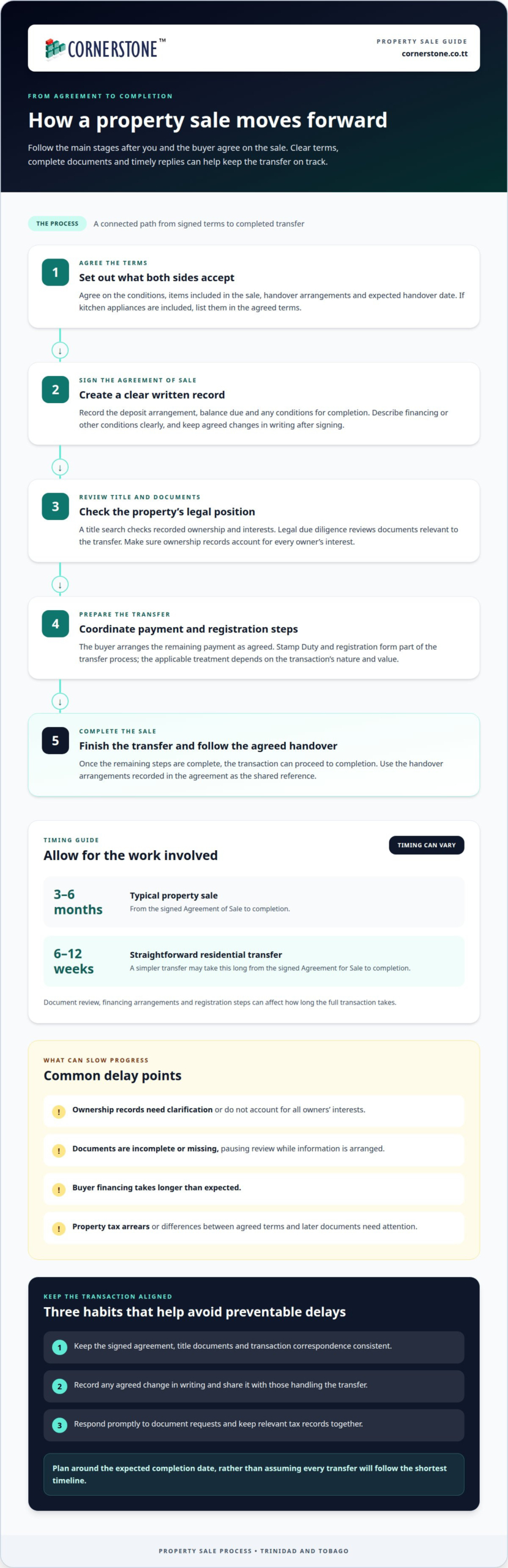
From the signed Agreement of Sale to completion, a property sale in Trinidad and Tobago typically takes 3 to 6 months. A straightforward residential transfer may take six to twelve weeks from the signed Agreement for Sale to completion. The difference reflects how much work the full transaction requires, including document review, financing arrangements, and registration steps.
Timing can be affected by ownership records that need clarification, incomplete documents, or a buyer’s financing taking longer than expected. A missing document, for example, can pause the review while the parties arrange the information needed to proceed. Clear communication about outstanding items helps everyone understand what is delaying the next stage.
Property tax arrears also deserve attention during sale planning. Identify any outstanding property tax balance and account for it when estimating your net proceeds. The Property Tax Act 2009 sets annual liability at 2% of the property’s Annual Taxable Value. Keep relevant tax records together so the transaction’s financial picture is easier to review.
To avoid preventable mistakes, keep the signed agreement, title documents, and transaction correspondence consistent. If a term changes, record the agreed change in writing and share it with those handling the transfer. Differences between the agreed terms and later documents can raise questions and slow progress. Responding promptly to document requests also helps avoid unnecessary delays.
Set realistic plans around the completion date rather than assuming every transfer follows the shortest timeline. If you are coordinating a move, a purchase, or another property commitment, allow for the typical 3 to 6 month sale period. A simple residential transfer may finish within six to twelve weeks, but outstanding documents, tax balances, or financing steps can affect the schedule. Track each unresolved item and its next action. That gives you a clearer view of progress and helps you plan around the actual status of the sale.
Stamp Duty and registration
Stamp Duty and registration are separate steps in a Trinidad and Tobago property transfer. Stamp Duty applies to many real estate transactions, while registration records transfer documents through the Land Registry within the Registrar General’s Department. Understanding how these steps fit together clarifies what happens after the sale agreement is signed.
Residential Stamp Duty ranges from 3% to 7.5% of the purchase price, and the buyer is principally responsible. For land and non-residential property, Stamp Duty ranges from 2% to 7%. The rate depends on the transaction’s nature and value, so a residential home and a commercial property may not follow the same calculation.
The Inland Revenue Division administers Stamp Duty in Trinidad and Tobago. Exemptions and rates vary according to the transaction’s value and nature, so the property type and purchase price affect how the duty applies. Include Stamp Duty in your understanding of the buyer’s transfer requirements, but keep it separate from seller-side expenses such as agent commission and legal fees.
After closing, transfer documents must be stamped and registered with the appropriate government authorities. Deeds of Conveyance, Transfers, and Mortgages are registered through the Land Registry within the Registrar General’s Department. Stamping and registration are separate requirements, and registration follows the applicable stamping process. These steps create the formal record of the transfer or related interest.
As the seller, keep the agreed transaction details and signed documents consistent throughout the process. Differences in names or property details across transfer paperwork, for example, can prompt questions during review. The buyer’s Stamp Duty responsibility does not remove the need to complete the required documentation and registration steps after closing.
If you’re preparing to sell, talk with Cornerstone about property sales and plan your next steps with the transaction process in view.
Cornerstone
Cornerstone can help you consider your asking price and discuss how to reach potential buyers. Its property sales service can support you in presenting your home and moving the sale forward. A property market opinion can provide context for thinking about price in light of the property and market conditions. It is not a licensed valuation.
If your plans change, Cornerstone also offers property rentals and property management. These may suit you if selling is no longer the right next step and you are considering keeping the property. The best approach depends on your plans for the home, and you can discuss your options without pressure.
Contact Cornerstone to discuss your property and the next step you have in mind.
Take the Next Step With Confidence
If you’re deciding how to sell a house in Trinidad, consider how the sale fits your plans for the property and what comes next. You may be moving, changing your investment plans, or weighing whether to keep the home. Thinking about your next step can help you choose the right path.
Cornerstone’s team can discuss your property sales needs and, if your plans shift, property rentals or property management. Their local real estate experience can help you talk through your options and decide what direction to take. You can start with a conversation about your goals, the property, and the kind of support that would be useful.
Ready to discuss your sale? Contact Cornerstone about your property and take the next step at your own pace. A clear plan can make it easier to move forward.
Frequently Asked Questions
Do most sellers in Trinidad and Tobago use an estate agent, or is private selling common?
Both agent-assisted and private sales are possible in Trinidad and Tobago; there is no verified figure here showing which is more common. With an agent, you can get help marketing the property and communicating with interested buyers. In a private sale, you handle those tasks yourself. Either way, agree the terms clearly and use a written sale agreement to record them.
How does capital gains tax work when selling property in Trinidad and Tobago?
Tax can apply to gains from disposing of a chargeable asset within 12 months of acquisition. The stated tax rate on gains from property sold within that period is 25%. This concerns the gain, not automatically the full sale proceeds. Keep records of the acquisition and sale, along with documents showing relevant transaction amounts, so the gain can be determined for your circumstances.
How does the exchange and completion process work in Trinidad and Tobago?
The signed sale agreement records the parties’ terms, and completion follows once the transaction requirements are met. The buyer pays the agreed balance, and the transfer documents proceed through stamping and registration after closing. The parties may agree, for example, on a handover date after completion. Keep payment arrangements, document status, and the possession date aligned in the written transaction record.
What legal requirements must sellers meet in Trinidad and Tobago?
Sellers need a written sale agreement and the required transfer paperwork. After closing, transfer documents must be stamped and registered with the appropriate authorities. Deeds of Conveyance and Transfers are registered through the Land Registry within the Registrar General’s Department. Clear ownership records and consistent property details help ensure the paperwork reflects the sale accurately.
What should foreign sellers know about repatriating sale proceeds from Trinidad and Tobago?
Foreign sellers should plan how the sale proceeds will reach their destination account before completion. The arrangements may involve the receiving account, transfer method, and any currency conversion required. Keep the sale agreement and completion records with your transaction papers. These documents help explain the source and purpose of the funds during banking and transfer processes.
What steps are involved in selling property yourself in Trinidad and Tobago?
In a private sale, you manage the key tasks directly: prepare property details, advertise, respond to buyers, agree on terms, and arrange the written sale agreement. Then coordinate the deposit and completion paperwork with the buyer. For example, record any included appliances in the agreed terms. The transfer still requires stamping and registration after closing.