
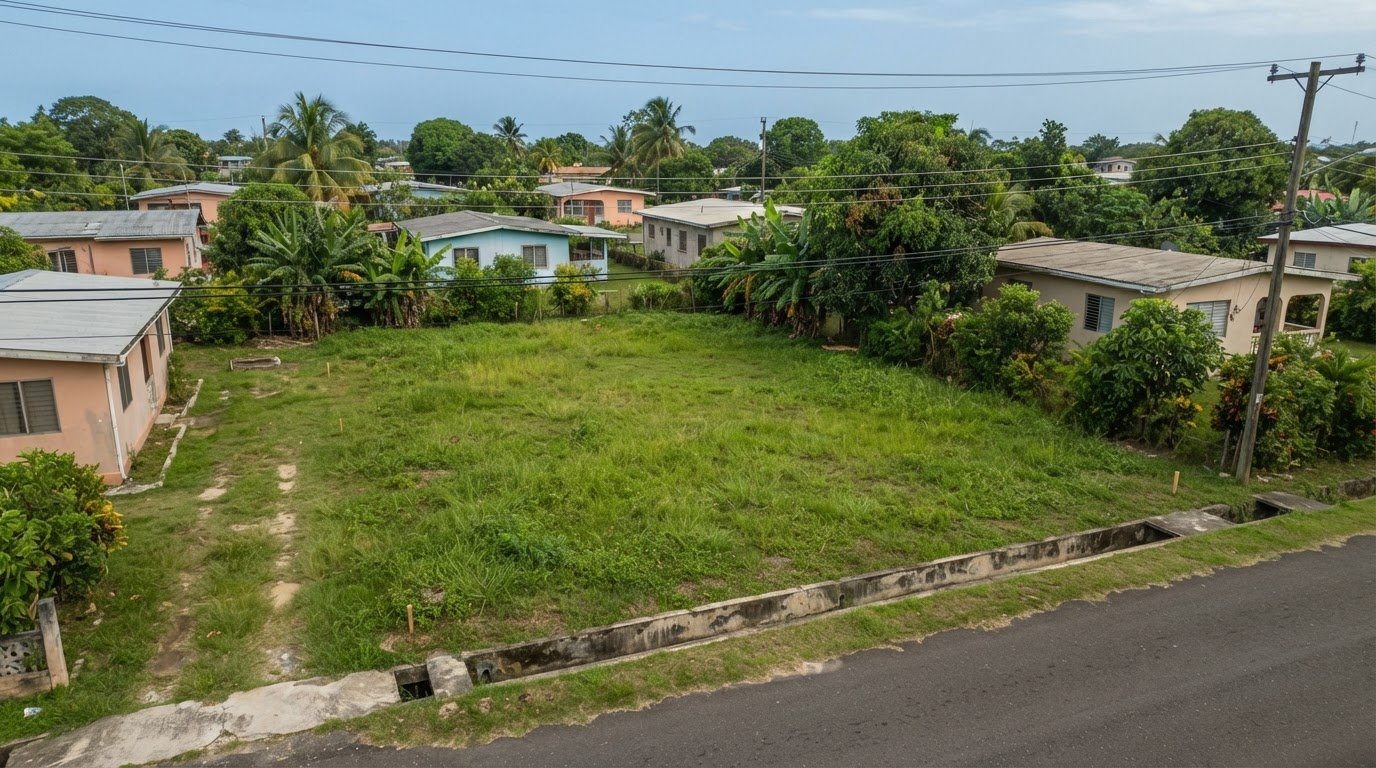
Land for sale across Trinidad and Tobago includes freehold options in places such as Penal, Palmiste and St. Joseph, alongside lots in Cunupia, Princes Town, Debe, Sangre Grande and Claxton Bay. These listings give you different locations and parcel details to compare.
Examples covered here range from a 5,010-square-foot lot in Samaan Park, Cunupia, to an 8,834-square-foot lot at Sahai Trace, Borde Narve, showing how available land sizes vary by location.
If you’re weighing where to buy, this guide covers freehold land, locations across Trinidad, listing examples and available lot details. It is one part of a nationwide offering that includes Tobago. Compare each area and parcel against your plans, whether you’re considering a home site or an investment, and focus on the setting and amount of land that suit you.
Key Takeaways
- Learn what freehold land means and how it differs from other ownership arrangements when comparing parcels.
- Explore land listings across Trinidad, with locations ranging from Cunupia and Princes Town to Sangre Grande and Claxton Bay.
- Compare lot sizes, including examples from 5,010 square feet in Cunupia to 8,834 square feet in Borde Narve.
- See how property sales, rentals, market opinions and management can support your next step as a buyer or property owner.
Freehold land
A freehold label tells you the stated tenure. It does not settle every ownership question. Treat it as one part of the listing. For example, a freehold land listing in Penal was recorded on June 17, 2024. Another in Valley View, St. Joseph, was recorded on May 20, 2024. Those dated examples show why tenure and current availability are separate details. Ask what documents support the listing before comparing parcels.
How can a real estate professional help review land title and ownership documents in Trinidad before you buy? They can review the seller’s documents, compare names and parcel details, and flag gaps for follow-up. A title search examines property records. A real estate professional can help organize the information, but that review alone does not certify legal ownership.
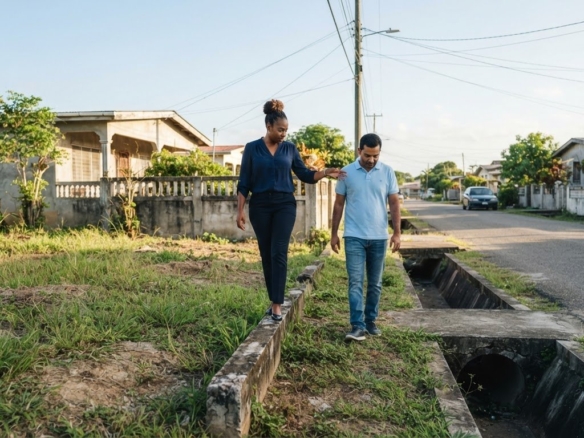
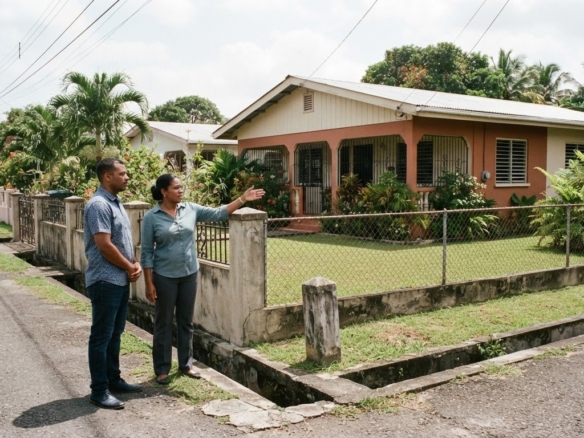
What risks can a professional help you check for, such as flooding, access, utilities, and boundary disputes? They can raise these points during listing review and a site visit. Ask about visible drainage, the route into the parcel, nearby utility connections, and whether boundary markers match the stated lot. A site visit to land in Penal, for example, can reveal access conditions that a listing description may not convey.
Compare tenure with your intended use. A parcel for a home may need different access and services from land held as an investment. Review the location, stated lot dimensions, access details and documents together. If names or parcel descriptions differ, treat the mismatch as an unresolved question, not a minor detail. Clear records help you understand what the seller says is being transferred.
Keep your review focused on specific evidence. Match the listing’s location to the documents and parcel shown on site. Note unanswered questions about flooding, utilities, access or boundaries. Freehold is useful context, but it cannot replace checking the parcel itself. A careful review gives you a clearer basis for comparing land for sale in Trinidad with your plans.
Land for sale listings
Listings span different parts of Trinidad, including Santa Cruz, Maraval, Tabaquite and Trincity. You can also find listed land in Freeport, Carenage and Arima D’abadie Mausica. These place names give you a starting point, but they don’t show whether a parcel suits your plans. Check each listing’s location, tenure, stated lot size and access details together. A parcel near your preferred community may still differ in shape, surroundings or services. Cornerstone manages properties in Trinidad and Tobago, including Tobago.
Look beyond the short listing description. Note whether it identifies a specific development or road. Some listings name Freeport and Carenage, while others identify Arima D’abadie Mausica. More precise location details can help distinguish parcels within a wider area. Compare what each listing says about boundaries, access, drainage and nearby utilities. These details help you assess the land itself, not just its place on a map.
Compare location, parcel size, tenure, access and site characteristics before treating two listings as similar. A parcel in Maraval and one in Tabaquite may differ in setting and intended use. The place name alone cannot explain whether a parcel suits your plans. Review the listing details together rather than judging by one feature.
Use a simple comparison process. First, group listings by area, such as Freeport or Santa Cruz. Next, compare lot details and stated tenure. Then note unanswered questions about access or boundaries. Keep listing descriptions distinct from confirmed site conditions. A clear comparison helps you narrow options without assuming every listed parcel offers the same features. It also gives you a more useful basis for assessing land listings across Trinidad and Tobago.
Land locations across Trinidad and Tobago
Trinidad listings span north, central, and south. Examples include Las Lomas, Penal, and Chaguanas. Others are in Claxton Bay and Point-a-Pierre. These place names help narrow your search. Next, compare each parcel’s exact setting. Nearby roads and services can affect suitability. Check the site, not just its area label. You can also include Tobago in a nationwide property search.
A real estate professional can help organize parcel details and intended use, and flag zoning or permit questions for review. These may concern permitted uses or building approvals, depending on the parcel and planned work. A listing description alone doesn’t establish permitted use, so keep your proposed use clear during the review.
Specific locations can help you compare listings. Sahai Trace is in Borde Narve, Savana Grande; Boodoo Trace is in Debe; Richmond Park and Samaan Park are in Cunupia; and Sandy Brook Development is in Sangre Grande. These names distinguish listings within broader areas. Compare the parcel’s road, surroundings and access, since a community name alone won’t describe the whole site.
As part of a land purchase, review the sale documents and parcel details carefully. A real estate professional can help you organize the information and identify questions to raise during the review. Keep legal questions distinct from property information, and make sure the parcel details align with your intended use.
Use a consistent location check for each listing. First, note the community and road name. Then consider access and nearby services. Compare Claxton Bay with Las Lomas, for example, and consider how each setting fits your plans. A home site and an investment parcel may call for different priorities. Record zoning questions alongside location details to keep your comparison focused on practical differences and make it easier to discuss each parcel before deciding.
Land lot sizes
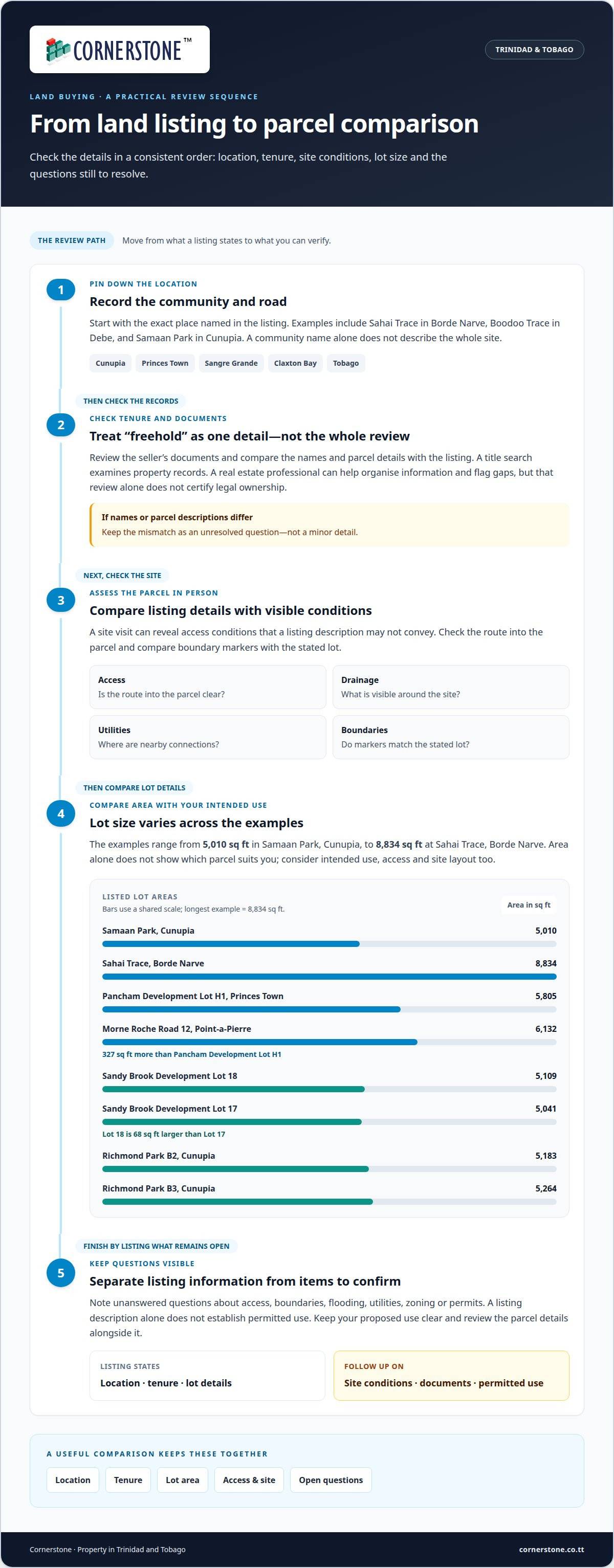
Pancham Development Lot H1 is in Princes Town. It measures 5,805 square feet. Morne Roche Road 12 is in Point-a-Pierre. Its area is 6,132 square feet. That’s 327 square feet more. Area alone doesn’t show which parcel suits you. Compare its size with your intended use, access, and site layout.
Several listed lots are close in area. Sandy Brook Development Lot 18 measures 5,109 square feet. Lot 17 measures 5,041 square feet. The difference is 68 square feet. Richmond Park B2 in Cunupia measures 5,183 square feet. Richmond Park B3 measures 5,264 square feet. These examples help you compare parcels within named developments. Consider the location and site shape too.
Other listings offer a broader comparison. Boodoo Trace 26 in Debe measures 5,385 square feet. Ocean Heights Phase Two in Claxton Bay measures 5,022 square feet. Sahai Trace in Borde Narve measures 8,834 square feet. The figures describe total lot area. They don’t explain the parcel’s shape, frontage, or usable layout. Those details matter when judging how the land fits your plans.
Compare each stated area with its parcel details. Check whether the listing identifies boundaries and dimensions. Relate those details to the space you need. For example, a 5,022-square-foot lot and an 8,834-square-foot lot differ substantially in total area. That doesn’t automatically make the larger one a better fit. Consider location, access, and intended use alongside square footage. These examples cover Trinidad; compare listings in Tobago separately when considering properties across Trinidad and Tobago.
Cornerstone: Property sales
Cornerstone can help you move from comparing land listings to a property decision. If you’re considering a purchase, its property sales service can help you explore available properties and discuss what matters for your plans. Share the location and lot details you’re considering to give the conversation a clear starting point.
If you own land, Cornerstone’s property sales service can support your plans to bring it to market. A property market opinion offers a view of the property’s market position. It’s an opinion, not a licensed valuation, and Cornerstone offers it with no obligation. It may help you consider your next step before deciding whether to sell.
Your plans may change over time. If you’re considering renting property rather than selling, Cornerstone’s property rentals may fit your needs. If you already own property and want support with its ongoing management, property management may be relevant. These services meet different needs, so consider whether you want to sell, rent or have a property managed. You can discuss the option that best matches your situation.
Clear details help make the discussion useful. Share the property’s location, current status and what you hope to do next. If you’re considering selling land, include the parcel details you have. For a rental or managed property, explain your plans as an owner. This keeps the conversation grounded in your property and priorities, without assuming one route suits everyone.
If you’re ready to talk through your property plans, contact Cornerstone for a no-obligation conversation.
Frequently Asked Questions
Where can I find land for sale in Trinidad and Tobago?
Browse vacant-land listings and compare them by location, tenure and intended use. Cornerstone’s listings include vacant land for sale, giving you a starting point for exploring available options. Read each description closely. Details such as access, parcel shape and nearby services can help you decide which listings merit a closer look. Listing details can change, so focus on the information shown for each property.
What are current land prices per acre or square foot in Trinidad?
There isn’t one rate that applies to every parcel. Asking amounts can vary with location, total area, tenure, access and site characteristics. Compare parcels with similar features and units, such as total lot area or a stated rate per square foot. A per-acre figure and a per-square-foot figure are not directly comparable unless you convert them to the same unit.
Which areas in Trinidad have residential land for sale?
Residential land listings can appear in different communities and developments across Trinidad. Availability changes as properties enter or leave the market. Look for listings that identify a residential purpose, then compare access, surrounding development and the parcel’s stated size. A location’s name alone doesn’t tell you whether a site suits your plans. Consider how the setting fits your intended home and daily needs.
What are the best locations for agricultural land in Trinidad?
No single location is right for every agricultural plan. Your choice depends on the intended activity and the land’s characteristics. Consider the parcel’s shape, access, drainage and surrounding land use. A listing may identify land as agricultural, but that label alone doesn’t describe soil or growing conditions. Compare those details with the needs of your planned use before choosing a parcel.
What is the average price of land in Port of Spain, Chaguanas, San Fernando, and Arima?
A single average can’t describe every parcel in urban areas. Location, lot size, tenure, access and site features all affect asking amounts. For a useful comparison, look at current listings with similar parcel sizes and stated uses. Treat an average cautiously if it combines different land types or locations, since that can hide important differences between individual properties.
What types of land tenure are available in Trinidad, including freehold and leasehold?
Freehold and leasehold are distinct tenure terms you may encounter when reviewing land. A freehold listing describes freehold tenure, while leasehold rights are set out in the lease documents. Review the title or lease details carefully, including the parties and terms that apply to the parcel. The tenure description alone doesn’t explain every right or condition connected with a particular property.