









To find tenants for a property in Trinidad and Tobago, present the home clearly, screen applicants carefully and check that their needs suit the property. A good tenant is not simply the first person to apply; look for someone who understands the responsibilities of renting it.
Start with clear information about the property and its availability, then use consistent screening and reference checks to support your choice.
This guide explains how to reach prospective renters and review applications, income details, employment information and references. It also covers how professional support can help you manage the search.
Key Takeaways
- Present your rental listing clearly across suitable channels to help prospective tenants assess the property.
- Use consistent, fair screening criteria to assess whether applicants suit the property and can manage the rent.
- Verify income and employment details, and consider relevant rental history before making a decision.
- Build on listing exposure with local relationships and referrals to reach more prospective tenants.
How does a professional prepare a rental to attract renters?
How can a property professional prepare and photograph a rental to attract suitable tenants? If you are considering how to find tenants for your property, start with clean, uncluttered rooms that are easy to view. A professional can photograph key spaces in clear light. A short video, around 60 seconds, can help prospective renters understand the layout before arranging a viewing.
- Prepare the property for viewings. Clean, uncluttered rooms help prospective tenants view the property and its features. A professional can suggest practical preparations based on the home and your plans for renting it.
- Present the property clearly. Clear photographs and an accurate description help prospective tenants understand the property. A professional can arrange photography, select the clearest images and prepare a concise description. Accurate details help prospective tenants decide whether the property suits their needs.
- Prepare clear advertising. A strong rental listing describes useful details such as the layout, location and included features. The professional can arrange photography, select the clearest images and prepare a concise description. Accurate details help prospective tenants decide whether the property suits their needs.
- Advertise across suitable channels. A professional can make finding tenants for your property more manageable by coordinating the listing across suitable channels. Online rental platforms can reach people actively looking for a home, while local channels may connect with renters familiar with the area. A letting agent can manage inquiries and arrange viewings, rather than leaving you to handle each response separately.
- Review applications consistently. After viewings, the professional can compare applications using the same suitability and affordability criteria. They can review screening reports and supporting details, follow up on missing information, and respond to inquiries promptly. A same-day reply helps keep an interested applicant engaged while the rental search is active.
Screening prospective tenants for suitability and affordability
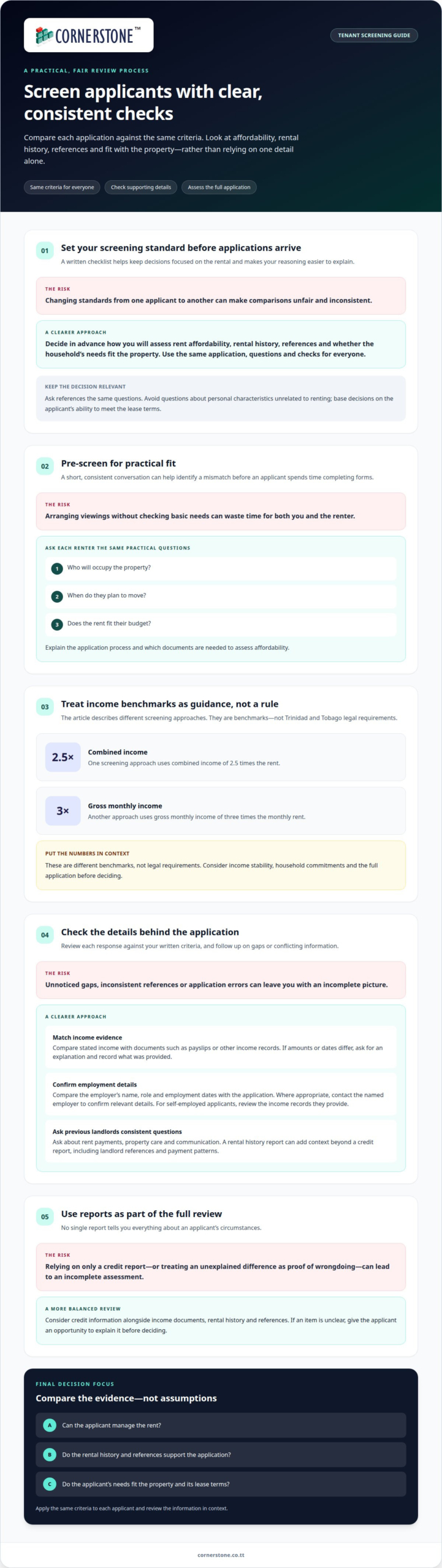
A consistent process helps you compare applicants fairly and focus on whether each person suits the rental. Use the same application, questions and affordability criteria for everyone, then assess the information provided in context.
Set Fair, Consistent Screening Criteria
Set your criteria before reviewing applications. Consider whether applicants can afford the rent, their rental history and references, and whether their household’s needs fit the property. Apply the same checks to everyone and ask references the same questions. Avoid questions about personal characteristics unrelated to renting; base decisions on the applicant’s ability to meet the lease terms.
For example, assess each application using the same income evidence and rental-reference questions. Don’t change your standards based on assumptions about someone’s background, family or circumstances. A written checklist helps keep screening focused on suitability and makes your decision easier to explain.
Pre-Screen Prospective Renters
Before arranging a viewing, ask each renter the same practical questions: who will occupy the property, when they plan to move and whether the rent fits their budget. Explain the application process and which documents are needed to assess affordability. This early conversation can identify a mismatch before an applicant spends time completing forms.
Use income ratios as a guide, not a pass-or-fail rule. Some screening approaches use combined income of 2.5 times the rent; others use gross monthly income of three times the monthly rent. These are different benchmarks, not Trinidad and Tobago legal requirements. Consider income stability, household commitments and the full application before deciding.
Review Applications and Supporting Details
Use one application form and review every response against your written criteria. Compare the applicant’s stated income with supporting documents, and follow up on gaps or conflicting details. A rental history report can add context beyond a credit report, including previous landlord references and payment patterns.
Review screening reports alongside the full application instead of relying on one item. A past difficulty or missing detail may need clarification, while consistent income information and positive references can support your assessment. Keep your decision focused on affordability, rental history and the property’s requirements, not assumptions about an applicant.
Checking income, employment and credit history
Skipping checks can leave income gaps, inconsistent references or application errors unnoticed. A property professional can help verify relevant details consistently and keep a record of how each application was assessed.
- Match income evidence. Compare the income stated in the application with documents the applicant provides, such as payslips or other income records. If amounts or dates differ, ask for an explanation. Record what was provided and whether it supports the application; don’t treat an unexplained discrepancy as proof of wrongdoing.
- Confirm employment details. Compare the employer’s name, role and employment dates with the information in the application. Where appropriate, contact the named employer to confirm relevant details. For self-employed applicants, review the income records they provide. This helps establish the basis for stated income without assuming every applicant has a salaried job.
- Review credit information in context. A credit report can provide information about payment history, but it does not show every aspect of an applicant’s circumstances. Consider it alongside income documents, rental history and references. If an item is unclear, give the applicant an opportunity to explain it before deciding.
- Check references and background carefully. Ask previous landlords consistent questions about rent payments, property care and communication. Compare their responses with the rental history in the application. Keep background checks relevant to the tenancy and handle applicant information carefully. A profile photo or personal impression does not show whether someone can meet the lease terms.
- Confirm application details before deciding. Check that the applicant’s identity information and intended occupants match the details submitted. Follow up on missing or conflicting information, and record the response. A professional review can help identify unanswered questions before an agreement is prepared. Fair, consistent checks also reduce the risk of relying on assumptions or incomplete paperwork.
How can a professional generate more rental leads beyond the listing itself?
Local relationships can introduce your rental property to people who may not see its online listing. A property professional can build referral channels and make the path from first inquiry to application clear. If you’re considering how to find tenants for a property, personal connections can complement online exposure.
- Build useful local partnerships. Connect with employers, relocation contacts and community organisations that hear about housing needs. Share accurate property details, availability and the type of tenant the home may suit. For example, an employer could pass the listing to a new team member moving into the area. Give partners a simple way to direct interested renters to the same enquiry process.
- Make the listing easy to share. Provide a clear description that partners can forward without rewriting. Include the location, layout, key features and availability, so prospective renters can quickly assess the fit. Consistent information across platforms and local contacts helps attract genuine interest and avoids confusion about the rental terms.
- Follow up on referrals. Collect each prospective renter’s contact details and preferred viewing time, then explain the next step. A scheduled showing lets interested renters see the property and ask practical questions before applying. This organised follow-up is another part of how to find tenants for a property while keeping enquiries moving.
- Check landlord and employer references. Ask each previous landlord the same questions about rent payments, property care and communication. Where appropriate, contact the employer named in the application to clarify relevant work and income details. Record responses and compare them with the applicant’s information instead of relying on one comment or informal impression.
- Review the full application. Consider income documents, credit information and references together. Credit history can add context, but it does not replace income evidence or a previous landlord’s account. If a detail conflicts, invite the applicant to explain it before deciding. This gives each person a fair opportunity to provide context.
If you’d like help coordinating rental enquiries, explore professional rental support.
Cornerstone
Cornerstone can help you consider the next step for your rental property, whether you’re planning to rent it out or want support managing it. Its property rentals and property management services may suit owners who want professional assistance with their property plans.
If you’re still deciding whether renting is right for you, Cornerstone also offers a property market opinion to inform your decision. This is a market opinion, not a licensed property valuation. Discuss your goals and the support you need, then decide what suits your situation.
When you’re ready, contact Cornerstone to discuss your property plans and rental options.
Plan the next move for your property
Next, decide what you want the rental to support over time. Consider the kind of tenant who will suit the home, how involved you want to be in day-to-day arrangements and whether renting fits your wider property plans. A clear direction helps you choose the support you need.
If you’re weighing how to find tenants for a property, Cornerstone can discuss rental options and property management to suit your plans. It also handles property sales and rentals, so you can consider what comes next for your property.
When you’re ready to talk through your plans, contact Cornerstone about finding tenants. A conversation can help you identify a practical next step for your property.
Frequently Asked Questions
What Makes a Good Tenant?
A good tenant communicates reliably, respects agreed arrangements and treats the property with care. Consider how an applicant handles practical matters, such as arranging access for maintenance and reporting issues. Clear communication about scheduling, for example, can prevent avoidable misunderstandings after move-in. These habits complement formal checks and help establish a respectful landlord-tenant relationship.
Can virtual tours help fill a vacancy faster?
Virtual tours can help interested renters view a property remotely before arranging an in-person visit. Present the home in a logical sequence, from the entrance through the main living areas, and show how the rooms connect. Steady camera work and clear narration help viewers follow the layout and decide whether to arrange a viewing.
Do pet-friendly rentals fill faster?
Allowing pets may make a rental suitable for more households, but it does not guarantee a faster tenancy. Consider the flooring, outdoor areas and shared spaces when setting a pet policy. Clearly describe any agreed limits and expectations in the listing and lease so renters can decide whether the home suits their household.
How can a professional screen renters fast without cutting corners?
A property professional can keep the process organised with a clear document checklist and a consistent application review. Tell applicants upfront which records they need to provide to reduce repeated follow-up. The professional can also coordinate viewings and review applications as inquiries arrive, saving time without skipping relevant checks or treating applicants differently.
Is it better to list a rental furnished or unfurnished?
Choose furnishings based on the property and the needs of the renters you hope to attract. For a furnished rental, prepare an inventory naming the included items and recording their condition. This clarifies what stays in the home and what the tenant is responsible for. For an unfurnished rental, describe any appliances or fixed items that remain.