


For rental owners in Trinidad and Tobago, the benefits of hiring a property manager include organized rent collection, tenant communication, applicant screening and day-to-day administration. You stay informed and retain the final say over who rents your property. A manager can follow up on rent, respond to tenant questions and coordinate the steps involved in finding a suitable renter, reducing the work you need to handle yourself.
This support may suit you if you have limited time, manage multiple rentals or prefer not to handle every tenant matter directly. This guide explains how management can support rent collection, what other tasks may be included and how to decide whether the service fits your property and priorities.
Key Takeaways
- Consider whether tenant communication, rent follow-up and day-to-day tasks are taking more time than you can comfortably give.
- Learn how tenant screening and clear rental processes can support a steadier tenancy.
- See how organized maintenance coordination can help you keep track of property issues and repairs.
- Understand what to weigh when deciding whether professional management fits your rental and priorities.
1. What Are the Benefits of Hiring a Property Manager for Your Rental?
A property manager can organize tenant screening, rent follow-up and rental marketing, helping you manage the work involved in a tenancy. Screening may include reviewing references and rental history. You retain the final say over who rents your property, while a consistent process helps you assess applicants and set clear expectations from the start.
Rental pricing also affects demand and vacancy time. A rate that does not reflect a property’s location, condition and features may attract less interest or limit potential income. A manager can consider comparable rentals and current demand when discussing a competitive rate with you. Your priorities matter too, including whether you value finding a tenant sooner or achieving a particular rental return.
Vacancies affect rental income, while retaining a suitable tenant can support continuity. When reviewing a rent increase, consider the property’s condition, tenant feedback and interest from prospective renters. A manager can share market context and help you consider timing, so any change reflects the rental and tenant relationship rather than being treated as automatic.
What services are typically included in property management in Trinidad and Tobago? The agreed scope may include tenant screening, rent collection, tenant communication and rental administration. Review the management agreement to understand the services provided and each party’s responsibilities before deciding.
What are the disadvantages and risks of hiring a property manager? You may give up some control over daily tenant matters, and unclear reporting can make it harder to follow decisions. Agree on communication, approval steps and responsibilities at the outset to reduce misunderstandings.
How can landlords choose and verify a property manager in Trinidad and Tobago? Ask for a written description of services, learn how tenant applications are handled and request references. Discuss how updates are shared and which decisions remain yours. These practical details help you assess whether the arrangement fits your property and expectations.
2. Why hire a property management company?
A rental needs attention between tenancies, not just when rent is due. A property manager can coordinate tenant reports, inspections, contractor access and repair updates. For example, if a tenant reports a leaking tap, someone needs to record the issue, arrange access and follow up on the work. Handling these steps yourself means fitting them around your other responsibilities.
Established contractor relationships can make maintenance easier to organize. A manager can describe the problem, arrange a visit, share repair details with you and track completion. Clear records help distinguish routine upkeep from a larger repair, while approval steps give you the chance to review proposed work before it proceeds. Coordination can help prevent delays and reduce the chance that a small issue worsens. You can discuss how much involvement you want in maintenance decisions and updates.
Routine inspections give landlords a clearer view of a rental’s condition. A visit may reveal signs of a slow leak, damaged fittings or wear that a tenant may not notice or report promptly. The manager can record the issue, share findings and arrange suitable repairs with your approval. Agree on inspection timing and access with the tenant, and handle visits respectfully.
Preventative maintenance helps support the property’s condition over time. For instance, checking visible plumbing for leaks and noting wear in shared areas can help you plan upkeep before problems disrupt a tenancy. Consistent records also make it easier to review completed repairs and spot recurring issues. A well-kept property may remain more appealing to tenants, supporting its long-term usefulness. A manager can help coordinate ongoing upkeep, while you decide how involved you want to be in reviewing the property and its maintenance.
Is hiring a property manager a good fit for your rental property? It depends on the time you can spend handling tenants, inspections and repairs, as well as the management arrangement. Consider how much coordination and record-keeping support you need, and how closely you want to oversee day-to-day tasks. Comparing these factors can help you decide whether to manage the property yourself or ask a manager for support.
If you’d like help organizing rental operations, explore property management support.
3. Rent collection
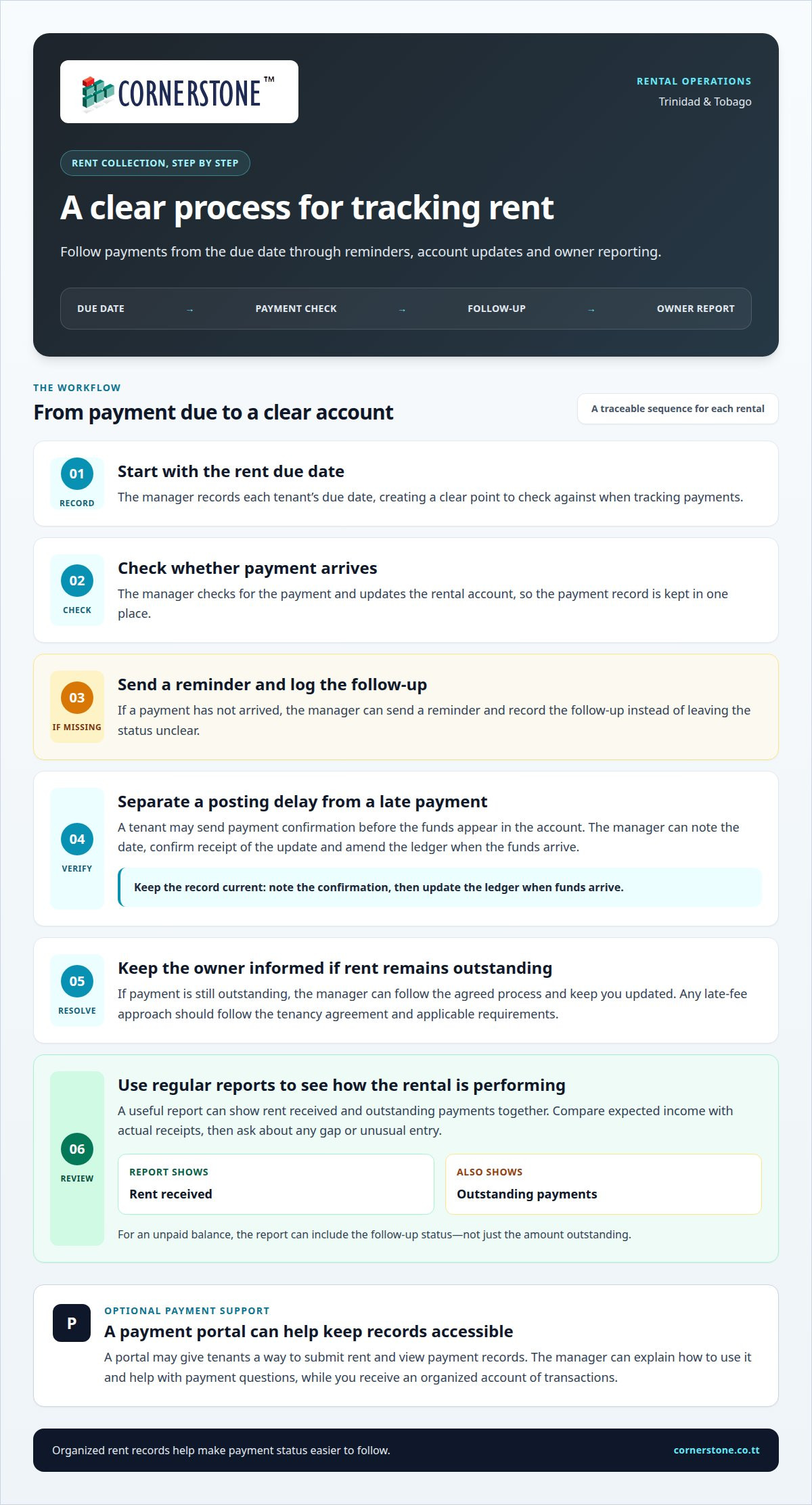
A consistent rent collection process gives you a clearer view of payments and rental income. The manager records each tenant’s due date, checks whether payment arrives and updates the rental account. If a payment is missing, the manager can send a reminder and record the follow-up. This creates a traceable sequence instead of leaving you to piece together messages, bank activity and tenant explanations.
Clear records also help distinguish a late payment from a posting delay. For example, a tenant may send confirmation while the payment has yet to appear in the account. The manager can note the date, confirm receipt and update the ledger when funds arrive. If payment remains outstanding, the manager can follow the agreed process and keep you informed. Any late-fee approach should follow the tenancy agreement and applicable requirements.
Regular reports help you understand how the rental is performing. A useful report can show rent received and outstanding payments in one place. Compare expected income with actual receipts, then ask about any gap or unusual entry. For instance, if one month’s rent remains outstanding, the report can show the follow-up status rather than simply listing an unpaid balance.
A payment portal may give tenants a convenient way to submit rent and view payment records. The manager can explain how to use it and help address payment questions, while you receive an organized account of transactions. This can reduce avoidable confusion, especially when a tenant changes payment details or needs confirmation of a receipt.
Rent collection also connects to tenant retention. Prompt, respectful follow-up can address a missed payment without turning every delay into a dispute. Pair clear payment instructions with careful tenant screening to set expectations before move-in. Review reports and communication records to spot recurring issues, discuss a suitable response with the manager and make informed decisions about your rental investment. Consistent records also give you a practical reference when planning future rental income.
4. Reasons to hire a property manager
With limited time, rental ownership can create constant interruptions. A tenant’s message about access, a question about the tenancy and a vacancy listing may all need attention on the same day. A property manager can handle routine communication and keep you updated, so you are not coordinating every task yourself while balancing work or family responsibilities.
Managing several properties adds more moving parts. Each rental may have different tenants, payment dates, inspection needs and maintenance issues. A professional manager can keep records separate, track open tasks and give you a clearer view of each property. For real estate investors, this organized oversight can make it easier to review how each rental is performing.
Distance can make day-to-day oversight harder. If you live away from a rental, a manager can receive tenant concerns, arrange repair access and report what happened. For example, a water leak needs a prompt response and clear updates, even when you cannot visit the property yourself. This support can make ownership more manageable without taking away your say over key decisions.
Tenant changes also require coordination. When a tenant leaves, the owner must manage the handover, prepare the rental for advertising and respond to prospective renters. A manager can organize these steps and help reduce delays between tenancies. The property may still be vacant while work or tenant selection is underway, but a planned process keeps the next actions clear.
A manager can also provide a consistent point of contact when a tenant raises a concern. They can gather the details, explain the issue to you and keep communication focused on practical next steps. This can help prevent misunderstandings from growing into disputes. You remain involved in decisions that affect your property, while the manager handles agreed daily tasks and shares updates.
If managing tenants and vacancies is taking too much of your time, talk through your rental plans.
Cornerstone
Cornerstone can help you consider whether professional property management fits your rental and preferred level of involvement. If you are weighing day-to-day support against managing tenant matters yourself, a conversation can clarify your priorities and the guidance you need. Cornerstone manages properties in Trinidad and Tobago and offers property management, rentals, sales and property market opinions. Its team can discuss your property goals and provide open, data-informed guidance as you consider your next step.
To talk through your property management needs, contact Cornerstone.
Choose the level of support that suits you
Your next step is to decide how involved you want to be in managing your rental. Consider which responsibilities you prefer to handle personally and where you would value support. The benefits of hiring a property manager matter most when the arrangement fits your priorities, communication preferences and plans for the property. A considered choice can help you feel more prepared to manage ownership over time.
Cornerstone’s team brings 22 years in the real estate market to conversations about property management and your wider property plans. The company also offers property sales, rentals and property market opinions, so you can talk through your goals and consider a suitable direction without rushing the decision.
For a friendly conversation about managing your rental, contact Cornerstone about property management. Take the next step when you’re ready, with a clearer sense of the support you want.
Frequently Asked Questions
Why hire a property management company?
A property management company can provide a defined approach to routine rental administration. Before appointing one, write down the tasks you want handled, the decisions you will keep and how often you expect updates. For example, you might want to approve non-routine work while leaving appointment scheduling to the manager. Clear boundaries help you judge whether the arrangement fits your working style.
What Are the Benefits of Hiring a Property Manager for Your Rental?
A manager can help keep rental records and tenancy administration organized, which is useful when you need to review the property’s history. You might refer to dated correspondence or handover notes when a tenant asks about an earlier agreement. Discuss how records are kept and shared so you know where to find key information and can stay involved in important decisions.
What are the main benefits of hiring a property manager?
The main benefit is having agreed support for the parts of rental ownership you do not want to manage yourself. Consider your preferred level of involvement: you could ask to be consulted on major decisions while receiving routine updates in a regular format. This makes it easier to assess whether the service matches your priorities, rather than choosing based on a general promise of convenience.
How does a property manager help reduce rental vacancies and find tenants?
A manager can organize the practical steps between listing a rental and reviewing applications. This may include keeping property details consistent across advertisements, arranging viewings and tracking prospective tenants’ questions. Feedback from viewings can show whether people need clearer information about features or tenancy terms. Use those observations to decide whether the listing or presentation needs adjustment.
How do property managers handle rent collection, late payments, and arrears?
Discuss the rent process before management begins, including how tenants receive payment instructions and how an unpaid balance is brought to your attention. If arrears arise, dated records of notices, replies and payments can help you understand the sequence of events. Agree when the manager should consult you, so any next steps reflect your instructions and the tenancy agreement.
How do property managers coordinate repairs, maintenance, and emergencies?
Before a tenancy starts, agree how maintenance concerns should reach the manager and how urgent reports will be passed on to you. Set out which work requires your approval and how access will be arranged. For example, a tenant should know where to report a fault, while you should know whom the manager will contact and what updates to expect as the issue is assessed.