


The difference in market opinion versus property valuation is mainly their purpose, not simply the figure each produces.
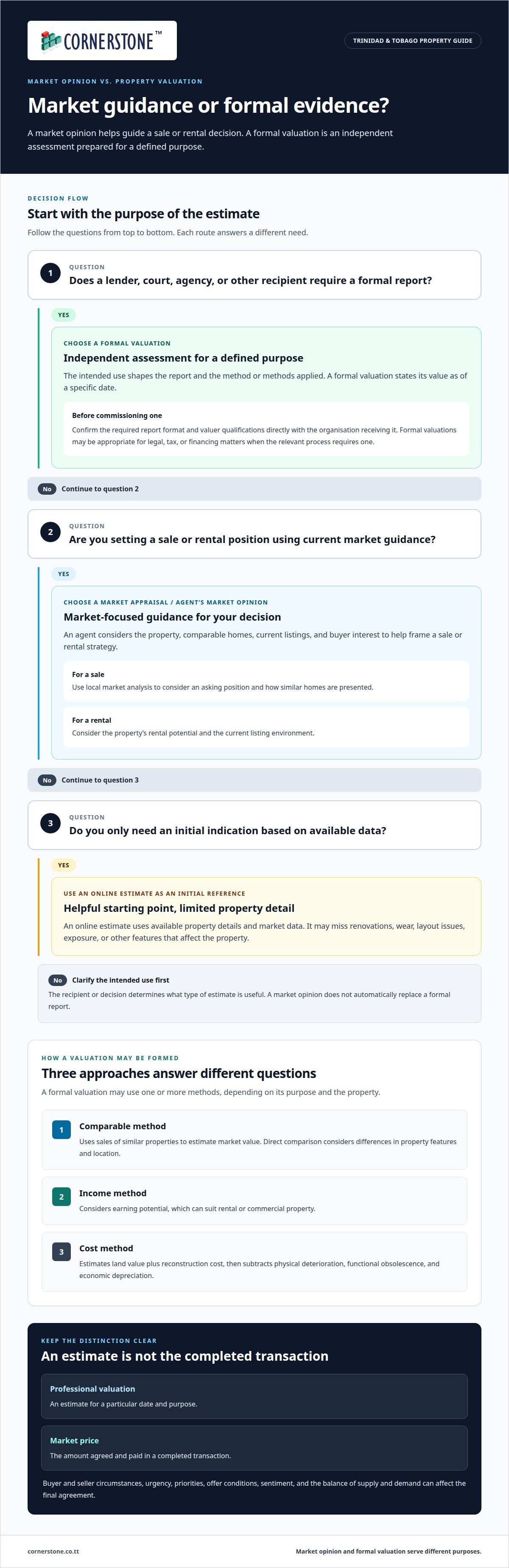
A market opinion estimates what a property may attract in the current market. A formal valuation is an independent assessment prepared for a defined purpose.
Understanding how each estimate is formed, and how supply, demand, buyer sentiment and property details affect it, can help you choose the right guide for a property decision in Trinidad and Tobago.
Key Takeaways
- Match the type of estimate to your purpose: setting a listing or rental strategy differs from needing a formal valuation for a specific use.
- Understand how comparable sales, income potential and replacement costs can shape an estimate, and why an online figure may miss property-specific details.
- Consider how buyer sentiment and the balance of supply and demand can affect offers, negotiations and the final transaction price.
- If you’re preparing to sell, rent or manage a property, Cornerstone’s market opinion can help inform your next steps; a formal valuation serves a different purpose.
How does a Valuation differ from a Market Appraisal?
An online estimate uses available data, while an in-person assessment can account for the property’s actual condition. The right approach depends on the property and the decision you need to make.
Online Estimates and In-Person Valuations
An online estimate can provide an initial indication based on property details and market data. It may miss renovations, wear, layout issues, exposure or other features that affect a home in Trinidad and Tobago. During an in-person assessment, a professional can inspect these details and apply judgment. A formal valuation is an independent estimate for a defined purpose; an agent’s market opinion guides decisions about likely market worth.
Comparable Sales and Market Conditions
Direct comparison looks at properties with similar features and locations, then considers their differences. Recent comparable sales can help an agent form an opinion, with sales from the previous 3-6 months providing a useful reference when available. Changing demand, buyer interest, and the supply of similar homes can make older sales less relevant. A past sale informs an estimate but doesn’t determine the next transaction.
Comparable, Income, and Cost Methods
The comparable method uses similar property sales to estimate market value. The income method considers earning potential, which can suit rental or commercial property. The cost method estimates land value plus reconstruction cost, then subtracts physical deterioration, functional obsolescence and economic depreciation. A valuation may use one or more methods, depending on its purpose and the property. Each approach answers a different question.
For a seller deciding how to list, market opinion versus property valuation comes down to purpose: market guidance or an independent report. The comparable, income, and cost approaches can inform a formal assessment, while an appraisal helps frame a market decision.
| Option | Basis | Property detail |
|---|---|---|
| Online estimate | Available data | Limited property-specific detail |
| Market appraisal | Comparables and judgment | Market-focused assessment |
| Formal valuation | Purpose-led method or methods | Independent assessment |
Choose an online estimate for an initial reference, an appraisal for market guidance, or a formal valuation when you need an independent report for a defined purpose.
Purpose and formality of an opinion of value versus a property valuation
A market opinion helps a seller consider an asking position using local market analysis. A formal property valuation is an independent estimate prepared for a defined purpose, such as assessing fair market or investment value on a specific date. The intended use shapes the report and the methods applied.
In Trinidad and Tobago, banks, courts and government agencies set the report format for their own processes. Use a formal valuation when that process calls for one. An agent’s market opinion does not itself establish that a formal report will be accepted. The person preparing a formal report should identify their qualifications and the valuation’s purpose.
Market value estimates what a property could command in the relevant market. Rental value concerns its potential rent, while tax value relates to a tax assessment purpose. These values answer different questions and can differ for the same property. For commercial lending, an independent valuation may inform loan-to-value limits and debt service coverage ratios. Loan-to-value compares a loan with the property value; debt service coverage measures income against debt payments.
A market opinion can help guide a sale, but it does not automatically replace a formal report for a mortgage, probate matter or property tax assessment. The receiving institution or process determines what form of evidence it accepts. A valuation states its value as of a specific date, while a market opinion reflects conditions when prepared. Changes to the property or local market can affect how useful either remains. Neither is a permanent figure.
Requirements vary by purpose and by the institution requesting the report in Trinidad and Tobago. Before commissioning a formal valuation, confirm whether a lender, court, agency or other recipient requires a particular report format or valuer qualifications. A formal valuation may be appropriate for legal, tax or financing matters when the relevant process requires it.
Choose a valuer whose qualifications and experience suit the property and intended use. In Trinidad and Tobago, confirm any requirements directly with the organisation receiving the report, rather than assuming a market opinion will meet them. The intended use of a valuation report guides the valuer in choosing which approaches to apply and rely on.
Market sentiment, supply and demand, and transaction prices
A property estimate and its completed transaction price answer different questions. The final agreement also reflects the choices and circumstances of the people involved.
Market Sentiment, Supply, and Demand
Market sentiment describes how confident buyers and sellers feel about making a move. For example, a buyer who expects conditions to change may delay an offer, while a seller facing a firm deadline may be more open to negotiation. These decisions shape activity in Trinidad and Tobago’s real estate market, alongside the number of buyers and available listings.
Market Price and Professional Valuation
Market price is the amount agreed and paid in a completed transaction. A professional valuation is an estimate for a particular date and purpose, so it does not record the final terms between two parties. A seller’s urgency, a buyer’s priorities and conditions attached to an offer can all help explain why a completed sale differs from an earlier estimate.
Agent Estimates and Market Opinion Providers
A real estate agent can provide a market opinion by considering the property, whether it is intended for sale or rent, and the current listing environment. The agent can discuss how similar homes are presented and how buyer interest affects a seller’s options. A buyer’s deposit and readiness to proceed may matter during offer discussions, but the deposit itself does not establish the property’s value.
Factors Affecting Valuations and Opinions
For a property owner, condition, location, size and distinctive features can affect how buyers respond. For a buyer, intended use and practical priorities may shape an offer. A market opinion helps frame those decisions; the transaction price emerges from the parties’ agreement and the terms they accept. Consider both the estimate and the circumstances behind an offer before deciding how to proceed.
Difference between a market appraisal and a property valuation
In Trinidad and Tobago, a market opinion helps you make practical decisions about selling or listing a property. A property valuation is an independent assessment prepared for a defined purpose. When comparing a market opinion with a property valuation, the key difference is intended use: an opinion can guide marketing choices, while a formal report addresses a specific assessment need.
Imagine you’re preparing a home for sale in Trinidad and Tobago. An agent’s market opinion can help you consider how to position the listing and respond to buyer interest. It offers guidance, not a binding sale figure. A formal valuation follows a stated purpose and date, and its report may be needed for a process with its own requirements.
A mortgage shows why the difference between a market opinion and a property valuation matters. A lender may require a formal valuation as part of its lending process, and an agent’s opinion does not automatically replace that report. The lender’s requirements determine what assessment it will consider. For a planned listing, however, a market opinion can help you make decisions about presentation and offers without serving as mortgage evidence.
To choose, start with the decision you need to make. If you’re preparing a property for sale and need guidance on its market position, an appraisal may fit. If a lender, court, or government process asks for a formal report, identify that purpose before arranging an assessment. The distinction in market opinion versus property valuation is practical: treat them as different tools, and match the assessment to the decision at hand.
Cornerstone: Property market opinion
Cornerstone provides a property market opinion when you need guidance for a property decision, such as preparing to sell or rent. It is an estimate of likely market worth, not a licensed property valuation. Knowing which kind of assessment you need helps you choose the right next step.
If you’re considering a sale, a market opinion can help shape your listing approach and expectations. The discussion can consider the property’s features, condition, location, and relevant local market evidence. Share what you know about the home and your plans for it. Cornerstone’s team works with local realtors, bringing practical knowledge of property and market conditions to these conversations.
For a rental decision, a property’s likely appeal to tenants and its rental potential may matter more than a sale-focused estimate. If you own property and want support with the ongoing responsibilities of letting it, Cornerstone’s property management service may suit your needs. These options address practical market and ownership decisions. They are distinct from a formal valuation prepared for a specific institutional or legal purpose.
Cornerstone supports property sales and rentals, so you can discuss a market opinion alongside your plans to bring a property to market. An opinion can help you consider how to proceed, but it does not guarantee a sale, rental outcome or lender acceptance. If your purpose specifically requires a formal valuation, an agent’s market opinion is not a substitute.
To discuss a property market opinion or your next property step, contact Cornerstone.
Frequently Asked Questions
What is a Property Valuation?
A property valuation is an independent professional estimate of a property’s value for a stated purpose and date. The assessment may consider features beyond appearance, such as zoning, planning restrictions and encumbrances. For example, two homes with similar layouts may be assessed differently if one has a restriction affecting its use. The report’s purpose helps determine which factors receive attention.
How is an appraisal determined?
A market opinion is formed by assessing the property and considering evidence from similar homes and the local market. An agent may review the rooms, age, fixtures, fittings and outdoor features, then account for differences between the property and its comparables. Clear records, such as plans and photographs, can help explain features that may not be obvious during a viewing.
What is Market Valuation (Fair Market Value)?
Market value estimates what a property could be worth in a particular market on a specified date. Fair market value is an assessment, not the amount guaranteed in a future sale. For instance, a property’s location and condition may support one estimate, while a change in buyer demand could affect what a later transaction achieves.
What are the risks of relying on a market opinion instead of a formal valuation?
The main risk is using an estimate for a purpose it was not prepared to serve. A market opinion can help with sale planning, but a lender, court or tax process may require a formal report with a stated scope. Relying on the wrong document may mean it does not meet the process’s needs or support the decision you must make.
How long is a property valuation or market opinion valid in Trinidad and Tobago?
Neither is a permanent figure. A formal valuation applies as of a specific date, while a market opinion reflects conditions when prepared. Changes to the property or local market can affect how useful either remains.