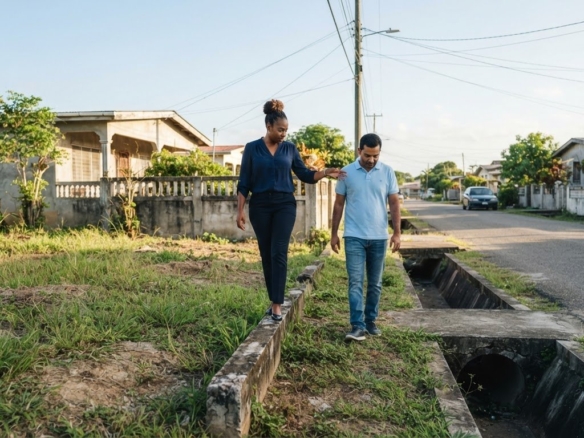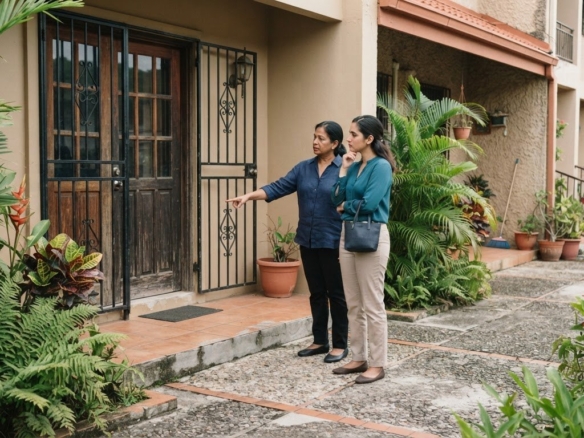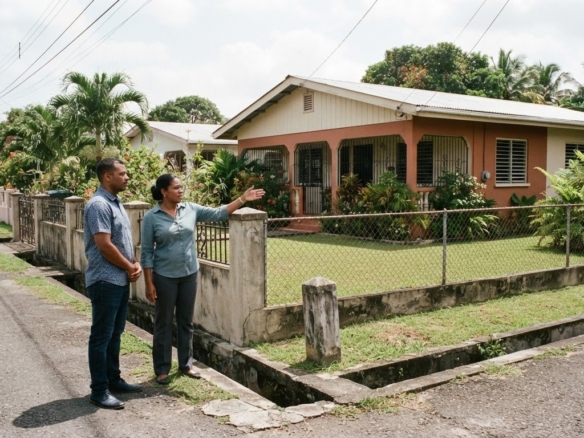

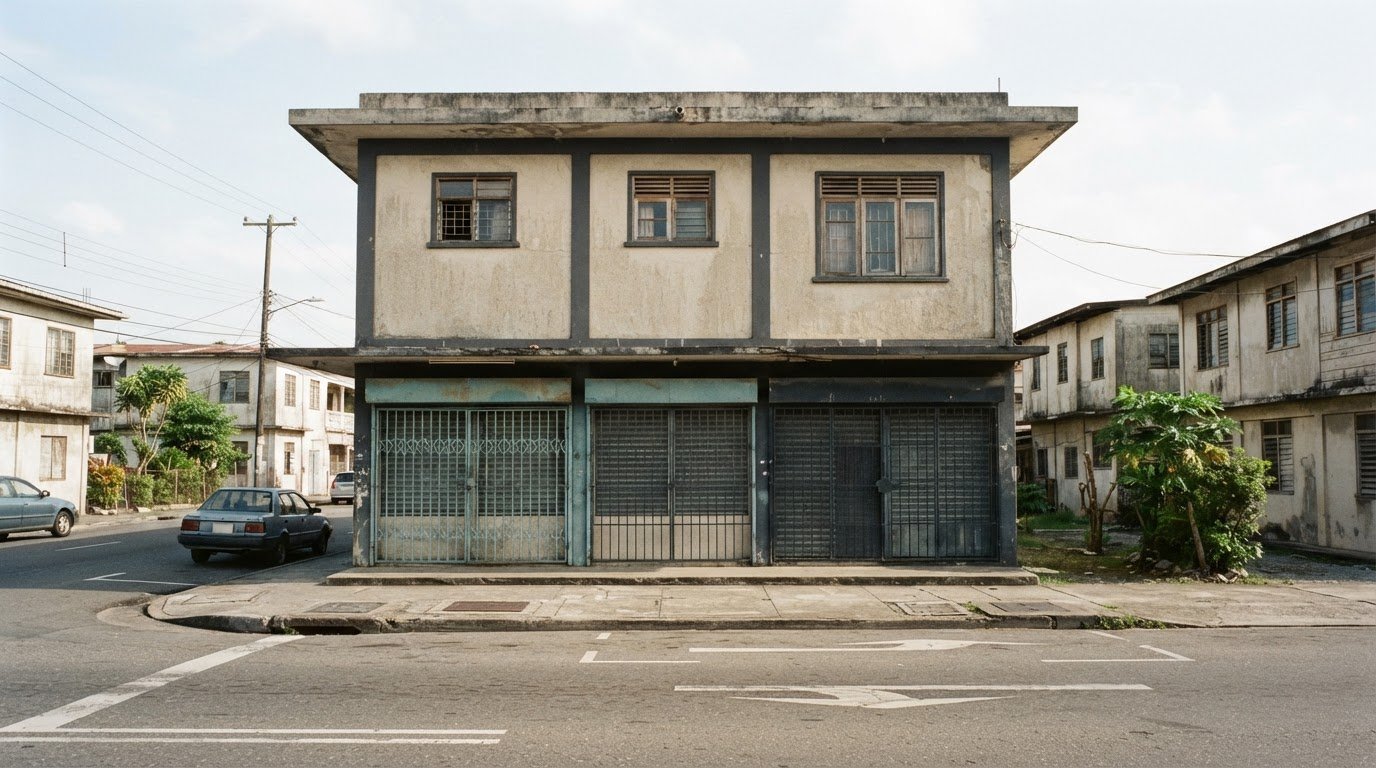
A two-storey commercial building on Hobson Street in San Fernando illustrates what to assess when considering commercial property for sale in Trinidad: floor area, land size, road frontage and location all influence how a property may fit your plans.
This article examines the San Fernando building and compares property sizes and locations, with examples from Port of Spain, Chaguanas, Couva and Tobago.
Learn how to weigh road frontage, usable space and location against your business or investment needs.
Key Takeaways
- Use the two-storey Hobson Street building as one example when comparing commercial and apartment-style properties in San Fernando.
- Distinguish a building’s floor area from its land size to better understand how each property may fit your plans.
- Consider location and road frontage alongside the space itself when weighing commercial options across Trinidad and Tobago.
- Explore how sales, rentals, market opinions and property management can support your next step, whether you’re buying or managing an investment.
Commercial building on Hobson Street, San Fernando
The Hobson Street property in San Fernando has two storeys, which buyers can assess for different business uses. A floor plan reveals the room layout, access and usable space. The address also provides a local point of comparison.
Commercial property characteristics vary across Trinidad. Location, land size, building condition, road access and intended use all shape a comparison. San Fernando and Marabella offer different settings, so compare similar property types rather than using one area as a benchmark for every listing.
Apartment buildings may suit buyers considering rental investments. The Marabella apartment building is a residential example. A rent roll organizes unit, occupancy, tenancy and income records, helping you assess how the building operates as a rental investment. Consider the unit mix, shared spaces, maintenance needs and access alongside the building’s appearance.
Commercial buildings differ in layout and setting. When reviewing listings, distinguish business premises from apartment-led investments. Use a map to compare street position, nearby routes and surrounding uses. A site plan shows the plot shape, building placement and outdoor areas; alongside a floor plan, it helps you assess whether the land and structure suit your intended use. For example, compare the San Fernando building with the Marabella apartment property, noting business layout, residential units, access and land use. A comparison sheet keeps these details together and makes differences easier to spot before a closer review.
Assess its two storeys alongside the floor plan, site plan and intended business use. Record the stated land area and building details in your comparison sheet, then confirm them during a closer review.
These are distinct listings, so compare their property types separately rather than assuming they offer equivalent uses. Assess the Hobson Street premises against the other San Fernando listing by land, layout, condition and access. For the Marabella apartments, focus on their residential configuration and rental records. This keeps your comparison grounded in each property’s stated use.
Property floor areas and land sizes
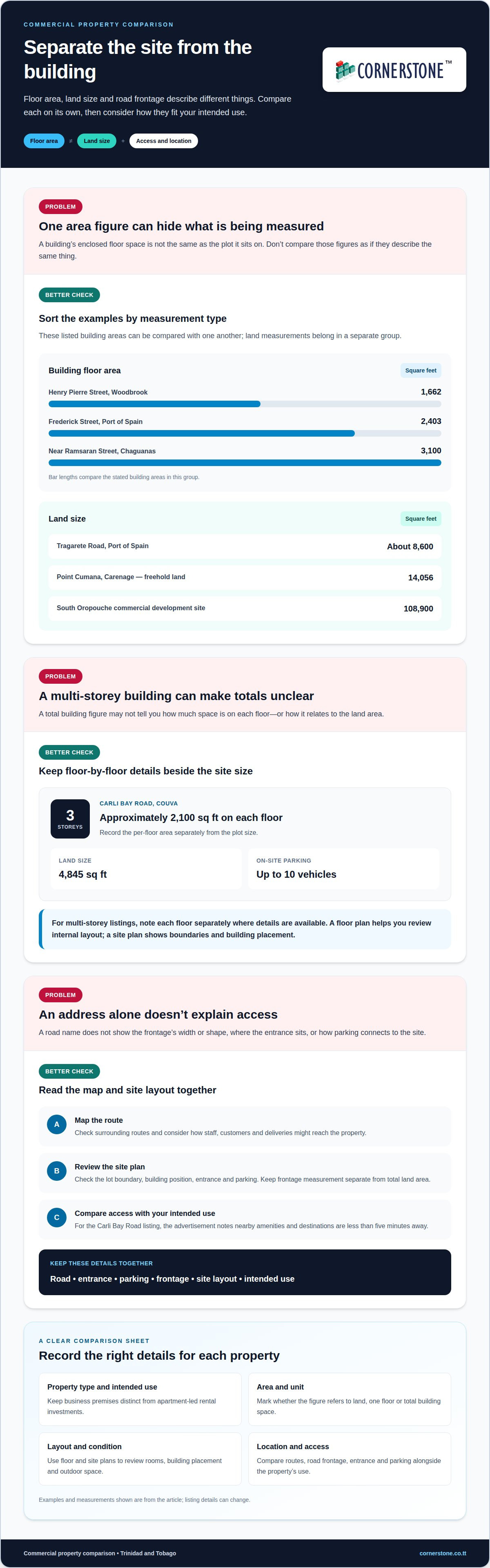
Floor area describes enclosed space. Land size describes the plot. Keep them separate when comparing listings. Woodbrook’s Henry Pierre Street building has 1,662 square feet. A Chaguanas property near Ramsaran Street has 3,100 square feet. Frederick Street in Port of Spain has a 2,403-square-foot building. These figures help you compare building footprints. They don’t describe the full site.
Some listings give land size instead. Point Cumana, Carenage, has 14,056 square feet of freehold land. Tragarete Road in Port of Spain sits on about 8,600 square feet. The Edward Street property includes an 898-square-foot office building. Reading both figures helps distinguish site capacity from existing indoor space. It also shows why land area alone doesn’t tell you how much building is usable.
Development land gives a different comparison. South Oropouche’s PRIME HIGHWAY COMMERCIAL DEVELOPMENT SITE covers 108,900 square feet. That scale differs sharply from a building listing measured by floor area. Before comparing sites, note whether the stated figure covers land, one floor, or total building space. A site plan helps show boundaries and building placement. A floor plan helps assess internal room layout.
Use a measurement worksheet to record each listing’s stated area and unit. A calculator can help compare dimensions or check area calculations. Keep the original listing figures beside your notes. For multi-storey buildings, record each floor separately where details are available. The Carli Bay Road building in Couva, for example, has approximately 2,100 square feet on each floor. This makes it easier to distinguish per-floor space from land area. Compare properties by intended use, access, and available outdoor space, not by one area figure alone.
Commercial locations and road frontage
Carli Bay Road in Couva offers another location example: the commercial building has three storeys, and its advertisement says nearby amenities and destinations are less than five minutes away. Use a map to locate the property and review surrounding routes, considering how staff, customers and deliveries might reach the site. An address provides orientation but cannot show every access detail.
Road frontage describes how a property meets the road, which can affect how people approach the site and find its entrance. A road name alone does not show the frontage’s width or shape. A site plan can show the lot boundary and building position, while a measuring wheel can help record frontage during a site review. Keep that measurement separate from the property’s total land area.
The Carli Bay property sits on 4,845 square feet of land and has on-site parking for up to 10 vehicles. Consider how parking, entrance placement, and road access work together for your intended use. A site plan helps show these relationships. The nearby amenities noted in the advertisement provide another point to consider when assessing the location.
Compare routes on a map, then use a site plan to review the layout. A frontage measurement adds detail an address cannot provide. Record the road, entrance, parking and site layout for each property in Couva or elsewhere. This makes it easier to weigh access alongside intended use, rather than judging a location by its street name alone.
The advertisement places the property less than five minutes from nearby amenities and destinations, a factor to weigh against your planned use.
Commercial property listings across Trinidad and Tobago
Commercial property for sale in Trinidad includes offices, warehouses, mixed-use buildings, apartment buildings, and development land. Tobago also has commercial opportunities. Each type suits different plans, from business premises to rental income. Compare the intended use with the property’s layout and setting.
Port of Spain listings include offices and mixed-use buildings. San Fernando examples include commercial office space on Lady Hailes Avenue and the Hobson Street building. Listings change over time, so treat these examples as an indication of the range of options, not a complete snapshot.
Commercial properties differ in location, layout, condition and access. Compare similar property types and measurements, and consider how each property’s features fit your intended use. These comparisons can help you assess the available options across Trinidad and Tobago.
Foreign ownership rules depend on the buyer and transaction. The Foreign Investment Act governs certain property purchases by non-citizens. Review how the rules apply to your circumstances as part of your purchase planning.
Commercial financing and mortgage rates depend on the lender’s assessment of the buyer and property. A real estate professional can help you review listings and support the property sales process, but does not provide mortgage lending or legal conveyancing.
Due diligence may include reviewing listing details, plans, land information, access and intended use. A title search checks property records and helps you review the property’s title. This can help identify title concerns, while property documents and site details still need careful review.
A spreadsheet can organize listings by location, property type and area. A map helps compare settings across Trinidad and Tobago and narrow options by intended use.
Cornerstone: Property sales
Cornerstone can support you as you consider buying or selling commercial property. If you’re comparing commercial property for sale in Trinidad, our property sales service can help you understand listing details and how they relate to your intended use. Share the location, property type, floor area, land details and priorities to give the discussion a clear starting point, without assuming one building suits every business.
If rental income is part of your plans, Cornerstone’s rental service can connect you with prospective tenants. Property management is another option for owners seeking support with their property. These services may suit an apartment building, commercial unit or mixed-use property. Your intended use and responsibilities as an owner can help determine which approach fits.
Cornerstone’s property market opinion can guide you when considering a sale or setting expectations. It is not a licensed valuation. It can help you discuss a property’s features and market position, including location, layout and condition. A commercial property for sale in Trinidad may require different comparisons depending on its type and intended use. This guidance supports an informed decision without promising a particular outcome.
Before speaking with Cornerstone, gather the details you already have, such as the listing address, floor plans, site information and intended timeline. If you’re buying, note the features you need; if selling, explain your plans for the property. Clear information helps keep the conversation focused, whether you’re exploring a purchase, rental, market opinion or ongoing management.
To discuss your property plans, contact Cornerstone when it suits you.
Frequently Asked Questions
What commercial properties are for sale in Trinidad and Tobago?
Options vary by listing and intended use. Before narrowing your choices, decide whether you need space for your own business, an investment to rent, or a property that supports both uses. Consider your operating needs, customer access and space requirements. This gives you a clearer basis for assessing whether a listing matches your plans.
What commercial property listings are available in Port of Spain and San Fernando?
The examples in this article span several cities, but availability changes as properties enter or leave the market. When reviewing a listing, check its status and details, including permitted use, access and occupancy arrangements. These points help you decide whether a property merits a closer look, beyond whether its location matches your preference.
What are commercial property prices per square foot in Trinidad?
No single figure answers this question for every purchase. Compare the property’s condition, location, access and likely use. For an investment, expected rental demand and the work needed before occupation also matter. Focus on similar properties and uses so a price-per-square-foot figure is considered alongside the factors that shape practical value.
Which areas in Trinidad are best for commercial property investment?
The right area depends on the businesses or customers you aim to serve. Consider where staff and customers need to travel, the routes available for deliveries and the surrounding activity that supports your intended use. An area that suits a customer-facing business may not suit a storage-focused investment. Define your priorities first, then assess each location against them.