
A property value enquiry in Trinidad and Tobago starts with the details of the property and sales of similar properties. Share its location, land and building size, layout, condition and notable features to give a clear basis for an estimate.
Nearby amenities, road access and the character of the neighbourhood also help explain how a property compares with others. A home close to everyday services may appeal to different buyers than one with limited access. Usable space and the work a property needs can also affect how its features are viewed.
This guide explains what to provide for a property value enquiry in Trinidad, how comparable sales inform an estimate, and why location, amenities, access and neighbourhood character matter. It also explains what a market opinion can tell you when you are considering a sale, rental or another property decision.
Key Takeaways
- Gather clear details about the property’s location, size, layout, condition and intended use to support a useful estimate.
- See how sales of similar properties provide context, and why differences between homes or land can change the comparison.
- Learn how nearby amenities, road access and neighbourhood character can shape a property’s appeal.
- Understand how a property market opinion can help inform your next steps when you’re considering a sale, rental or management.
What information should you provide for a property value enquiry?
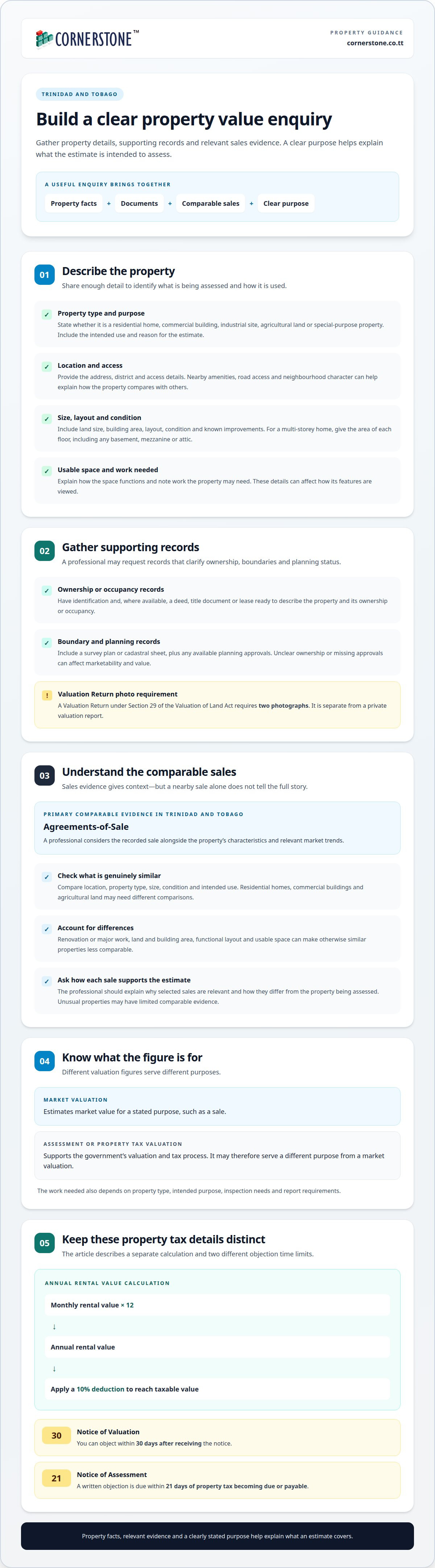
Start with the property’s location, type and purpose. A residential home, commercial building, industrial site, agricultural land and special-purpose property each call for different comparisons. Share the address, land size, building area, layout, condition and known improvements. Include the district and access details to help clarify the location.
Documents can clarify what is being assessed. A professional may request identification, a deed, title document or lease, as well as a survey plan or cadastral sheet. These records help describe ownership and boundaries. For a multi-storey home, provide the area of each floor, including any basement, mezzanine or attic.
RICS Valuation – Global Standards, December 2024, describes comparable information as evidence for valuing a similar item. RICS standards are an international reference, not a substitute for Trinidad and Tobago law. The intended use, property type and available evidence shape the valuation approach.
For Valuation Returns, Section 29 of the Valuation of Land Act provides for the process. A Return requires two photographs of the property. It is separate from a private valuation report.
A market valuation estimates market value for a stated purpose, such as a sale. An assessment or property tax valuation supports the government’s valuation and tax process. The figures may therefore serve different purposes.
You can object to a Notice of Valuation within thirty days after receiving it. A written objection to a Notice of Assessment is due within twenty-one days of property tax becoming due or payable.
The scope of valuation work depends on the property type, intended purpose, inspection needs and report requirements. These factors determine what the professional needs to assess and explain in the report.
The Valuation Division and Commissioner of Valuations provide information about valuation rolls and property tax. Town and Country Planning approval records also relate to a property’s intended use.
Residential market value reflects comparable sales, land and building area, layout, usable space and condition. For property tax, annual rental value is calculated by multiplying monthly rental value by 12; a 10% deduction is then applied to reach taxable value.
To assess title, boundaries and planning status, a professional can review the deed or title document, survey plan or cadastral sheet, and available planning approvals. Missing approvals or unclear ownership can affect marketability and value.
Comparable property sales
Comparable sales show what buyers have paid for properties with relevant similarities. In Trinidad and Tobago, Agreements-of-Sale are the primary source of comparable evidence for property valuations. A professional considers the recorded sale alongside the property’s location, type, size, condition and intended use. One nearby sale rarely tells the full story.
Similarity is about more than a shared address or property label. For a residential home, useful comparisons may include the neighbourhood, layout, usable area and overall condition. A commercial building may need comparison with properties serving a similar purpose. Agricultural land should be considered in light of its location, access and use, rather than automatically compared with residential lots.
Transaction details matter too. A professional considers the purchase price and relevant market trends, then assesses how differences affect the comparison. For example, a renovated home and a house needing major work may be in the same estate, but their condition affects how informative their sale prices are. Land size, building area and functional layout can also distinguish otherwise similar properties.
The property’s identity and the reason for the estimate help determine which sales are relevant. A sale-related estimate, rental decision or estate matter may call for different evidence and analysis. The professional should explain why each comparison supports the estimate and how it differs from the property being assessed. This gives you context, rather than just a number copied from another transaction.
Comparable evidence can be limited when a property is unusual, such as a special-purpose building or agricultural holding. In that case, the analysis may need to weigh broader market evidence and the property’s specific features carefully. Ask how selected sales relate to your property and which differences carry the most weight. For practical local property guidance, keep the estimate’s purpose and the comparisons used in view.
Location, amenities, accessibility, and neighbourhood character
In Trinidad and Tobago, proximity to essential amenities and major roads may influence a property’s market value, but the effect depends on the property and available market evidence. Access to shops, schools, health services and main roads can affect buyer interest. A property in a well-connected area may appeal differently from one with fewer nearby services. Location gives a professional context for comparing the subject property with other options.
Access involves more than distance to a road. A professional considers how easily residents, customers or deliveries can reach the property. For example, a commercial building with a clear approach from a major road may suit a different purpose from one reached through a narrow local street. For a home, convenient access to everyday services may matter to households. These details help indicate which buyers or tenants may find the property useful.
The importance of amenities varies by property type. A residential home near schools or shops may suit households seeking convenience in their daily routines. A commercial property may benefit from customer access and nearby services. An agricultural holding needs a different assessment, including access relevant to its intended use. Consider each feature of the surroundings in context, rather than treating it as an automatic increase in market value.
Neighbourhood character adds another layer. A quiet residential street and a mixed-use area can offer different advantages, even within the same community. The professional considers surrounding land uses, the immediate setting and how those features fit the property’s purpose. Planning status matters too: zoning that aligns with a property’s intended use may support a stronger valuation, depending on the property and market evidence. This helps distinguish a suitable location from one whose current use may not align with permitted use.
For a useful estimate, describe practical location details alongside the property itself. Note nearby amenities, road access, surrounding uses and any feature that affects entry or daily use. These details help explain how location influences the estimate, rather than reducing the neighbourhood to a broad label such as “central” or “quiet.”
How can a property professional help you check the value of a property in Trinidad and Tobago?
A property professional brings the available evidence together for a specific purpose, such as setting a sale price or considering a rental. The process starts by clarifying what you need the estimate to support. A figure for a possible sale and information for a property tax matter serve different purposes, so the intended use guides the work.
Next, the professional reviews the property’s features and how they affect its appeal. Land size, built area, usable space, layout and condition all matter. For example, two homes with similar floor areas may differ if one has a functional layout and the other needs major refurbishment. Buyers may take the extra work into account when deciding what they would pay.
The professional then weighs relevant market evidence against the property’s details. This means considering purchase prices, comparable sales and market trends, rather than relying on an asking price alone. A commercial space, agricultural holding and residential home each require evidence suited to their type and intended use. Location, access and nearby amenities add context to the comparison.
You can help by supplying the property’s address, type, intended use and known details about its condition. Deeds, title documents, leases and survey plans can clarify which land or building is being considered. During an inspection, access to the building’s areas helps the professional understand its layout and condition. Clear information makes it easier to explain the basis of an estimate.
A market opinion can guide a sale or rental decision, but it is not the same as a licensed valuation report. A lender or another report user may require a formal valuation for a particular purpose. If you are weighing a sale or rental, share your property details for guidance on a suitable next step.
Cornerstone
Cornerstone can provide a property market opinion to help you consider a sale, rental or management decision. The team considers the property details and market context to offer practical guidance for your next step. This can help you think through how the property fits your plans, whether you are preparing to sell, exploring rental options or reviewing management.
A market opinion is not a licensed valuation report. If your purpose requires a formal valuation, such as a lender’s specific requirement, you will need that type of report. For an informed conversation about your property and plans, Cornerstone offers no-obligation market opinions.
Contact Cornerstone to discuss your property and what you’re hoping to do next.
Take the next step with a clear property plan
A useful estimate is a starting point for a decision, not the decision itself. Consider what you want to do next: prepare a sale, explore rental options or understand how the property fits your plans. Being clear about your purpose helps shape the conversation and keep the guidance relevant.
For a property value enquiry in Trinidad and Tobago, Cornerstone provides property market opinions and supports property sales and rentals. The team’s local experience helps connect an estimate with practical choices for your property. A market opinion is distinct from a licensed valuation report, so consider what type of information your intended use requires.
Share your property details with Cornerstone and discuss the direction you are considering, without pressure to make an immediate decision. A thoughtful conversation can help you decide what to explore next, whether you are weighing a sale, rental or another property plan.
Contact Cornerstone about your property enquiry and take the next step at a pace that feels right for you.
Frequently Asked Questions
Why would I need to have my property valued?
A property opinion can help you weigh choices that affect your longer-term plans. For example, if you inherit a home, you may be deciding whether to keep it, rent it or sell it. An informed estimate can provide a starting point for family discussions and planning, and help you assess whether your expectations fit the property’s likely place in the market.
What are comparables?
Comparables are property transactions used as reference points when estimating another property’s value. They do not need to be identical, but their differences should be understood. A professional may consider whether unusual property features or circumstances make a sale less relevant. A useful estimate explains why the selected transactions provide meaningful context, rather than treating every nearby sale as equally informative.
What information and documents should you provide for a property value enquiry?
Along with property records, describe how the building is used and whether it has separate areas, such as a home with a shop below. Note whether the property is occupied and identify any changes made since the records were prepared. If names or descriptions differ across documents, explain what you know about the difference. These details can help the professional understand what the records refer to.
How do property professionals find recent comparable property sales in Trinidad?
Professionals use Agreements-of-Sale as the primary source of comparable evidence. They identify transactions relevant to the property and consider whether those sales provide a sound basis for comparison. You can ask which transactions were selected and why. The explanation should make clear how the evidence relates to your property, rather than presenting a list of addresses without context.
How do location, property condition, tenure, and access affect property values in Trinidad and Tobago?
Tenure describes the nature of the rights or arrangement connected with occupying or holding a property. A property offered with a lease may present different considerations from one offered for sale with ownership. Access details also matter: a shared entrance or difficult approach may affect how the property works for its intended use. The professional weighs these practical details alongside the property’s overall condition.